Bengaluru IPL 2026 security: 31 held for black ticketing, 17 for betting
Synopsis
A year after a deadly stampede killed 11 at Chinnaswamy Stadium, Bengaluru Police returned IPL 2026 to the venue with AI surveillance, QR ticketing, and a hard crackdown — 31 black-ticket touts and 17 betting suspects arrested. Karnataka's Home Minister called it a model operation; the real test is whether the infrastructure overhaul holds as the season continues.
Key Takeaways
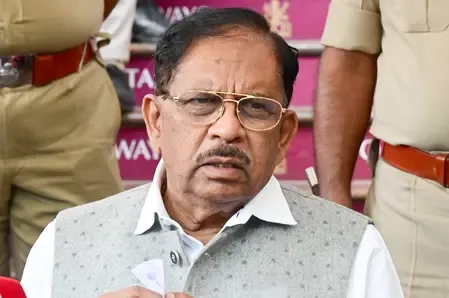
Karnataka Home Minister G.
Parameshwara commended Bengaluru City Police on 29 April for IPL 2026 security at M.
Chinnaswamy Stadium .
IPL matches returned to Bengaluru after a ban imposed following a 4 June 2025 stampede that killed 11 people and injured more than 30 .
31 accused arrested in 23 black ticketing cases ; police seized devices worth ₹48 lakh .
17 persons arrested across 12 cricket betting cases , all being probed by the Central Crime Branch (CCB) .
9 adults and 9 juveniles from Jharkhand held for mobile theft at the stadium; 4 remain absconding.
An average of 19,000–20,000 spectators used the metro per match, with 500+ CCTV cameras and AI crowd analytics deployed.
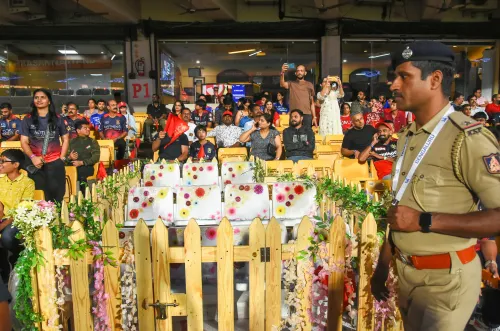
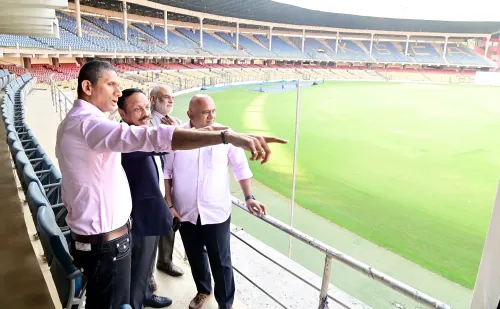
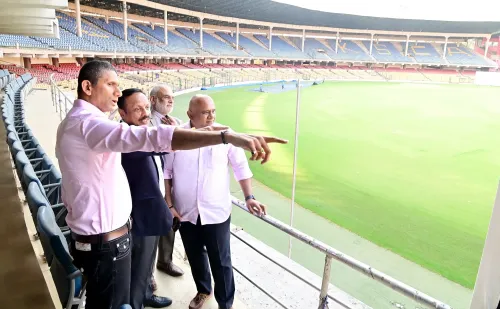
Karnataka Home Minister G. Parameshwara on Wednesday, 29 April commended the Bengaluru City Police for deploying extensive, well-coordinated security and crowd management arrangements during IPL 2026 matches at the M. Chinnaswamy Stadium in Bengaluru. The praise came at an event held at the Bengaluru Police Commissioner's office, where officials highlighted a sweeping crackdown on theft, cricket betting, and black ticket sales alongside upgraded stadium safety infrastructure.
Background: Why Security Was Overhauled
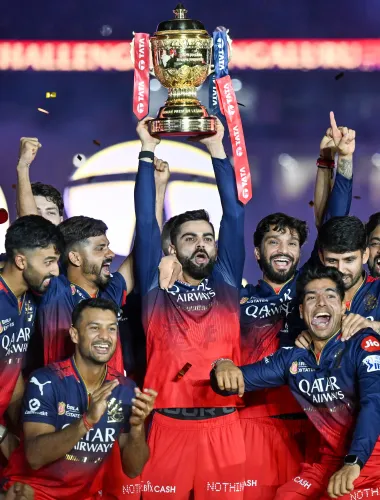
The heightened measures follow a tragedy on 4 June 2025, when a stampede during Royal Challengers Bengaluru (RCB) IPL victory celebrations at the same stadium claimed 11 lives and left more than 30 people injured. The Karnataka government had subsequently banned IPL and international cricket matches at the venue. The ban was lifted this year after a series of reform measures were implemented by the Karnataka State Cricket Association (KSCA), RCB, and event partners, paving the way for matches to return to Bengaluru.
Planning and Infrastructure Upgrades
According to an official statement released on Wednesday, police undertook more than three months of advance planning, drawing on lessons from past incidents. Structured consultations were held with the KSCA, RCB, and event partners, and continuous reviews were conducted after each match to refine arrangements.
Public transport integration emerged as a standout initiative. Metro services were aligned to match-day travel schedules, with an average of 19,000 to 20,000 spectators using the metro per match — significantly easing road congestion. Strategic traffic planning kept major arteries such as Queens Road largely free for regular commuters.
The introduction of QR-based digital ticketing with time-bound activation and non-transferability strengthened access control and helped curb black marketing. These tickets also provided authorities with a digital trail to track illegal resale activities.
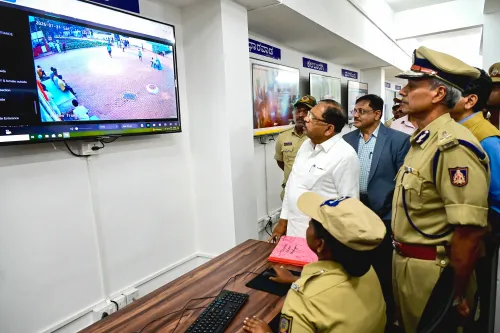
On the surveillance front, more than 500 CCTV cameras and drone units were deployed, integrated with police command and traffic control centres. AI-based crowd analytics enabled real-time monitoring and rapid response to developing situations. Multi-layer entry points, designated holding areas, improved gate infrastructure, ambulances, medical triage centres, and clearly defined evacuation protocols further bolstered emergency preparedness.
Crackdown on Crime: Theft, Betting, and Black Tickets
Police action extended well beyond crowd management. In one mobile theft case registered at Cubbon Park police station, a total of nine adults and nine juveniles — all reportedly from Jharkhand — were apprehended. Four accused remain absconding. According to police, the suspects had allegedly travelled by flight specifically to commit thefts at the stadium; CCTV footage and technical evidence were instrumental in tracking them down.
On cricket betting, 12 cases were registered, resulting in the arrest of 17 persons. The cases are being investigated by the Central Crime Branch (CCB). In a parallel crackdown on black ticket sales, the CCB registered 23 cases and arrested 31 accused, seizing 19 mobile phones and laptops valued at ₹48 lakh.
Recognition and the Road Ahead
The state government specifically recognised the leadership of the Commissioner of Police, the Joint Commissioner of Police (West Zone), and the Deputy Commissioner of Police (Central) for their planning and execution of match-day arrangements. Citizens have been urged to cooperate with authorities, follow advisories, and use public transport on match days.
The government reiterated its commitment to further improving infrastructure, including enhanced last-mile connectivity and better integration of stadium access in upcoming phases — signalling that the safety overhaul at M. Chinnaswamy Stadium is still a work in progress.
Point of View
But it also underscores how much ground had to be recovered after the catastrophic June 2025 stampede. The real story is not the commendation — it is that a ban had to be imposed in the first place, and that QR ticketing, AI analytics, and metro integration were not standard practice before 11 people died. The crackdown on betting and black-market tickets is significant, but 12 betting cases and 23 black-ticket cases in a single IPL season at one venue also reveals the scale of the problem that persists. Whether these measures outlast the tournament — or quietly lapse until the next crisis — will determine whether this is genuine reform or event-specific optics.
NationPress
19 Sept 2026
Frequently Asked Questions
Why was IPL cricket banned at M. Chinnaswamy Stadium in Bengaluru?
IPL and international cricket matches were banned at M. Chinnaswamy Stadium after a stampede on 4 June 2025, during RCB's IPL victory celebrations, which killed 11 people and injured more than 30. The ban was lifted in 2026 after reform measures by the KSCA, RCB, and event partners.
What security measures were put in place for IPL 2026 at Chinnaswamy Stadium?
Bengaluru Police deployed over 500 CCTV cameras, drone surveillance, AI-based crowd analytics, QR-based digital ticketing, multi-layer entry points, and dedicated medical triage centres. Metro services were also aligned to match schedules, with 19,000–20,000 spectators using public transport per match.
How many people were arrested for black ticketing and betting during IPL 2026 in Bengaluru?
A total of 31 people were arrested in 23 black ticketing cases, with police seizing 19 mobile phones and laptops worth ₹48 lakh. Separately, 17 persons were arrested in 12 cricket betting cases, all being investigated by the Central Crime Branch.
Who were arrested for theft at M. Chinnaswamy Stadium during IPL 2026?
Nine adults and nine juveniles, all reportedly from Jharkhand, were arrested for mobile theft at the stadium. Four accused remain absconding. Police said the suspects allegedly travelled by flight to commit the thefts and were tracked using CCTV footage and technical evidence.
What is the Karnataka government's plan for further improving stadium safety?
The state government has committed to enhancing last-mile connectivity and better integrating stadium access systems in upcoming phases, indicating that the safety overhaul at Chinnaswamy Stadium is ongoing beyond the current IPL season.