How Did Nearly 350,000 People Experience Overnight 'Temple Stays' in South Korea in 2025?
Synopsis
Discover how nearly 350,000 people experienced the enriching cultural phenomenon of 'temple stays' in South Korea, a program emphasizing tradition and community, in a record-breaking year for this unique initiative.
Key Takeaways
In 2025, nearly 350,000 people participated in temple stays.
The program has grown significantly since its launch in 2002 .
A total of 349,219 participants included both locals and tourists.
Plans to promote mental health programs are underway.
The decline in monastic ordination is a concerning trend.
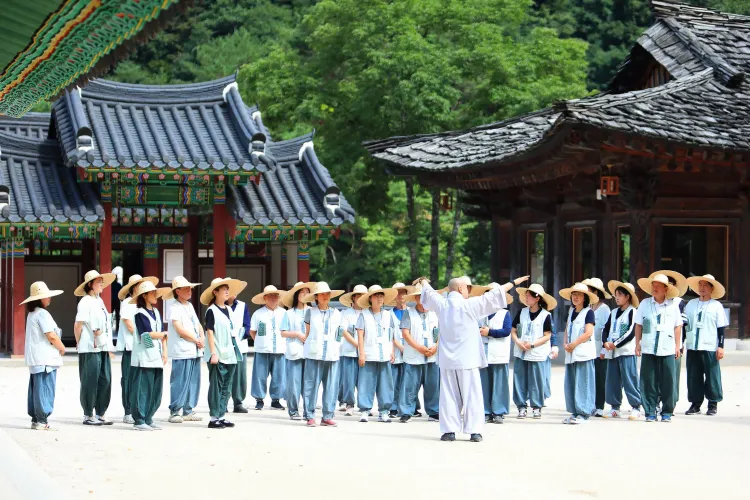
Seoul, Jan 18 (NationPress) In 2025, approximately 350,000 individuals in South Korea participated in “temple stays,” an overnight cultural initiative offered at Buddhist temples. This figure represents the highest attendance since the program's inception in 2002, as reported by the Jogye Order of Korean Buddhism on Sunday.
A total of 349,219 participants, including 293,704 South Koreans and 55,515 foreign visitors, engaged in the program at 158 temples across the nation, reflecting a 5.1% increase from the prior year.
Initially developed to promote traditional Korean culture and to address accommodation shortages during the 2002 World Cup co-hosted by South Korea and Japan, the temple stay program has witnessed significant growth over the last twenty years, with participation rising from just 2,500 guests at 33 temples in the inaugural year. To date, around 4.18 million people have experienced this unique program.
The Jogye Order aims to enhance the temple stay initiative further, aligning it with cultural and tourism resources in regions outside of Seoul to stimulate local economies.
Additionally, plans are underway to develop specialized programs aimed at mental health and stress relief, as well as initiatives designed for socially marginalized groups.
Meanwhile, the Jogye Order noted that only 81 individuals were ordained as monks last year, a significant drop from 226 in 2014, leading to concerns about the decreasing number of monks available for missionary and pastoral duties. This trend has been described as a “critical issue” that threatens the foundation of Korean Buddhism, prompting a focus on attracting younger generations through what is termed “hip Buddhism”, portraying the religion as vibrant, youthful, and culturally relevant.
Point of View
This remarkable growth in temple stays not only highlights the public's interest in cultural heritage but also underscores the necessity for ongoing support for regional economies and mental well-being. The Jogye Order's strategic focus on younger generations is commendable and indicates a proactive approach to keeping Buddhism relevant in contemporary society.
NationPress
20 Sept 2026
Frequently Asked Questions
What are temple stays?
Temple stays are overnight programs at Buddhist temples in South Korea, allowing visitors to experience monastic life and learn about Buddhist culture.
How many people participated in temple stays in 2025?
In 2025, approximately 350,000 individuals participated in temple stays across South Korea.
What benefits do temple stays offer?
Temple stays offer a unique opportunity for stress relief, cultural immersion, and mental health benefits.
Why was the temple stay program initiated?
The program was initially created to promote Korean cultural heritage and address accommodation shortages during the 2002 World Cup.
What is 'hip Buddhism'?
'Hip Buddhism' is an initiative aimed at attracting younger generations to Buddhism, presenting it as dynamic and culturally relevant.