4 villagers die of toxic gas in Jhajjar well while rescuing calf

Synopsis
Four men entered a well in Munimpur village, Jhajjar, one after another to save a fallen calf — and none came out alive. Suspected toxic gas claimed all four victims before a joint police-fire-administration team could reach them, raising hard questions about rural emergency response times and the absence of basic confined-space safety protocols.
Key Takeaways
Four villagers — Dalbir , Narendra , Monu , and Ramu — died of suspected toxic gas inhalation in a well in Munimpur village , Jhajjar , on 20 July .
The tragedy began when a calf fell into the well; each victim entered to rescue the one before them and was overcome by gas.
A joint rescue operation by Jhajjar Police , Fire Department , and district administration lasted nearly three hours .
Sub-Inspector Rajesh Kumar also fell ill during the rescue and is hospitalised in stable condition.
Villagers have alleged a delayed administrative response and are demanding an official inquiry.
Authorities are investigating the exact cause of death and whether safety protocols were followed.
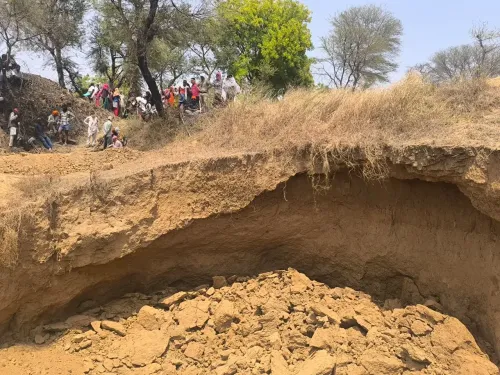
Four villagers died after inhaling suspected toxic gas inside a well in Munimpur village, Jhajjar district, Haryana, on Monday, 20 July, while attempting to rescue a calf that had fallen into it. The victims suffocated one by one as each entered the well to save the person before them, triggering a rescue operation that stretched nearly three hours.
How the tragedy unfolded
The incident began when a calf fell into the well. A villager climbed down to retrieve the animal but was overcome by what officials describe as suspected poisonous gas accumulated inside the well. Three others descended in succession to rescue him — each losing consciousness after inhaling the gas.
The deceased have been identified as Dalbir, Narendra, Monu, and Ramu. All four were eventually pulled out and rushed to a nearby hospital, where they were declared dead on arrival.
Rescue operation and official response
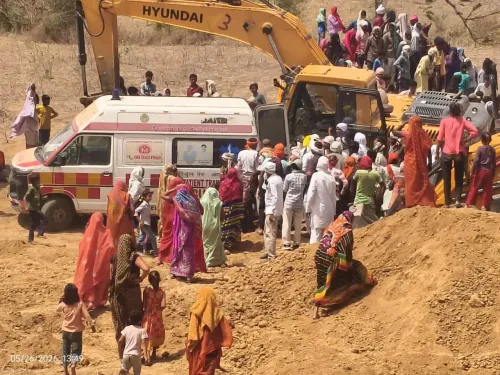
A joint team comprising the Jhajjar Police, the Fire Department, and the district administration worked for close to three hours to retrieve the victims. Police Commissioner Dr. Rajshree Singh reached the site and personally monitored the operation. Congress MLA Kuldeep Vats was also present during the rescue efforts.
During the operation, Sub-Inspector Rajesh Kumar also fell ill and was admitted to a private hospital; his condition is reported to be stable.
Villagers allege delayed response
Following the deaths, grieving residents alleged that the administration did not respond promptly, claiming timely assistance could have prevented the fatalities. They have demanded an inquiry into the incident and action against those responsible for the alleged delay in emergency response. Authorities have not yet publicly responded to these allegations.
Investigation under way
Police and district officials are examining the exact cause of death, with initial reports pointing to toxic gas build-up inside the well — a known hazard in confined underground spaces, particularly in agricultural areas where decomposing organic matter can generate methane or hydrogen sulphide. Investigators are also assessing whether adequate safety protocols were followed during the rescue attempt.
This is not an isolated pattern: deaths from toxic gas inhalation in wells and confined agricultural structures are reported across rural India each year, often involving bystanders who enter without protective equipment. The Munimpur tragedy underscores the urgent need for community-level awareness and basic safety gear in rural emergency responses.
Point of View
No protective equipment, and bystanders entering one after another in an instinctive but fatal chain. Rural India loses lives to well-gas incidents every monsoon season, yet community-level awareness of methane and hydrogen sulphide hazards remains negligible. The villagers' allegation of a delayed response deserves a time-stamped official accounting — not just an inquiry announcement. If the three-hour rescue window was partly administrative, that is a systemic failure, not an isolated accident.
NationPress
20 Oct 2026
Frequently Asked Questions
What happened in Munimpur village, Jhajjar?
Four villagers died after inhaling suspected toxic gas inside a well in Munimpur village, Jhajjar district, Haryana, on 20 July. They had entered the well one by one to rescue a calf and a fellow villager, and each was overcome by the gas.
Who are the victims of the Jhajjar well tragedy?
The four deceased have been identified as Dalbir, Narendra, Monu, and Ramu, all residents of Munimpur village in Jhajjar district, Haryana.
What caused the deaths inside the well?
Initial reports suggest the victims succumbed to suspected toxic gas — likely methane or hydrogen sulphide — that had accumulated inside the well. Authorities are conducting an investigation to confirm the exact cause.
Was anyone else affected during the rescue?
Yes. Sub-Inspector Rajesh Kumar fell ill while participating in the rescue operation and was admitted to a private hospital. His condition is reported to be stable.
What action are villagers demanding after the deaths?
Residents have alleged that the administration did not respond promptly and that timely help could have saved lives. They are demanding an official inquiry and accountability for the alleged delay in emergency response.