Why Did 41 Maoists, Including 39 from Chhattisgarh, Surrender to Telangana Police?
Synopsis
In a significant development, 41 Maoists, among them 39 from Chhattisgarh, surrendered to the Telangana Police. This marks a critical moment in the fight against the CPI (Maoist) and reveals the complexities and challenges faced by the organization amid increasing pressure from security forces.
Key Takeaways
41 Maoists surrendered to Telangana Police.
Includes 39 from Chhattisgarh .
24 firearms were surrendered.
Reasons include pressure from security forces and internal disputes.
Financial rehabilitation support is provided.
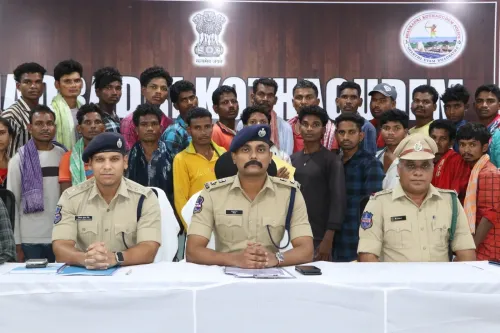
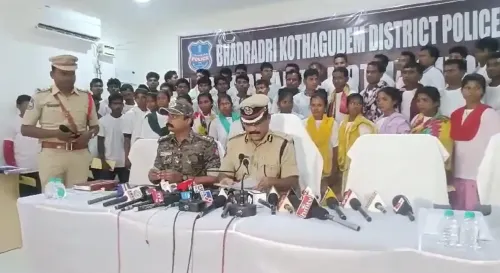
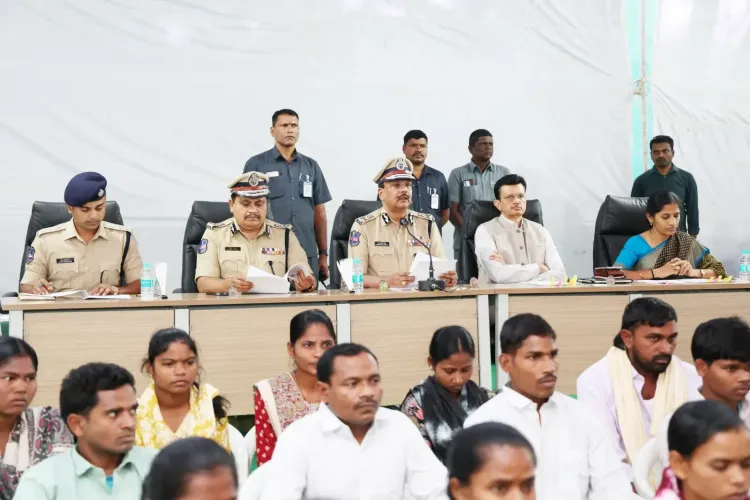
Hyderabad, Dec 19 (NationPress) In a significant setback for the outlawed Communist Party of India (Maoist), a total of 41 Maoists, with 39 hailing from Chhattisgarh, voluntarily surrendered to the Telangana Police on Friday.
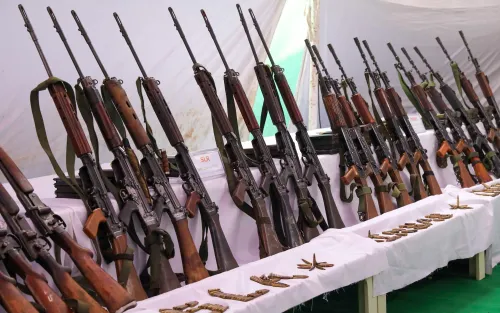
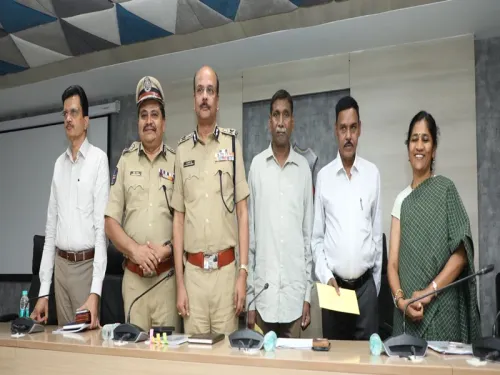
This group of Maoists includes six senior officials holding the rank of Company Platoon Committee Member/Divisional Committee Member (CyPCMs/DVCMs) and they also surrendered 24 firearms, marking a notable shift towards mainstream society in front of Telangana's Director General of Police B. Shivadhar Reddy.
The surrendered weapons consist of one INSAS Light Machine Gun, three AK-47 Rifles, five SLR Rifles, seven INSAS Rifles, one BGL gun, four .303 Rifles, one Single-shot Rifle, and two Air guns.
Among the local cadres who surrendered are Erragolla Ravi alias Santhosh, aged 40, and Kanikarapu Prabhanjan, 33, who serves as a Party Member (PM) in the Komaram Bheem Asifabad – Mancherial Divisional Committee (K-M DVC).
The remaining surrendered individuals are from Chhattisgarh, comprising 11 members of the People’s Liberation Guerrilla Army (PLGA) Battalion, five from the 2nd Central Regional Command (CRC) Company of the Telangana State Committee, and several others from various committees within the DKSZC.
During the surrender, they also turned over 24 firearms and 733 live rounds of ammunition of various calibres, along with eight BGL shells. The DGP noted that this surrender has considerably diminished the operational and combat capabilities of the CPI (Maoist) in the area.
The DGP attributed this mass surrender to an appeal made by Chief Minister A. Revanth Reddy on October 21, urging CPI (Maoist) members to renounce violence, reintegrate into society, and contribute to the development and welfare of the State and its citizens.
Reasons cited for the surrender include the arbitrary deployment of cadres to remote areas by CPI (Maoist) leadership, relentless pressure from security forces, and a breakdown of logistical support, which limited mobility and operational effectiveness. Additional factors include ideological rifts, disillusionment, leadership disputes, poor living conditions, health issues, and prolonged family separation.
According to the Telangana government's rehabilitation policy, those at the DVCM/CyPCM level are eligible for Rs 5 lakh each, while ACM/PPCM members receive Rs 4 lakh each, and Party Members (PM) get Rs 1 lakh each.
The total reward amount of Rs 1,46,30,000 will be distributed among the surrendered cadres as part of the state and central government's relief and rehabilitation initiatives. An immediate relief of Rs 25,000 each has already been provided to all 41 surrendered individuals.
According to Shivadhar Reddy, this year alone, 509 underground cadres of CPI (Maoist) have surrendered to the Telangana Police, including two Central Committee Members (CCMs), 11 State Committee Members (SCMs), and several others across various ranks.
Currently, there are 54 underground CPI (Maoist) members from Telangana, which includes five CCMs and various other ranks, although only a few remain active within the Telangana State Committee.
Five out of seven Central Committee Members of CPI (Maoist) are from Telangana, underscoring the region's importance in the organization's hierarchy.
The CPI (Maoist) leadership has instructed its underground members to disperse from Chhattisgarh and relocate to other territories by March 31, 2026, which is the cutoff set by the Government of India to eliminate the Maoist issue. They have assured cadres that security operations will diminish post this date, allowing a return to their underground activities. However, the DGP has stated that this assurance is misleading and amounts to false hope, urging all Maoists to surrender.
Point of View
It is crucial to recognize the implications of the recent surrender of 41 Maoists in Telangana. This event reflects a critical juncture in the ongoing struggle against the CPI (Maoist) and highlights the pressing need for socio-economic development and rehabilitation for those affected by the cycle of violence.
NationPress
19 Sept 2026
Frequently Asked Questions
What prompted the surrender of the Maoists?
The surrender was influenced by several factors, including pressure from security forces, internal leadership disputes, and a call from Chief Minister A. Revanth Reddy to reintegrate into society.
What types of weapons were surrendered?
The surrendered arms included various firearms such as AK-47 rifles, SLR rifles, and an INSAS Light Machine Gun, totaling 24 firearms.
What rehabilitation support is offered to the surrendered Maoists?
Under the state's rehabilitation policy, surrendered individuals are eligible for financial support, including Rs 5 lakh for DVCM/CyPCM members and Rs 1 lakh for Party Members.
How many Maoists have surrendered this year?
So far this year, a total of 509 underground Maoists have surrendered to the Telangana Police.
What is the significance of this event?
This mass surrender is a substantial blow to the CPI (Maoist) and indicates a potential shift in the operational capabilities of the group.