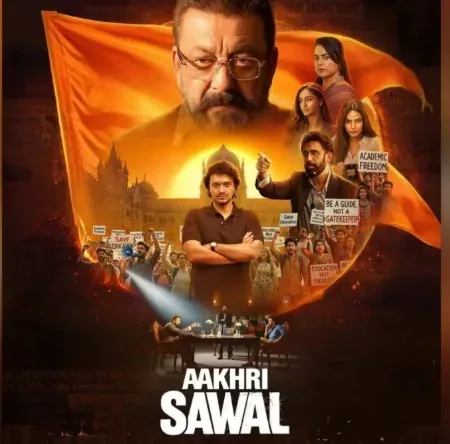
Aakhri Sawal Review: Sanjay Dutt's boldest film in years earns 4 stars
Synopsis
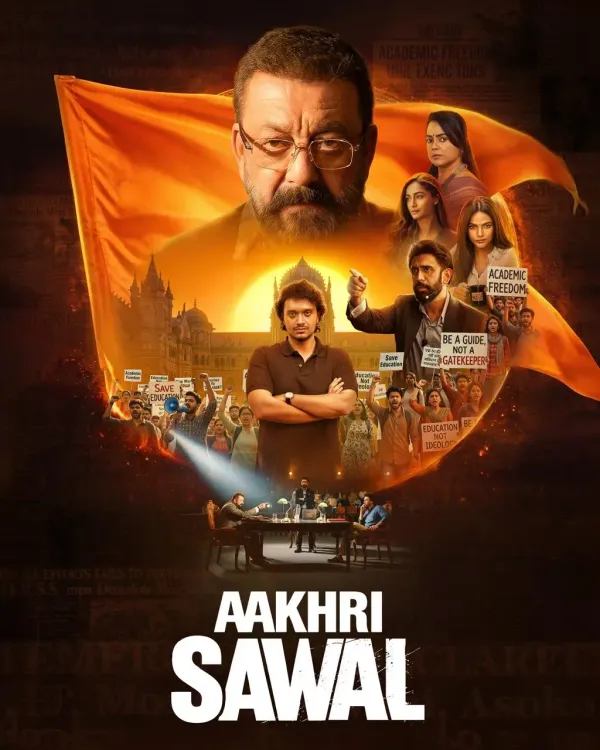
Aakhri Sawal is the political drama Indian cinema has been too cautious to make — openly interrogating the RSS's alleged role in the Babri Masjid demolition and Gandhi's assassination, with Sanjay Dutt delivering a restrained, career-best performance and Namashi Chakraborty emerging as a major new force. NationPress gives it four stars.
Key Takeaways
Aakhri Sawal is directed by Abhijeet Mohan Warang and produced by Nikhil Nanda , earning a four-star rating from NationPress.
Sanjay Dutt delivers what critics are calling one of the most restrained and intense performances of his career.
Namashi Chakraborty emerges as the film's emotional standout, marking him as an actor ready for major recognition.
The film directly engages with the demolition of the Babri Masjid and the assassination of Mahatma Gandhi , raising questions about the RSS 's alleged involvement.
The supporting cast — Amit Sadh , Sameera Reddy , Neetu Chandra , and Tridha Choudhury — deliver some of their most impactful performances.
The film's newsroom debate sequences are cited as among its strongest and most emotionally charged set-pieces.
Aakhri Sawal, directed by Abhijeet Mohan Warang and produced by Nikhil Nanda, is a rare political drama that does not ask for the audience's comfort — it demands their reckoning. Released in 2025, the film confronts some of Indian history's most contested flashpoints, from the demolition of the Babri Masjid to the assassination of Mahatma Gandhi, with a bluntness that mainstream Hindi cinema has rarely attempted. NationPress rates it four stars.
What the Film Is About
At its core, Aakhri Sawal is a hard-hitting political drama that forces a national conversation that, critics argue, has been deferred for decades. The narrative raises pointed questions about the alleged involvement of organisations such as the RSS in landmark historical events — claims the film presents through its characters' perspectives rather than as established fact. The unapologetic directness of the writing is its most provocative quality, and reportedly the source of its most jaw-dropping moments.
The film's newsroom debate sequences are among its strongest set-pieces — scripted with sharp intelligence and staged with raw urgency, they resemble a nation arguing with itself on screen. Several of these confrontations are emotionally charged enough to linger well after the film ends.
Sanjay Dutt Delivers a Career-Defining Turn
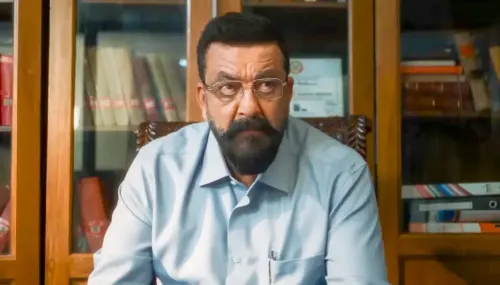
Sanjay Dutt anchors the film with what is arguably one of the most restrained and intense performances of his career. Stripped of the larger-than-life persona audiences associate with him, Dutt plays a wounded, fearless figure carrying the accumulated weight of history and anger. His silences register as powerfully as his dialogue, and the cumulative effect is emotionally unforgettable.
The performance elevates Aakhri Sawal beyond political relevance into something more durable — a character study of a man grappling with truths that institutions have preferred to leave unexamined.
Namashi Chakraborty Steals the Spotlight
The film's biggest revelation is Namashi Chakraborty, who emerges as its emotional centre. His sincerity, screen presence, and emotional depth bring an unpredictable energy to the narrative that consistently surprises. Several of his scenes are among the film's most lasting, and they mark him as an actor ready for significantly wider recognition.
The supporting ensemble — including Amit Sadh, Sameera Reddy, Neetu Chandra, and Tridha Choudhury — deliver some of their most impactful work, each adding weight to a narrative that demands emotional commitment from its entire cast.
Direction, Craft, and Visual Tension
Director Abhijeet Mohan Warang maintains a grip on tension across the film's runtime without allowing the material to turn preachy. Every frame is purposeful; the storytelling remains emotionally engaged even as it navigates layered historical and political terrain. Rather than reducing complex events to slogans, the film keeps its human stakes visible throughout.
Producer Nikhil Nanda deserves credit for backing a subject this uncompromising at a moment when the commercial incentives to play safe are considerable.
Verdict
Aakhri Sawal is bold, unsettling, and brutally honest — a film that succeeds in making its audience uncomfortable while keeping them entirely engaged. It does not feel like routine cinema. It feels like a conversation India has long postponed. As a work of political filmmaking, it stands among the most courageous to emerge from Indian cinema in recent years.
Frequently Asked Questions
What is Aakhri Sawal about?
Aakhri Sawal is a political drama directed by Abhijeet Mohan Warang that confronts some of India's most contested historical events, including the demolition of the Babri Masjid and the assassination of Mahatma Gandhi. The film raises questions — through its characters' perspectives — about the alleged involvement of organisations such as the RSS in these events.
How is Sanjay Dutt's performance in Aakhri Sawal?
Sanjay Dutt delivers what is being described as one of the most restrained and intense performances of his career, departing from his larger-than-life screen persona. His silences are as powerful as his dialogue, and the performance is widely considered the emotional backbone of the film.
Who is Namashi Chakraborty and why is he being praised?
Namashi Chakraborty is an actor who emerges as the surprise standout of Aakhri Sawal, bringing emotional depth and unpredictable screen energy to the narrative. His performance has been called a breakthrough, with several of his scenes cited as the film's most lasting.
Is Aakhri Sawal worth watching?
NationPress rates Aakhri Sawal four stars, calling it one of the most courageous political dramas to emerge from Indian cinema in recent years. The film is bold, unsettling, and emotionally engaging — recommended for audiences willing to engage with challenging historical and political material.
Who produced Aakhri Sawal?
Aakhri Sawal was produced by Nikhil Nanda, who has been credited for backing a subject considered unusually uncompromising by mainstream Bollywood standards. The film also features a strong supporting cast including Amit Sadh, Sameera Reddy, Neetu Chandra, and Tridha Choudhury.