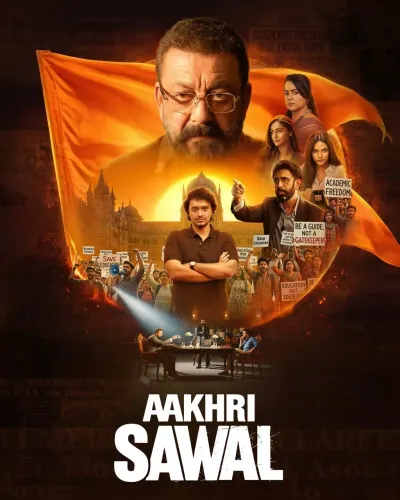
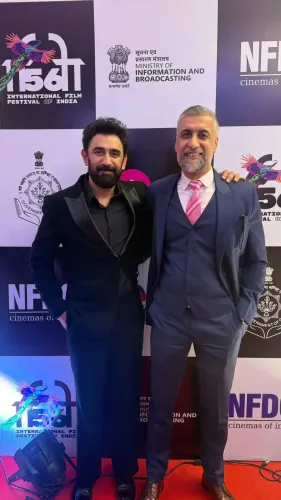
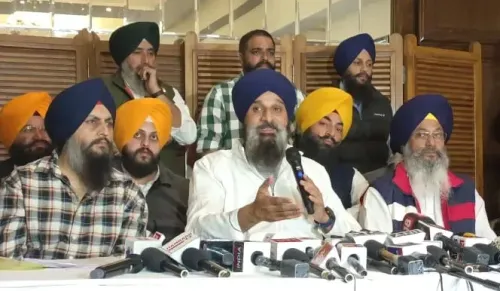
'Aakhri Sawal' trailer: Sanjay Dutt tackles RSS, Gandhi assassination and Babri Masjid
Synopsis
Sanjay Dutt's 'Aakhri Sawal' is not your average Bollywood release — its trailer directly confronts alleged RSS involvement in Gandhi's assassination, the Babri Masjid demolition, and the Emergency. Directed by a National Award winner and releasing in four languages on 15 May 2026, the film is already provoking one of Hindi cinema's most charged pre-release debates in years.
Key Takeaways
The trailer of 'Aakhri Sawal' starring Sanjay Dutt was unveiled on 8 May 2026 in Mumbai.
The film probes alleged RSS involvement in the assassination of Mahatma Gandhi , the Babri Masjid demolition , and the Emergency .
Directed by National Award-winning filmmaker Abhijeet Mohan Warang and co-produced by Sanjay Dutt and Nikhil Nanda .
The film is the first Hindi release with integrated Indian Sign Language (ISL) for hearing-impaired audiences.
Scheduled for cinema release on 15 May 2026 in Hindi, Telugu, Kannada, and Malayalam .
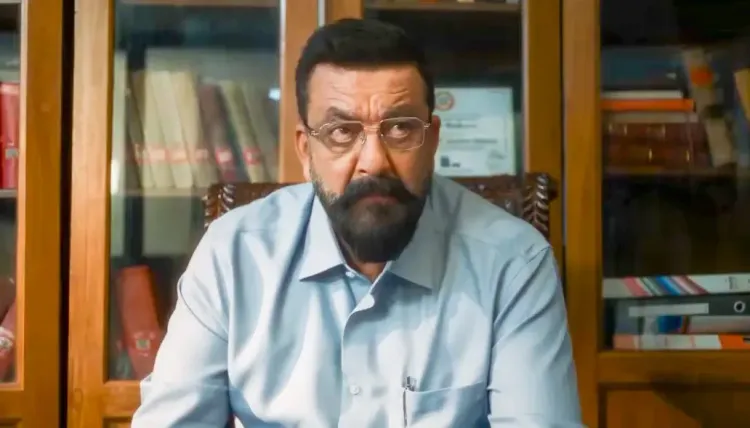
The trailer of Sanjay Dutt-fronted film 'Aakhri Sawal' was unveiled on Friday, 8 May 2026 in Mumbai, sparking immediate conversation for its unflinching engagement with some of India's most contested historical narratives. The trailer probes alleged conspiracies tied to the Rashtriya Swayamsevak Sangh (RSS), raising questions that the film's makers say have long gone unanswered.
What the Trailer Reveals
Sanjay Dutt leads the film, delivering what the trailer frames as hard-hitting dialogues in which his character responds to allegations levelled against the RSS. The footage touches upon three of modern India's most politically charged episodes: the alleged RSS involvement in the assassination of Mahatma Gandhi, the Babri Masjid demolition, and the Emergency. The tone is direct and confrontational, positioning the film as a courtroom-style debate rather than a conventional drama.
Cast and Creative Team
Alongside Dutt, 'Aakhri Sawal' stars Sameera Reddy, Namashi Chakraborty, Amit Sadh, Nitu Chandra, and Tridha Choudhury. The film is directed by National Award-winning filmmaker Abhijeet Mohan Warang and presented by Nikhil Nanda, who also produces alongside Sanjay Dutt. Co-producers include Puneet Nanda, Dr. Deepak Singh, Gaurav Dubey, and Ujjwal Anand.
A First for Inclusive Cinema
'Aakhri Sawal' is being promoted as the first Hindi film to release with integrated Indian Sign Language (ISL), making it accessible to audiences with hearing disabilities. The makers have also indicated efforts toward inclusive access for visually challenged viewers — a notable step for mainstream Hindi cinema.
Release and What to Expect
The film is scheduled to release in cinemas on 15 May 2026 across four languages: Hindi, Telugu, Kannada, and Malayalam. Given the subject matter — covering events that remain deeply divisive in Indian public discourse — the release is expected to generate significant debate well beyond multiplex audiences. This comes amid a broader trend of Hindi films engaging with politically sensitive historical material, a space that has drawn both critical acclaim and sharp controversy in recent years.
Frequently Asked Questions
What is 'Aakhri Sawal' about?
'Aakhri Sawal' is a Hindi film that examines alleged RSS involvement in the assassination of Mahatma Gandhi, the Babri Masjid demolition, and the Emergency. Starring Sanjay Dutt, the film is framed as a truth-seeking narrative rooted in India's contested political history.
When does 'Aakhri Sawal' release in cinemas?
'Aakhri Sawal' is set to release in cinemas on 15 May 2026 in Hindi, Telugu, Kannada, and Malayalam.
Who stars in and directs 'Aakhri Sawal'?
The film stars Sanjay Dutt, Sameera Reddy, Namashi Chakraborty, Amit Sadh, Nitu Chandra, and Tridha Choudhury. It is directed by National Award-winning filmmaker Abhijeet Mohan Warang.
What makes 'Aakhri Sawal' unique among Hindi films?
It is reportedly the first Hindi film to release with integrated Indian Sign Language (ISL), making it accessible to hearing-impaired audiences. The makers have also indicated efforts toward inclusive access for visually challenged viewers.
Who has produced 'Aakhri Sawal'?
The film is presented and produced by Nikhil Nanda and Sanjay Dutt, with co-producers Puneet Nanda, Dr. Deepak Singh, Gaurav Dubey, and Ujjwal Anand.