Adhikari orders Cooch Behar drive on Bangladeshi infiltrators
Synopsis
West Bengal CM Suvendu Adhikari publicly ordered Cooch Behar SP Manish Joshi to track illegal Bangladeshi Muslim infiltrators and send them back along the same entry routes, while pledging shelter to Hindu refugees. He also demanded a full stop to border smuggling once BSF fencing is complete, and a free hand against crimes targeting women.
Key Takeaways
West Bengal Chief Minister Suvendu Adhikari on Wednesday directed Cooch Behar SP Manish Joshi to identify illegal Bangladeshi Muslim infiltrators for deportation.
Adhikari said Hindus facing religious oppression are refugees who will be given shelter, not treated as infiltrators.
He asked police to send identified infiltrators back through the same route by which they entered West Bengal .
District police were told to coordinate with the BSF , complete barbed fencing, and stop smuggling, illegal madrasas, cannabis cultivation, fake currency and narcotics.
Adhikari announced a zero-tolerance line on crimes against women, saying police have a free hand.
He recalled an attack on his convoy in the region last year when he was Leader of the Opposition.
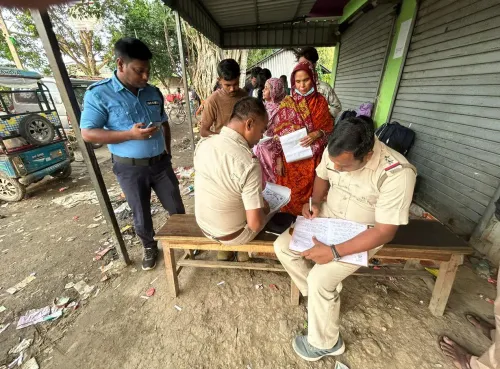
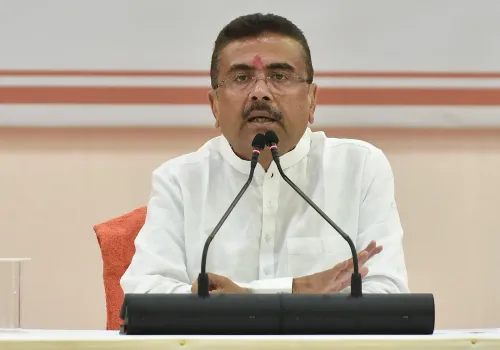
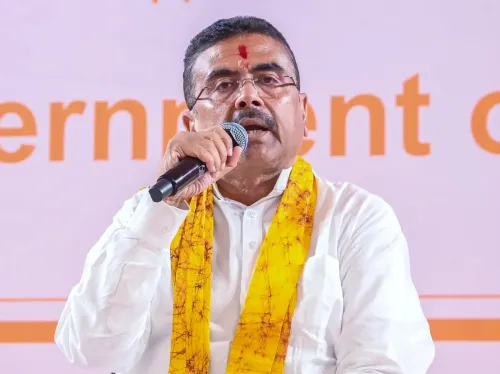
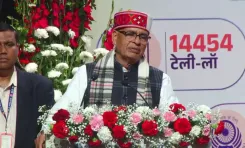
West Bengal Chief Minister Suvendu Adhikari on Wednesday directed Cooch Behar Superintendent of Police Manish Joshi to launch a comprehensive drive to identify illegal Bangladeshi Muslim infiltrators residing in the Indo-Bangladesh border district so that arrangements can be made to deport them. The instruction was delivered in Cooch Behar during Adhikari's visit to participate in the historic Rashmela festival, with the Chief Minister telling the district police chief to go all out in tracking those still staying in the border region.
What Adhikari told the district police
Addressing a gathering in the district, Adhikari said illegal Bangladeshi Muslim infiltrators have no place in the state and must return to their own country. He contrasted that category with Hindus who have arrived from other places after facing religious oppression, describing them as refugees who will be given shelter rather than treated as infiltrators.
“Illegal Bangladeshi Muslim infiltrators have no place in this state. They have to return to their own country. However, Hindus who have come from other places facing religious oppression are not infiltrators. They are refugees. The police superintendent should ensure that the illegal Bangladeshi Muslim infiltrators still staying in the district should be tracked and then sent back to their native land through the same route through which they came to West Bengal. However, the same thing is not applicable for Hindu refugees. We will shelter them,” Adhikari said.
By naming the Cooch Behar police superintendent in public, the Chief Minister placed a direct operational brief on the district police leadership. The identification drive, as framed, is meant to precede deportation along the routes of entry — a sequence that local officers will now have to convert into field action in a district that shares a long and densely inhabited frontier with Bangladesh.
BSF coordination, fencing and smuggling
Adhikari also instructed the district police to work in close coordination with the Border Security Force (BSF) to tighten border management and curb unlawful activities along the frontier. He linked the crackdown to the completion of physical barriers on land already made available to the force.
“The BSF has been given the necessary land. Once the work of erecting barbed fencing is completed, all kinds of cross-border smuggling will have to be stopped completely. Illegal madrasas, cannabis cultivation, fake currency imports and narcotics smuggling will have to be stopped at the border areas,” the Chief Minister asserted.
This comes amid a long-running national effort to seal unfenced and riverine stretches of the India-Bangladesh boundary, where smuggling networks and illegal crossing have repeatedly tested both the BSF and state police. Notably, Adhikari grouped illegal madrasas with cannabis cultivation, counterfeit currency and narcotics, treating them as a single enforcement cluster for the border belt rather than as separate civic or criminal files.
Zero tolerance on crimes against women
Simultaneously, Adhikari directed law-enforcement officials to enforce a strict zero-tolerance policy against crimes targeting women, stating that the police have been granted a free hand to deal firmly with offenders.
“Even if someone raises his finger towards any mother and sister, that finger will be broken. I have given the police a free hand in such matters,” he warned.
The warning was issued in the same speech as the infiltration order, pairing border security with public order. How stations in Cooch Behar interpret a free hand will matter: women's safety is a genuine local concern, but enforcement still has to remain inside criminal procedure if the policy is to survive legal scrutiny.
Political backdrop and why Cooch Behar matters
During his address, the Chief Minister recalled an attack on his convoy in the region last year, during his tenure as Leader of the Opposition in the West Bengal Assembly, remarking that he had endured a great deal in the past. The recollection underlines how politically contested the district has been, and why a public direction to the superintendent of police carries weight beyond a routine administrative note.
Cooch Behar's demography, riverine border and festival calendar have for years placed it at the centre of debates on infiltration, refuge and citizenship in eastern India. Adhikari's distinction — deportation for those labelled illegal Bangladeshi Muslim infiltrators, shelter for Hindu refugees — will decide who is pulled into the identification net. Similar arguments have shaped politics along the Bangladesh frontier for decades, from foreigners proceedings in Assam to repeated rows over detection and return in Bengal's border districts.
What happens next
The next move lies with Cooch Behar police and the BSF: identifying those alleged to have entered illegally, coordinating with Border Security Force units, and translating the fencing-and-smuggling brief into measurable stops on cannabis, fake currency and narcotics. District officials have not yet spelled out screening criteria, timelines, or whether cases will move through formal foreigners proceedings or another route.
Until those procedures are notified, Wednesday's Rashmela-stage brief remains a political and operational signal whose test will be documentation, due process and a visible drop in cross-border crime — not the applause in the festival ground. SP Manish Joshi now has a public mandate from the Chief Minister to show results on both infiltration and the frontier economy of smuggling.
Point of View
However, imports a communal filter into what should be a nationality-and-documents test. The phrase ‘sent back through the same route they came’ sits uneasily with formal foreigners proceedings, and a free hand for police on crimes against women will be judged by whether it produces convictions or excess. Completing BSF fencing and choking fake currency, narcotics and cannabis networks is the part of this brief that will actually show up in enforcement data — and that is where Cooch Behar should be measured.
NationPress
25 Nov 2026
Frequently Asked Questions
What did Suvendu Adhikari direct Cooch Behar police to do?
Adhikari directed Cooch Behar Superintendent of Police Manish Joshi to identify illegal Bangladeshi Muslim infiltrators in the border district and arrange to send them back to their native country. He issued the instruction on Wednesday while attending the Rashmela festival in Cooch Behar.
What distinction did Adhikari make between infiltrators and refugees?
He said illegal Bangladeshi Muslim infiltrators have no place in West Bengal and must return, while Hindus who arrived facing religious oppression are refugees, not infiltrators, and will be given shelter. Deportation through the same entry route, he said, does not apply to Hindu refugees.
What did Adhikari say about the BSF and border fencing?
He said the BSF has been given the necessary land and that once barbed fencing is completed, all cross-border smuggling must stop completely. He also told district police to coordinate with the BSF and halt illegal madrasas, cannabis cultivation, fake currency imports and narcotics smuggling in border areas.
What orders did Adhikari give on crimes against women?
Adhikari directed a strict zero-tolerance policy against crimes targeting women and said police have been given a free hand. He warned that even raising a finger towards any mother and sister would be met with a broken finger.
Why was Suvendu Adhikari in Cooch Behar?
He was in Cooch Behar to participate in the historic Rashmela festival, where he addressed a gathering and issued the police directions. During the same address he recalled an attack on his convoy in the region last year when he was Leader of the Opposition.