Has the Ahmedabad Crime Branch Taken Action Against 120 Online Entities for Prostitution and Obscenity?
Synopsis
In a significant crackdown, the Ahmedabad Crime Branch has targeted 120 online entities for solicitation of prostitution and distribution of obscene content. This action aims to protect women and combat digital exploitation. Learn how the investigation uncovered a vast network of illegal activities and the misuse of technology.
Key Takeaways
120 online entities have been registered for unlawful activities.
Action taken after extensive digital surveillance .
Investigation revealed a network exploiting AI tools .
Victims were lured into making fraudulent payments .
Legal actions reflect serious concerns over online exploitation .
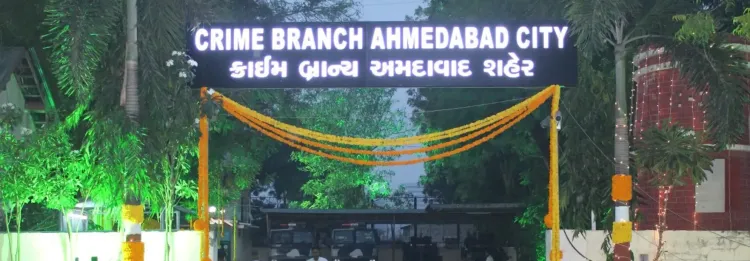
Ahmedabad, Feb 1 (NationPress) The Ahmedabad Crime Branch has filed a complaint against 120 online entities for their involvement in soliciting prostitution, disseminating obscene material, and deceiving the public via social media and websites, as announced by officials on Sunday.
According to an official statement, the Crime Branch undertook this action following extensive digital surveillance and monitoring of social media, aiming to combat online prostitution and the digital exploitation of women.
The accused entities include various Instagram profiles, Facebook pages, and numerous websites allegedly used to facilitate illegal escort service operations and mislead the public.
Investigators reported that a specialized technical analysis unveiled a coordinated network of social media accounts and web links operating within Ahmedabad. These accounts reportedly showcased obscene images and videos of women to attract clients.
Officials further revealed that the investigation had exposed the misuse of artificial intelligence tools to create and distribute obscene content masquerading as escort services, a tactic increasingly utilized to avoid detection and entice potential victims.
The Crime Branch noted that these profiles advertised specific hourly fees and overnight charges for services in Ahmedabad, sharing mobile numbers and UPI IDs to facilitate illegal transactions.
Initial investigations suggest that victims were lured into making online payments via UPI, only to be defrauded, leading to financial losses. “These operations are not only unlawful but also severely compromise the dignity of women by portraying them in a degrading manner on public platforms,” the press release emphasized.
To protect the victims' privacy and secure digital evidence, the FIR has been categorized as “sensitive”.
The case has been filed under multiple legal provisions, including sections of the Bharatiya Nyaya Sanhita concerning the violation of women’s dignity, public obscenity, and fraud, along with relevant sections of the Immoral Traffic (Prevention) Act, 1956, and the Information Technology Act, 2000.
A senior Crime Branch official stated that this case reflects broader concerns regarding the misuse of emerging technologies.
“We have seen a significant increase in complaints about AI-generated explicit materials being exploited online lately. Similar issues have emerged on other platforms, underscoring the necessity for enhanced monitoring and enforcement,” the official remarked.
The Crime Branch has urged the public to stay vigilant and refrain from engaging with unverified social media accounts or sending money to unknown UPI IDs.
Further investigations are ongoing to identify and apprehend those behind the alleged racket, officials confirmed.
Point of View
It is my duty to emphasize that the actions taken by the Ahmedabad Crime Branch reflect a crucial step towards addressing the serious issues of online exploitation and the misuse of technology. The integrity and dignity of individuals must always be upheld, and measures like these are essential in our fight against such rampant illicit activities.
NationPress
19 Sept 2026
Frequently Asked Questions
What prompted the Ahmedabad Crime Branch to act?
The action was initiated after continuous digital surveillance and social media monitoring aimed at combating online prostitution and protecting women from exploitation.
What types of platforms were involved in the illegal activities?
The illegal activities were conducted through various social media platforms, including Instagram, Facebook, and numerous websites.
What legal provisions are the accused being charged under?
The case has been filed under multiple legal provisions, including sections of the Bharatiya Nyaya Sanhita and the Immoral Traffic (Prevention) Act, 1956.
How are victims being deceived in these scams?
Victims are often tricked into making online payments via UPI, only to find themselves defrauded and suffering financial losses.
What measures are being taken to protect victims?
The FIR has been classified as 'sensitive' to safeguard the privacy of victims and prevent tampering with digital evidence.