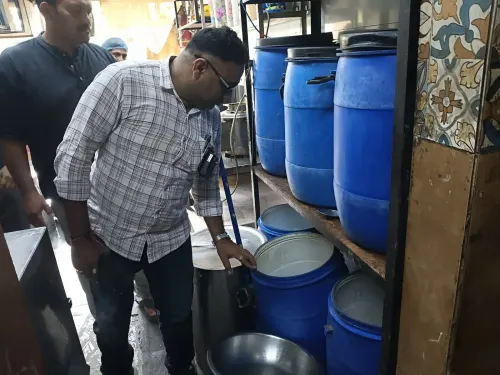
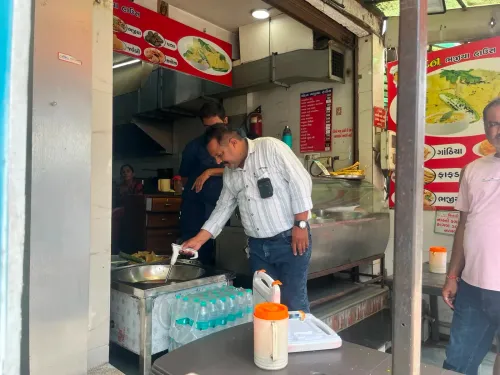
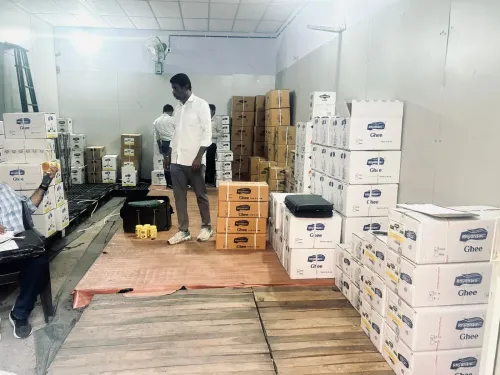
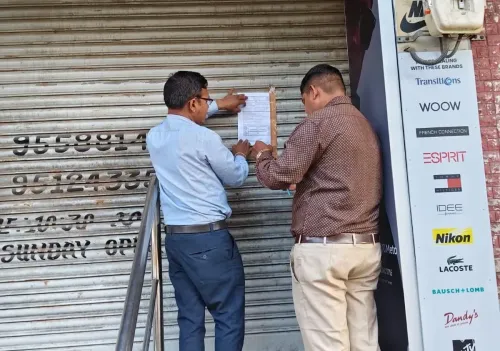
Ahmedabad food crackdown: 9,334 kg stock seized, 22 samples fail quality test
Synopsis
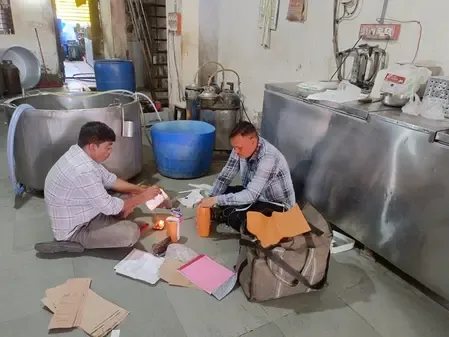
Ahmedabad's civic food department ran its most visible enforcement sweep of the year in September — seizing over 9,300 kg of food stock, failing 22 samples from branded ghee to reused frying oil, and shutting 28 businesses. The sweep exposes how deep food safety gaps run across a major Indian city, from street food stalls to warehoused packaged goods.
Key Takeaways
9,334 kg of food stock worth ₹21.64 lakh was detained by the AMC Food Department in September 2026 .
22 out of 612 food samples collected were declared substandard following laboratory analysis.
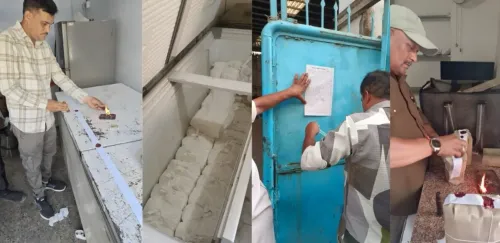
28 food establishments were sealed or closed; 404 notices issued; penalties of ₹12.79 lakh recovered.
Substandard items included branded cow ghee , reused cooking oil , paneer , sauces , and namkeen with prohibited synthetic colour.
1,863 kg/litres of unhygienic food was destroyed during the enforcement drive.
The AMC confirmed inspections will continue and that legal action has been initiated against non-compliant operators.
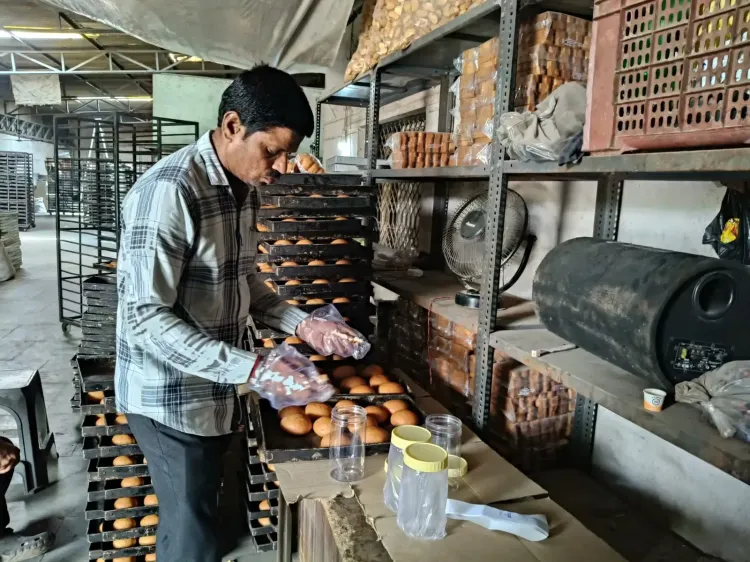
The Ahmedabad Municipal Corporation (AMC)'s Food Department prohibited the sale of 9,334 kg of food stock worth ₹21.64 lakh and declared 22 food samples substandard following citywide inspections conducted throughout September 2026. The enforcement drive, carried out under the Food Safety and Standards Act, 2006, targeted hygiene practices, storage standards, labelling compliance, and valid FSSAI licences across food businesses in Ahmedabad.
Scale of the Enforcement Drive
Officials collected a total of 612 food samples during the month-long campaign. Of these, 22 were subsequently declared substandard after laboratory analysis. The department also sealed or closed 28 food business establishments, recovered penalties worth ₹12.79 lakh, and issued 404 notices to food operators across the city. Additionally, 1,863 kg/litres of unhygienic food was destroyed during the drive.
Products That Failed Quality Standards
The substandard products spanned a wide range of everyday food items, including palmolein oil, ginger-garlic paste, reused cooking oil, sweet chutney, red gravy, garlic powder, veg puff, sambhar, medium-fat paneer, fruit squash, soya sauce, and chilli sauce.
Several branded ghee products also failed prescribed standards, including Desi Cow Ghee (Gopishri), Pure Cow Ghee (Shri Amrut), Premium Cow Ghee (KT Krishna), Pure Cow Ghee (Khusali), and Desi Cow Ghee (Prasang). Low-fat paneer samples from multiple establishments also did not meet required benchmarks.
Key Violations Detected
Inspectors flagged several specific violations during the campaign. At Rajasthan Dalwada Centre in Isanpur, the total polar compounds (TPC) level in burnt cooking oil was recorded at 32.1 — a marker of dangerously degraded oil used for frying. In Vejalpur, prohibited synthetic food colour was detected in namkeen at a food business. Another establishment was found selling an expired food product.
Several meat and chicken outlets were sealed following the detection of unhygienic conditions and non-compliance with Schedule 4 requirements under food safety regulations. A warehouse was also penalised for operating without the mandatory food safety licence.
Areas Covered and Establishments Sealed
The enforcement action covered food businesses across Vatva, Vejalpur, Chandlodia, Navrangpura, Bapunagar, Gota, Isanpur, Ranip, Juhapura, Dudheshwar, Narol, and other parts of the city. Establishments were shut for reasons including absence of a valid food safety licence, unhygienic operating conditions, and detected violations of food safety norms.
In one positive outcome, a consignment of Desi Cow Ghee (Ramsons) — earlier detained from Adarsh Trading Company in Madhupura — was released after laboratory analysis confirmed that the sample conformed to prescribed standards.
What the AMC Has Said
'Where samples were found not to conform to prescribed standards, further legal action was initiated in accordance with the law,' officials said. The department has directed all food business operators to maintain hygiene, use appropriate-quality raw materials, store food correctly, prevent contamination, and comply fully with conditions attached to their FSSAI licences. Officials confirmed that inspections and sampling would continue in the coming days.
Point of View
Nearly two tonnes destroyed, and a quarter of sampled ghee products failing — points to a systemic quality gap in Ahmedabad's food supply chain, not isolated rogue operators. The presence of branded packaged ghee among the failures is particularly telling: consumers typically treat branded products as safer than loose goods, yet the data challenges that assumption. The AMC's action is commendable, but one month of sampling across a city of eight million is a fraction of what robust continuous surveillance demands. Whether this drive translates into lasting compliance or merely a periodic headline blitz will depend on whether the 404 notices lead to prosecutions and whether repeat offenders face escalating consequences rather than just fines.
NationPress
3 Oct 2026
Frequently Asked Questions
What action did the AMC Food Department take in Ahmedabad in September 2026?
The Ahmedabad Municipal Corporation's Food Department prohibited the sale of 9,334 kg of food stock worth ₹21.64 lakh, declared 22 food samples substandard, sealed or closed 28 establishments, and issued 404 notices under the Food Safety and Standards Act, 2006. Penalties of ₹12.79 lakh were also recovered during the month.
Which food products were found substandard in Ahmedabad's inspection?
Substandard products included palmolein oil, ginger-garlic paste, reused cooking oil, sweet chutney, sambhar, medium-fat paneer, fruit squash, soya sauce, chilli sauce, and garlic powder. Several branded cow ghee products — including Gopishri, Shri Amrut, KT Krishna, Khusali, and Prasang — also failed laboratory standards.
Why were food establishments sealed in Ahmedabad?
Establishments were sealed primarily for operating without a valid FSSAI food safety licence, functioning under unhygienic conditions, and for specific violations such as use of expired ingredients, prohibited synthetic food colour in namkeen, and dangerously high total polar compounds (TPC) levels in reused frying oil.
What is a TPC level and why was it flagged at Rajasthan Dalwada Centre?
Total Polar Compounds (TPC) measure the degradation of cooking oil — higher values indicate oil has been reused to a point where it poses a health risk. At Rajasthan Dalwada Centre in Isanpur, the TPC level in burnt oil was recorded at 32.1, exceeding safe consumption thresholds under FSSAI standards.
Will AMC food inspections continue in Ahmedabad?
Yes, the AMC Food Department confirmed that inspections and sampling of food businesses will continue in the coming days. Officials have also warned all food operators that compliance with prescribed food safety standards is mandatory and that legal action will be taken against violators.