AISA protest in Patna turns violent; police fire tear gas, water cannons
Synopsis
A student march in Patna turned into a flashpoint on 22 July when AISA demonstrators clashed with police near JP Golambar, drawing tear gas and water cannons. With demands ranging from a minister's resignation to a fast-track paper-leak probe, the protest signals deepening student anger over examination integrity and education privatisation — a pressure point that has been building across India for months.
Key Takeaways
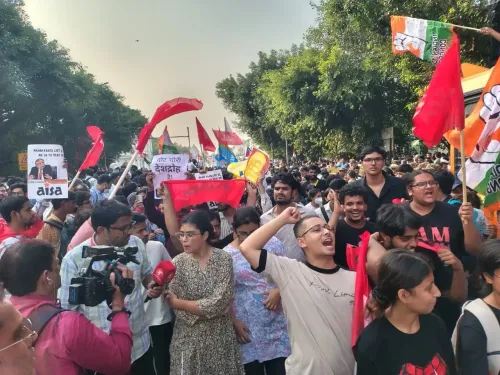
AISA organised a protest march in Patna on 22 July against paper leaks, corruption, and privatisation in education.
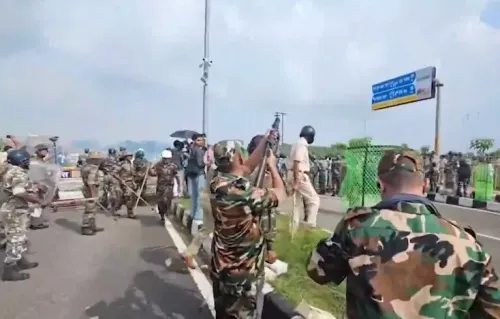
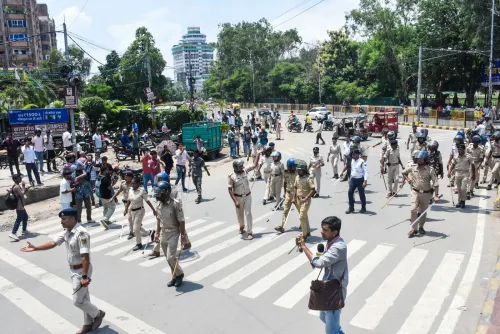
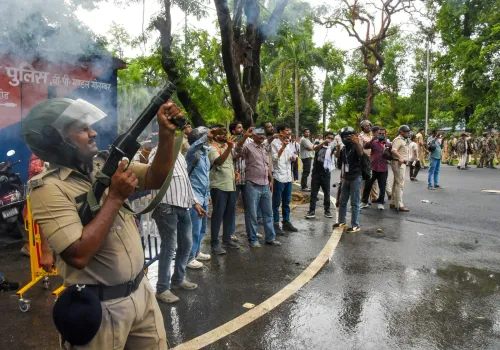
Police used tear gas shells and water cannons after some protesters allegedly pelted stones near JP Golambar .
Thousands of students, youth, and workers participated, marching from Gate No.
10, Gandhi Maidan towards Raj Bhavan .
Protesters demanded the resignation of Union Education Minister Dharmendra Pradhan and Bihar Education Minister Mithilesh Tiwari .
Additional demands included a fast-track paper-leak probe, rollback of fee hikes, and Non-NET Fellowships for PhD scholars in Bihar.
No official statement on arrests or injuries was released immediately after the incident.
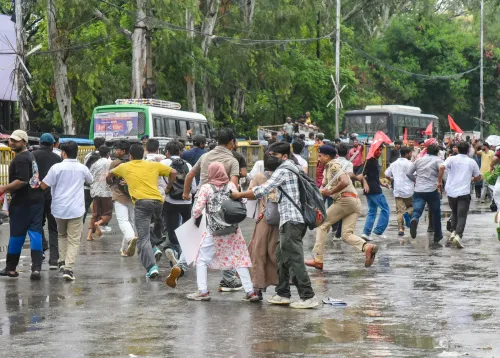
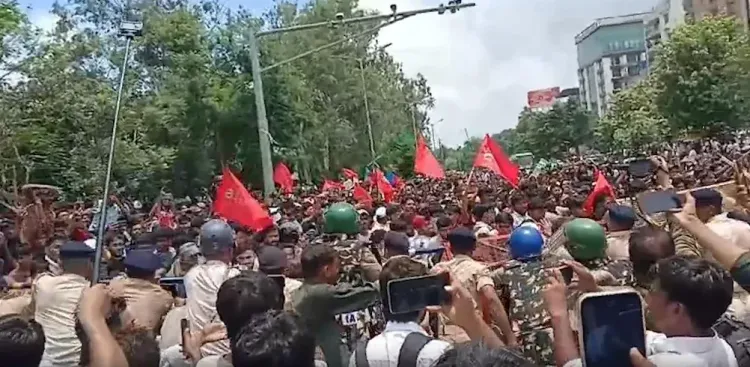
A protest march organised by the All India Students' Association (AISA) turned violent in Patna on Wednesday, 22 July, after demonstrators clashed with police while attempting to advance towards Raj Bhavan. Police deployed tear gas shells and water cannons to disperse the crowd after some protesters allegedly pelted stones at security personnel. No official statement on arrests or injuries had been issued immediately following the incident.
How the Confrontation Unfolded
Thousands of students, youth, and workers gathered at Gate No. 10 of Gandhi Maidan before beginning the march towards Raj Bhavan. Police erected barricades near JP Golambar, halting the procession. As demonstrators attempted to push past the barricades, a heated standoff developed between protesters and security personnel, which escalated when some in the crowd allegedly threw stones at the police. Authorities responded with tear gas and water cannons to restore order. A heavy police deployment remained in the area to prevent further escalation.
What AISA Was Protesting
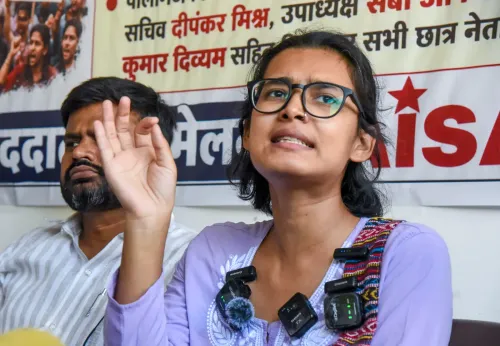
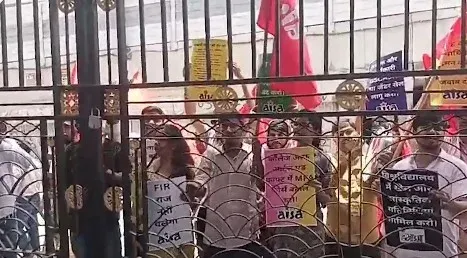
AISA members stated the demonstration was called to highlight what they described as the deteriorating state of public education and recurring irregularities in examination systems. The protesters put forward a broad list of demands, including the resignation of Union Education Minister Dharmendra Pradhan and Bihar Education Minister Mithilesh Tiwari, a fast-track probe into paper leak cases, and action against alleged corruption in examination systems.
Additional demands included the withdrawal of the 7.5 CGPA eligibility criterion, rollback of fee hikes, introduction of Non-NET Fellowships for PhD scholars in Bihar universities, and protection of the autonomy of higher educational institutions, including Patna University. Protesters alleged that repeated paper leaks, rising educational costs, and privatisation have adversely affected students across the country.
Police Response and Ground Situation
Authorities said adequate security arrangements had been put in place ahead of the march and that necessary measures were taken to prevent the situation from deteriorating further. The confrontation was eventually brought under control, though tension reportedly persisted in the area for some time after the dispersal. Law enforcement personnel continued to maintain a presence in the vicinity to guard against any fresh flare-up.
Broader Context
This comes amid a series of student-led agitations across India over alleged examination irregularities and paper leaks, which have intensified scrutiny on education administration at both the central and state levels. Notably, demands for the resignation of the Union Education Minister have featured in multiple protests in recent months, reflecting a pattern of escalating student discontent over systemic failures in competitive examination conduct. Authorities are expected to review the events and take further action based on their findings.
Point of View
AISA is framing this as a systemic failure, not a one-off scandal. The Bihar government's response — barricades and water cannons rather than dialogue — risks hardening that narrative. With no official word on injuries or arrests, the information vacuum itself becomes a political liability.
NationPress
21 Oct 2026
Frequently Asked Questions
Why did the AISA protest in Patna turn violent?
The protest turned violent on 22 July after some demonstrators allegedly threw stones at police who had barricaded the march near JP Golambar. Police responded with tear gas shells and water cannons to disperse the crowd.
What were the key demands of the AISA protesters in Patna?
Protesters demanded the resignation of Union Education Minister Dharmendra Pradhan and Bihar Education Minister Mithilesh Tiwari, a fast-track probe into paper leak cases, withdrawal of the 7.5 CGPA eligibility criterion, rollback of fee hikes, Non-NET Fellowships for PhD scholars in Bihar, and protection of institutional autonomy including that of Patna University.
Were any arrests or injuries reported in the Patna AISA protest?
No official statement regarding arrests or injuries had been released immediately after the incident, according to available information. Authorities were expected to review the events and announce further action.
Where exactly did the clashes take place in Patna?
The confrontation occurred near JP Golambar, where police had erected barricades to stop the march from proceeding towards Raj Bhavan. The protest had begun at Gate No. 10 of Gandhi Maidan.
What is AISA and what is it protesting against?
The All India Students' Association (AISA) is a national student organisation. In this protest, it was demonstrating against alleged paper leaks, corruption in examination systems, rising educational costs, and what it described as increasing privatisation of public education in India.