Rohini Acharya condemns Patna police action on AISA student protest
Synopsis
RJD leader Rohini Acharya's public rebuke of Patna police — calling cane charges and tear gas against students 'tragic' and 'condemnable' — puts a high-profile political face on a nationwide student movement over examination paper leaks. With BJP-Congress clashes also erupting in the city, what began as a student march has quickly become a full-spectrum political flashpoint.
Key Takeaways
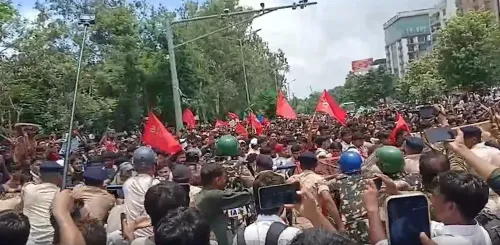
AISA -led student protesters marched from Gandhi Maidan to Raj Bhavan in Patna on 22 July , demanding action over alleged examination paper leaks and the resignation of Union Education Minister Dharmendra Pradhan .
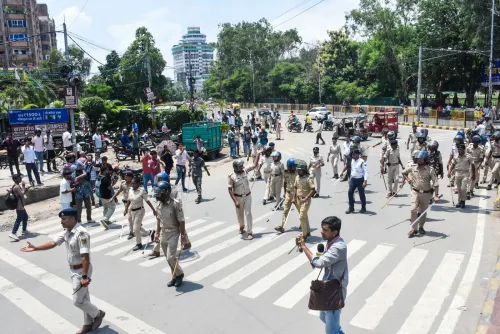
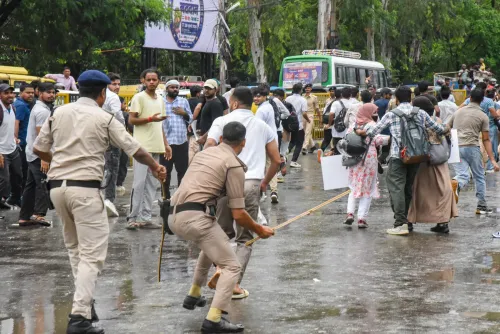
Police used barricades, water cannons, tear gas, and a cane charge after protesters refused to disperse and attempted to breach barricades.
RJD leader Rohini Acharya called the police action 'tragic' and 'condemnable' in posts on X , alleging it reflected a 'dictatorial mindset'.
She demanded the Union government initiate dialogue with students and review the conduct of police and administrative officials involved.
Clashes between BJP and Congress workers were also reported in the city; heavy security was deployed to restore order.
The Patna protest is part of a wider, nationwide student movement over alleged examination irregularities and demands for systemic reforms.
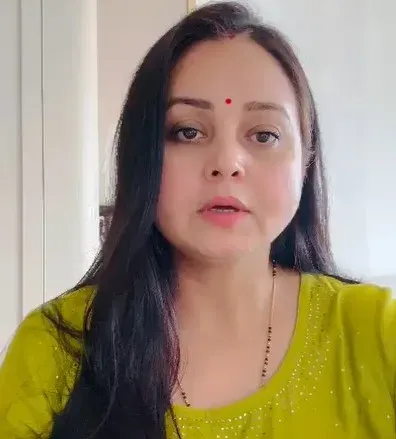
Rashtriya Janata Dal (RJD) leader Rohini Acharya on Wednesday, 22 July sharply criticised the Patna police for using cane charges, tear gas, and water cannons against student protesters who had marched to demand accountability over alleged examination paper leaks and the resignation of Union Education Minister Dharmendra Pradhan. Acharya, the daughter of RJD President Lalu Prasad Yadav, called the police response 'tragic' and 'condemnable', and urged the Union government to open dialogue with students rather than resort to force.
What Happened on the Streets of Patna
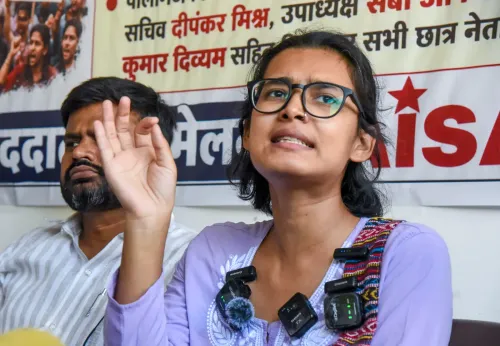
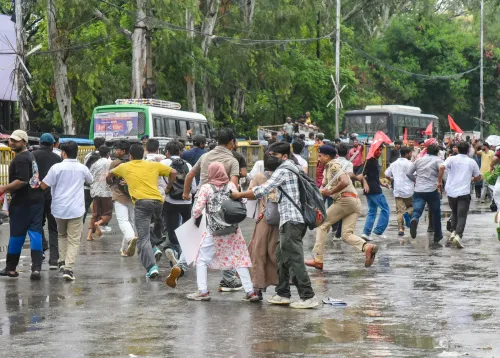
Student protesters, led by the All India Students Association (AISA), marched from Gandhi Maidan towards Raj Bhavan, raising slogans against the Union government over alleged irregularities in public examinations. Police deployed barricades, water cannons, and tear gas shells to halt the procession. When protesters refused to disperse and the situation deteriorated, authorities carried out a cane charge to clear the crowd.
Tensions continued later in the day, with clashes reported at multiple locations across the city. Separate confrontations between Bharatiya Janata Party (BJP) and Congress workers were also reported, prompting authorities to intervene. Heavy security was deployed across key locations in Patna to restore and maintain order.
What Rohini Acharya Said
In a post on social media platform X, Acharya described the police action as reflecting a 'dictatorial mindset', alleging that the Union government chose to suppress student dissent through force rather than engage with their legitimate concerns. She asserted that students and young people hold a constitutional right to peaceful protest in a democracy.
In a second post, Acharya broadened her attack on the National Democratic Alliance (NDA) government at the Centre, arguing that no government can permanently silence public dissent and that democratic accountability would ultimately prevail. She called on the Union government to take cognisance of the incident and examine the conduct of the police and administrative officials involved.
The Police Version
Authorities maintained that force was used only after protesters attempted to breach barricades and the law-and-order situation deteriorated. Student organisations, however, alleged that the police response was disproportionate and have continued to press their demands for examination reforms and official accountability.
Wider Context: A National Student Movement
The Patna demonstrations were part of a broader, nationwide wave of protests by student organisations demanding action over alleged paper leaks, systemic examination reforms, and the resignation of the Union Education Minister. Multiple opposition parties have aligned with these demands, amplifying political pressure on the Centre. This is not the first time student marches over examination irregularities have ended in confrontation with police this year, underscoring the depth of grievance within India's student community.
What Comes Next
With opposition leaders now formally on record demanding dialogue, and student groups showing no signs of standing down, pressure on both the Bihar administration and the Centre is likely to intensify. Whether the Union government engages with protesting students or maintains its current posture will shape the trajectory of this movement in the days ahead.
Point of View
Emotive line of attack at a moment when student anger over examination paper leaks has national resonance. But the louder question is one the opposition has so far sidestepped: Bihar's own administration, not just the Centre, bears direct responsibility for law-and-order in Patna. The student movement's demands — examination reform and ministerial accountability — are substantive, yet the political response risks reducing them to a BJP-versus-opposition frame. Unless either side engages with the structural failures in India's examination system, the protests will recur, and the next crackdown will generate the same cycle of condemnation without consequence.
NationPress
21 Oct 2026
Frequently Asked Questions
Why did students protest in Patna on 22 July?
Students, led by the All India Students Association (AISA), marched in Patna on 22 July to demand action over alleged examination paper leaks and the resignation of Union Education Minister Dharmendra Pradhan. The demonstration was part of a broader, nationwide student movement over examination irregularities.
What action did Patna police take against the protesters?
Police deployed barricades, water cannons, and tear gas shells to halt the march from Gandhi Maidan towards Raj Bhavan. When protesters refused to disperse and attempted to breach barricades, authorities carried out a cane charge to clear the crowd.
What did Rohini Acharya say about the police action?
RJD leader Rohini Acharya described the use of cane charges, tear gas, and water cannons against students as 'tragic' and 'condemnable' in posts on X. She alleged the Union government was suppressing dissent with a 'dictatorial mindset' and called for dialogue with the students instead.
Who is Rohini Acharya?
Rohini Acharya is a leader of the Rashtriya Janata Dal (RJD) and the daughter of RJD President Lalu Prasad Yadav. She is a prominent political voice within the party and has been vocal on issues of governance and civil rights.
What is the current status of the protests in Patna?
Tensions continued into the evening of 22 July, with clashes reported at multiple locations across Patna, including separate confrontations between BJP and Congress workers. Authorities deployed heavy security across key locations to restore order, while student organisations maintained their demands for examination reforms and accountability.