Will Amaravati Transform into the Most Livable City in Three Years?
Synopsis
Andhra Pradesh's Chief Minister N Chandrababu Naidu has ambitious plans for Amaravati, envisioning it as the world's most livable city in just three years. This transformative vision includes advancements in technology, infrastructure, and welfare initiatives, promising to reshape the region's future and set a global standard for urban living.
Key Takeaways
Amaravati is projected to become a leading global city in three years.
Investment in technology and infrastructure is a priority.
Support for farmers has been significantly increased.
Green energy initiatives are being actively pursued.
Access to drinking water is a key focus of government initiatives.
Amaravati, Feb 9 (NationPress) The Chief Minister of Andhra Pradesh, N Chandrababu Naidu, announced on Monday that the state capital Amaravati is set to develop and become the most livable city globally within the next three years.
He asserted that a city of such exceptional quality is unlikely to emerge anywhere else in the world.
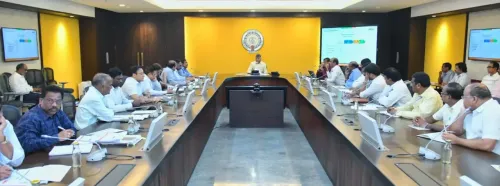
During a meeting with ministers and secretaries at the Secretariat, he mentioned that the development of Amaravati has been accelerated.
He criticized the previous YSR Congress government for labeling Amaravati as a graveyard and a desert while disrespecting the farmers who contributed their land for the capital's construction.
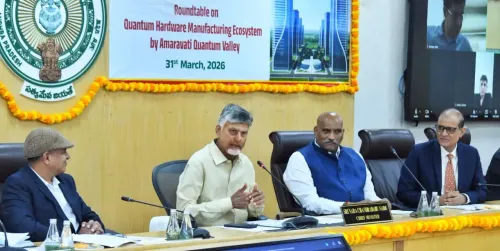
The Chief Minister highlighted that the foundation stone for the Quantum Valley in Amaravati was laid, expressing optimism that quantum computing advancements would be realized there within two years.
He observed that Google and other tech giants are establishing data centers in Visakhapatnam, boasting a capacity of 5 Gigawatts.
Naidu urged officials to cultivate a spirit of teamwork and implement best practices to yield positive outcomes and benefit society. He emphasized the necessity of adopting technology and revising outdated legislation. The Chief Minister mentioned that the Government of India is also in the process of reassessing old laws to eliminate unnecessary clauses that hinder societal progress. He stated that Andhra Pradesh should set an example in legislative review and reform.
Pointing out the achievements of the coalition government over the past 19 months, he emphasized the balance achieved between welfare and development.
Furthermore, he disclosed that the Polavaram project is nearing completion and is expected to be operational before the Godavari Pushkaram in 2027.
Chandrababu Naidu also indicated that the Visakhapatnam Steel Plant is back on track, generating a profit of Rs 54 crore.
The Chief Minister revealed that the state government intervened in the market, spending Rs 1,100 crore to ensure farmers received better prices for their crops. Additionally, Rs 10,000 crore was credited to farmers' bank accounts within 48 hours of paddy procurement, alongside an investment of Rs 24,000 crore in irrigation development.
He mentioned that the distribution of pattadar passbooks featuring QR codes began, ensuring they are tamper-proof.
Highlighting the significance of green energy initiatives, Naidu announced the launch of a green ammonia project in Kakinada. With the introduction of reforms, the government is set to implement 'true-down' charges in electricity tariffs.
He also stated that new roads will be constructed with an investment of Rs 3,000 crore, aiming for a garbage-free state by March.
Under the Jal Jeevan Mission, the government plans to ensure drinking water access for all households at a cost of Rs 25,000 crore.
Naidu asserted that the Sanjeevani project, which introduced a universal health scheme, will revolutionize the health sector.
Deputy Chief Minister K Pawan Kalyan emphasized the necessity for officials to perform effectively at the ground level and address gaps in the delivery of government services.
Point of View
The ambitious declaration by Andhra Pradesh Chief Minister N Chandrababu Naidu regarding Amaravati's development illustrates a significant commitment to urban transformation. The focus on technology and sustainability aligns with global trends, positioning Andhra Pradesh as a potential leader in modern urban planning and governance.
NationPress
28 Sept 2026
Frequently Asked Questions
What is the timeline for Amaravati's development?
The Chief Minister has stated that Amaravati is expected to become the most livable city in the next three years.
What technology initiatives are planned for Amaravati?
The establishment of a Quantum Valley is planned, along with data centers set up by major tech companies like Google.
How is the government supporting farmers?
The government has intervened in the market to provide better prices for agricultural produce and has credited significant amounts to farmers' accounts quickly.
What green energy projects are underway?
A green ammonia project has been launched in Kakinada, and reforms are being introduced to adjust electricity tariffs.
What are the goals for the Jal Jeevan Mission?
The mission aims to ensure drinking water access for all households at a projected cost of Rs 25,000 crore.