Amarnath Yatra 2026: J&K L-G Manoj Sinha chairs security review ahead of July 3 start

Synopsis
With the Amarnath Yatra just weeks away, J&K L-G Manoj Sinha has convened a high-level security review at Lok Bhavan, Jammu, signalling the administration's intent to leave nothing to chance for the 52-day pilgrimage beginning 3 July 2026 — especially given the region's persistent security sensitivities.
Key Takeaways
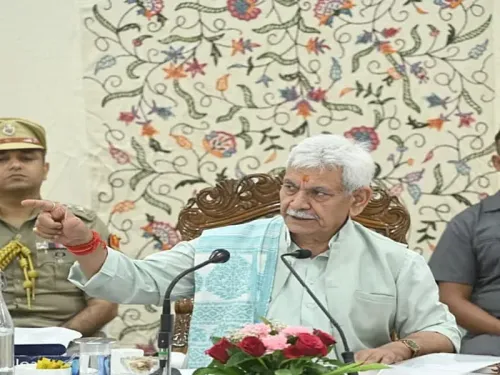
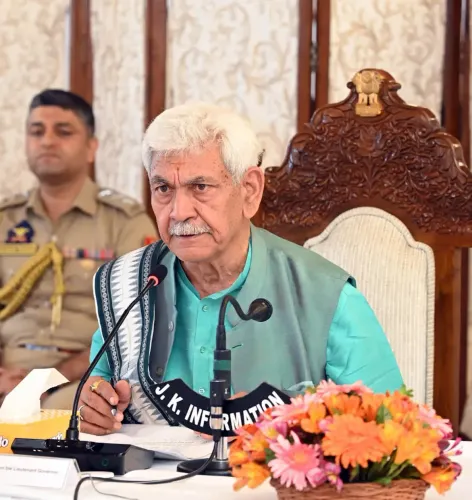
J&K L-G Manoj Sinha chaired a security review meeting at Lok Bhavan, Jammu on 29 April 2026 .
Amarnath Yatra 2026 begins on 3 July and concludes on 28 August — a 52-day pilgrimage.
DGP Nalin Prabhat and other senior officials participated; focus was on law and order and coordinated security.
Daily pilgrim count capped at 10,000 , excluding helicopter travellers; registration opened 14 April .
The administration's anti-drug drive was also reviewed at the meeting.
The cave shrine is located at 3,888 metres in Anantnag district , accessible via Pahalgam and Baltal routes.
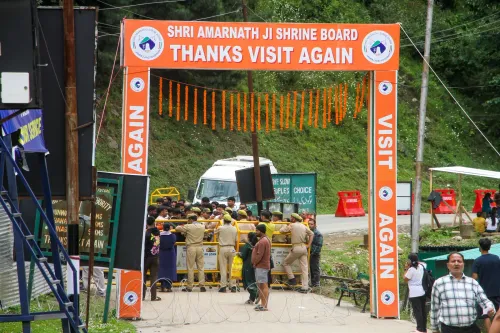
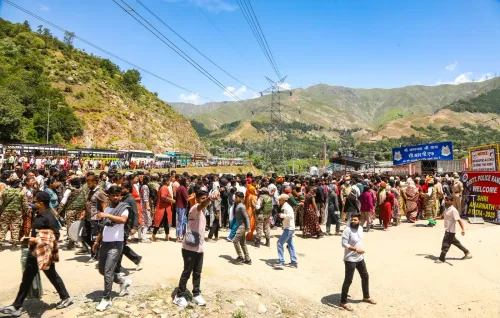
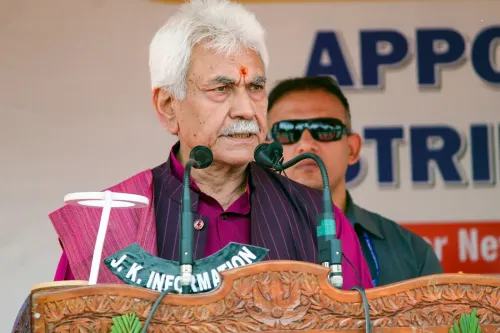
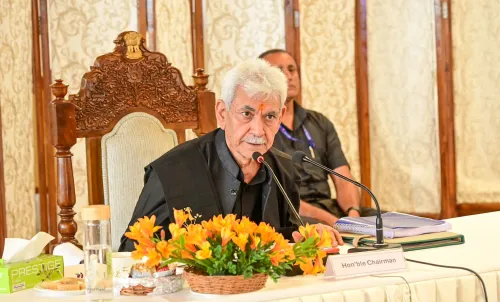
Jammu and Kashmir Lieutenant Governor Manoj Sinha on Wednesday, 29 April chaired a high-level security review meeting at Lok Bhavan in Jammu to assess preparedness for the annual Amarnath Yatra, which is scheduled to begin on 3 July 2026. The 52-day pilgrimage will conclude on 28 August 2026, drawing thousands of devotees to the Himalayan cave shrine in South Kashmir's Anantnag district.
Key Officials and Focus Areas
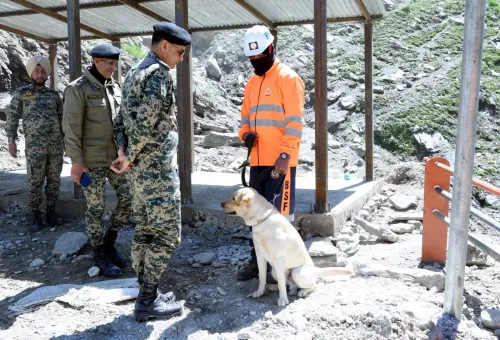
Senior police and administrative officials, including Director General of Police (DGP) Nalin Prabhat, attended the meeting. Discussions centred on law and order management, coordinated security arrangements, and strengthening preventive measures across vulnerable areas. The Lieutenant Governor is understood to have stressed the need for seamless coordination among security agencies and timely response mechanisms to address any emerging situation.
Security Preparedness Along Pilgrimage Routes
The review examined the overall security scenario in Jammu and Kashmir, with particular emphasis on ensuring the safe and smooth conduct of the yatra. Officials discussed heightened alertness across sensitive zones along both the traditional Pahalgam route and the shorter Baltal route. Devotees using the Pahalgam route typically take four days to reach the cave shrine, while those on the Baltal route complete the journey and return to base camp on the same day. Helicopter services are available on both routes.
Anti-Drug Drive Also Reviewed
The meeting additionally reviewed ongoing efforts under the administration's initiative to build a drug-free society. Officials discussed measures to intensify action against narcotics, strengthen enforcement, and expand awareness campaigns as part of a broader strategy to curb substance abuse across the region.
About the Amarnath Yatra
The Amarnath cave shrine is situated at an altitude of 3,888 metres in South Kashmir's Anantnag district. It houses an ice stalagmite structure that devotees believe symbolises the mythical powers of Lord Shiva. Registration for the Amarnath Yatra 2026 commenced on 14 April, with the daily pilgrim count capped at 10,000, excluding those travelling by helicopter. The yatra officially opens with the Pratham Pujan, a ritual seeking Lord Shiva's blessings for a safe pilgrimage. The festival of Shravan Purnima, coinciding with Raksha Bandhan, marks the peak of the yatra and draws the largest crowds to the holy cave.
With the yatra weeks away, all security agencies are expected to be placed on coordinated high alert as the administration moves toward finalising ground-level deployment plans.
Point of View
But this year's meeting carries added weight given the heightened tensions in Jammu and Kashmir following recent security incidents in the region. The administration's decision to cap daily pilgrims at 10,000 reflects a calibrated approach, yet the real challenge lies in coordinating multiple agencies across two geographically distinct routes. The inclusion of the anti-drug drive on the same agenda signals that the administration is using the yatra's administrative momentum to push parallel governance priorities — a pattern worth watching for how effectively it translates into ground-level outcomes.
NationPress
17 Sept 2026
Frequently Asked Questions
When does the Amarnath Yatra 2026 begin and end?
The Amarnath Yatra 2026 begins on 3 July 2026 and concludes on 28 August 2026, making it a 52-day pilgrimage. The yatra opens officially with the Pratham Pujan ritual seeking Lord Shiva's blessings.
What was discussed at the Amarnath Yatra security review meeting?
J&K Lieutenant Governor Manoj Sinha chaired the meeting at Lok Bhavan, Jammu on 29 April 2026, focusing on law and order management, coordinated security arrangements, and strengthening preventive measures in vulnerable areas. The anti-drug drive in the region was also reviewed.
How many pilgrims are allowed per day for Amarnath Yatra 2026?
The daily pilgrim count for Amarnath Yatra 2026 is capped at 10,000, excluding those travelling by helicopter. Registration for the yatra commenced on 14 April 2026.
What are the two routes to the Amarnath cave shrine?
There are two routes — the traditional Pahalgam route, which takes four days to reach the shrine, and the shorter Baltal route, from which devotees can complete the journey and return to base camp on the same day. Helicopter services are available on both routes.
Where is the Amarnath cave shrine located?
The Amarnath cave shrine is situated at an altitude of 3,888 metres in South Kashmir's Anantnag district. It houses an ice stalagmite structure that devotees believe symbolises the powers of Lord Shiva.