How Did HM Amit Shah Counter Rahul Gandhi's Claims on SIR?
Synopsis
In a heated debate in Lok Sabha, Union Home Minister Amit Shah delivered a decisive rebuttal to Rahul Gandhi's allegations regarding vote theft. He highlighted electoral irregularities by the Opposition and defended the necessity of the SIR process, emphasizing historical precedents set by the Congress party itself. This contentious exchange underlines the ongoing political tensions in India.
Key Takeaways
Amit Shah effectively countered Rahul Gandhi's allegations.
The significance of the SIR process in electoral management was emphasized.
Historical context highlighted the Congress party's past practices.
Political tensions continue to escalate in India's Lok Sabha .
Shah's insistence on decorum reflects his legislative experience.
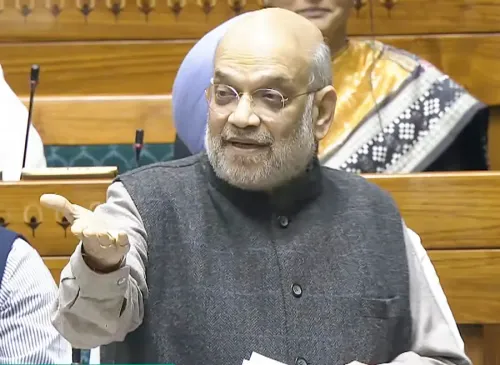
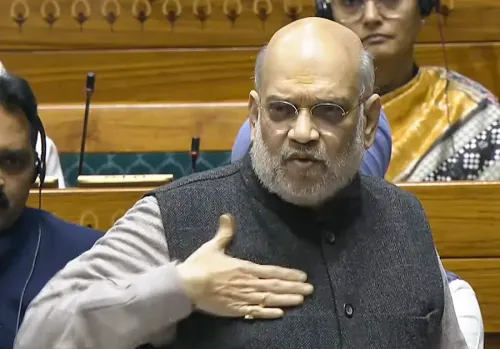
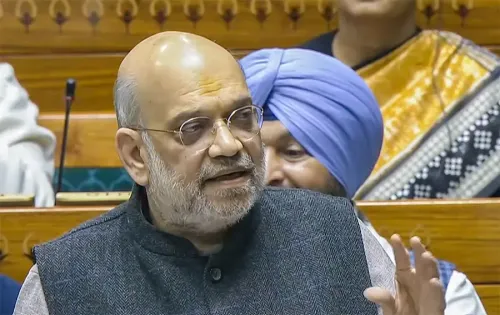
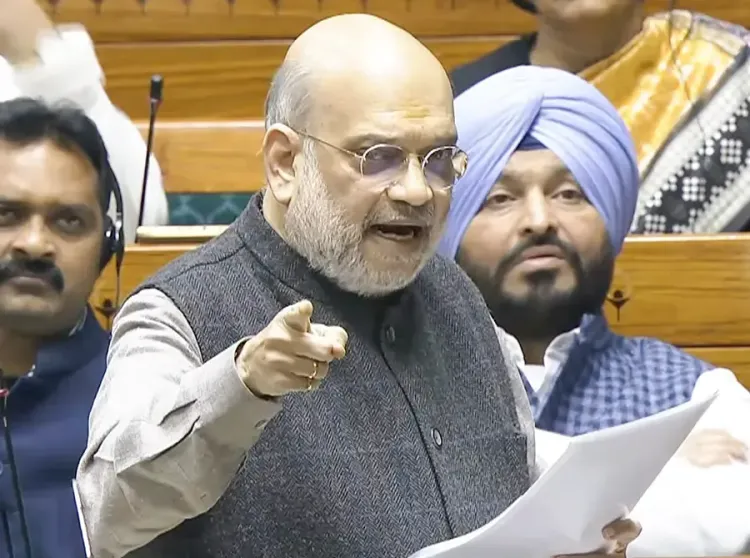
New Delhi, Dec 10 (NationPress) In a recent Lok Sabha session, Union Home Minister Amit Shah engaged in a robust debate on electoral reforms, effectively challenging every accusation made by Congress leader Rahul Gandhi regarding "vote theft" and highlighting instances of electoral malpractice attributed to the Opposition itself.
Despite facing numerous interruptions from the Congress benches, where he was occasionally compelled to pause, Speaker Om Birla attempted to restore order in the House.
The Home Minister took a swipe at Gandhi’s “nuclear bomb” press conference, pointing out discrepancies in his allegations. He referenced Gandhi’s assertion of over 500 voters linked to a single address on Haryana’s voter list and clarified that “House No. 265” encompasses a one-acre ancestral plot with multiple families residing in distinct dwellings.
As separate numbers were not assigned to individual homes, Shah stated, “There could be three generations of family members living in a house,” citing the Election Commission of India (ECI) clarifications and noting that these individuals would have participated in elections even during the Congress rule in Haryana.
His counter-argument shocked the Opposition, as he revealed that a voter from Bihar had been pressured by the Congress party to falsify statements concerning voter list discrepancies. Furthermore, he highlighted how Congress itself has engaged in "vote theft," prompting loud protests from the Opposition benches. He recalled how, after India gained independence, when the Congress chose a mandate from regional leaders to determine who should be Prime Minister, Jawaharlal Nehru received only two votes compared to Sardar Vallabhbhai Patel's 28.
“Yet, Nehru became the Prime Minister,” he noted. Additionally, Shah referenced a June 1975 judgement from the Allahabad High Court that nullified Indira Gandhi's victory from the Rae Bareli constituency due to alleged electoral misconduct, a ruling that triggered significant political turmoil in India, including the Emergency imposed by Gandhi.
Addressing Rahul Gandhi's inquiry regarding the NDA government led by Prime Minister Narendra Modi implementing a law safeguarding the Election Commissioner from legal actions, Shah reminded him that the Congress had ensured similar protections for Prime Ministers. He defended the SIR process as crucial for the “purification” of voter lists, linking its origins to the era of Jawaharlal Nehru's governance, while countering continued interruptions from the Opposition.
Shah described the SIR as a method to “clean and purify electoral rolls,” eliminating deceased individuals, migrants, and foreign nationals while incorporating new voters. Emphasizing its historical context in India’s electoral management, he pointed out that the initial three SIR exercises were conducted during the administrations of Nehru, Lal Bahadur Shastri, Indira and Rajiv Gandhi, and Narasimha Rao. This process was only interrupted once by a non-Congress government under Atal Bihari Vajpayee, ceasing when Manmohan Singh took charge in 2004.
“No complaints or protests were raised until it resumed under our government,” he recalled, noting the absence of an SIR for electoral rolls between 2004 and 2025. Previously, a returning officer could delete the names of the deceased and eliminate duplicate entries, but “in 2010, the Chief Election Commissioner decided against it,” Shah reminded the House. Consequently, he contended, SIR is essential for the revision and updating of the voters’ list. He remained resolute in his rebuttal and resistant to any disruptions.
When interruptions persisted, Shah asserted, “I will determine the order of my speech,” emphasizing his commitment to parliamentary decorum and his extensive legislative experience.
Point of View
It's essential to present both sides of the political spectrum. In this debate, Amit Shah's rebuttal to Rahul Gandhi emphasizes the ongoing tensions in Indian politics. While Shah's defense of the SIR process is rooted in historical context, the accusations of vote theft raise questions about electoral integrity. Our commitment remains to present facts while encouraging informed discussions among citizens.
NationPress
16 Sept 2026