Andhra HC strikes down BC quota orders, YSRCP says Naidu's political game exposed
Synopsis
The Andhra Pradesh High Court has struck down the Naidu government's BC reservation orders — and YSRCP is using the ruling as political ammunition. The party says the government's failure to clear the 50 per cent aggregate ceiling was predictable, and is now demanding that the ruling coalition deliver at least 34 per cent of election seats to BCs instead of promises that courts keep overturning.
Key Takeaways
The Andhra Pradesh High Court struck down government orders granting 34% BC reservation in rural local bodies and 33.33% in urban bodies.
The court directed the local-body election process to begin within six weeks .
YSRCP leaders Dharmana Prasada Rao and Chelluboyina Srinivasa Venugopala Krishna said the ruling exposed Chief Minister Chandrababu Naidu 's political game on BC welfare.
The court had earlier questioned the government on the data and legal basis for the 34% figure, which breaches the standard 50% aggregate reservation ceiling.
YSRCP demanded the TDP-Jana Sena-BJP coalition allot at least 34% of political seats and candidatures to BCs ahead of local body elections.
Under former CM Jagan Mohan Reddy , BCs reportedly held 9 of 13 Mayor posts and nearly 48% of MLC positions, according to YSRCP.
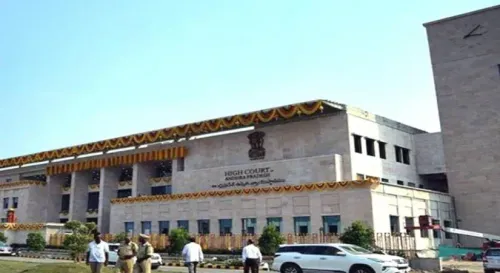
The Andhra Pradesh High Court has struck down state government orders providing 34 per cent BC reservation in rural local bodies and 33.33 per cent in urban bodies, directing that the local-body election process be initiated within six weeks. YSR Congress Party (YSRCP) senior leaders and former ministers Dharmana Prasada Rao and Chelluboyina Srinivasa Venugopala Krishna said the ruling had laid bare what they called the Chandrababu Naidu regime's political manoeuvring under the cover of social justice.
What the Court Ruled
The High Court set aside the government orders on BC reservations, citing the well-established judicial principle that aggregate vertical reservations for Scheduled Castes (SCs), Scheduled Tribes (STs), and Backward Classes (BCs) cannot ordinarily exceed the 50 per cent ceiling. The court had earlier questioned the government on the data and legal basis used to arrive at the 34 per cent figure, indicating that the administration had not established a legally sustainable foundation for the quota.
YSRCP's Charge Against the Naidu Government
Dharmana said the YSRCP had warned from the day the government orders were issued that they would face legal hurdles, precisely because the aggregate reservation threshold had not been addressed. He challenged Chief Minister Chandrababu Naidu to demonstrate genuine commitment to BC welfare by ensuring equivalent political representation for the community in the forthcoming local elections.
Venugopala Krishna went further, demanding an unconditional apology to BCs and questioning why the Telugu Desam Party (TDP), despite being part of the National Democratic Alliance (NDA) government at the Centre, had not pursued a constitutional route — such as a proposal on the lines of Tamil Nadu's Ninth Schedule protection — if it genuinely sought reservation beyond the existing ceiling.
YSRCP's Record on BC Representation
YSRCP leaders pointed to what they described as a model of political inclusion under former Chief Minister Jagan Mohan Reddy, who they said had compensated for judicial limits on statutory reservation by expanding political representation for BCs. According to party leaders, BCs were given nine of 13 Mayor posts, six of 13 Zilla Parishad Chairperson posts, four Rajya Sabha positions, 11 of 25 Lok Sabha candidatures, nearly 48 per cent of MLC positions, and substantial representation at municipal and Mandal levels.
What the Opposition Is Demanding Now
With local body elections now imminent following the court's six-week directive, YSRCP leaders demanded that the ruling coalition — TDP, Jana Sena, and BJP — allot at least 34 per cent of political opportunities and seats to BCs, arguing that credible representation through electoral tickets is more durable than government orders that cannot survive judicial scrutiny.
The High Court's intervention puts the Naidu administration under pressure to chart a legally defensible path on BC reservations before the local-body election cycle begins.
Point of View
And the Naidu government offered no novel constitutional workaround. The real political question is whether YSRCP's demands for 34 per cent electoral seat-sharing will hold the coalition accountable or simply serve as campaign positioning. What is notable is that neither side has seriously pursued the Ninth Schedule route that Tamil Nadu used — a harder constitutional lift, but the only durable one. Until that conversation happens at the national level, BC reservation in local bodies will remain a cycle of executive orders, legal challenges, and political recriminations.
NationPress
1 Oct 2026
Frequently Asked Questions
Why did the Andhra Pradesh High Court strike down the BC reservation orders?
The court struck down the orders because the aggregate vertical reservations for SCs, STs, and BCs breached the standard 50 per cent ceiling set by the Supreme Court. The government also failed to provide adequate data and legal justification for fixing BC reservation at 34 per cent in rural bodies and 33.33 per cent in urban bodies.
What did the Andhra Pradesh High Court direct after striking down the BC quota?
The court directed the state government to initiate the local-body election process within six weeks of the order, effectively clearing the path for elections to proceed without the contested reservation framework in place.
What is YSRCP's criticism of the Naidu government over BC reservations?
YSRCP argued that the Naidu government issued the reservation orders knowing they would not survive judicial scrutiny, calling it a political stunt rather than genuine welfare policy. The party demanded an unconditional apology to BCs and challenged the TDP to ensure at least 34 per cent of coalition election tickets go to BC candidates.
How did YSRCP claim it supported BC representation during Jagan Mohan Reddy's tenure?
YSRCP leaders said the Jagan Mohan Reddy government gave BCs nine of 13 Mayor posts, six of 13 Zilla Parishad Chairperson posts, four Rajya Sabha seats, 11 of 25 Lok Sabha candidatures, and nearly 48 per cent of MLC positions, arguing this was more effective than statutory reservations that face court challenges.
Is there a constitutional path to BC reservations beyond the 50 per cent ceiling?
YSRCP's Venugopala Krishna pointed to Tamil Nadu's Ninth Schedule inclusion as a constitutional mechanism that could potentially shield reservation orders from judicial review. The party questioned why TDP, as part of the NDA at the Centre, had not pursued such a route if it was serious about expanding BC quotas beyond the existing ceiling.