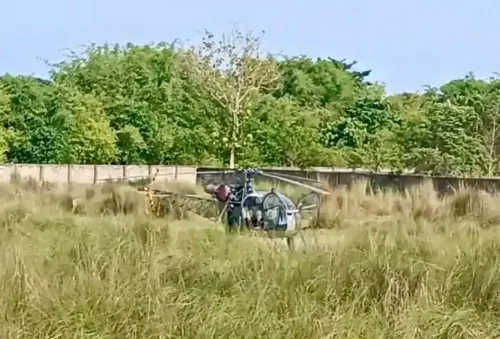
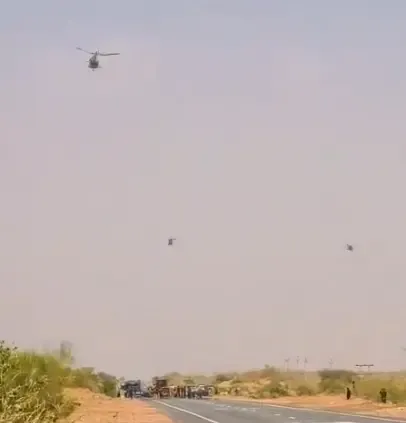
Army helicopters land on Bharatmala NH-911 near Pakistan border in Bikaner drill
Synopsis
The Indian Army landed Rudra, Dhruv, and Chetak helicopters on a live national highway just 80 km from the Pakistan border — a pointed reminder that India's Bharatmala road network is not just for civilian traffic. The 30-minute Bikaner drill signals a deliberate push to extend military reach into desert terrain without relying on fixed airfields.
Key Takeaways
Indian Army helicopters conducted a highway landing exercise on Bharatmala NH-911 near Dantaur, Bikaner on 29 September 2026 .
The drill site is approximately 80 km from the India-Pakistan border in the Thar Desert .
Helicopters deployed included the Rudra , Dhruv Advanced Light Helicopter (ALH) , and Chetak .
The exercise lasted around 30 minutes ; traffic on NH-911 was stopped in both directions during the drill.
The objective was to test landing and takeoff capabilities on non-conventional sites during emergencies, enhancing operational flexibility in remote areas.
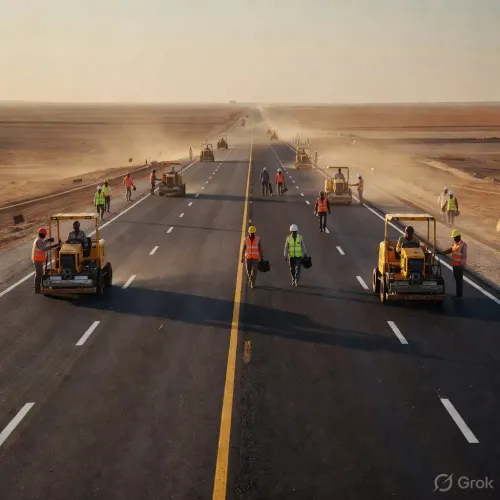
Indian Army helicopters on Tuesday, 29 September 2026 conducted a landmark operational exercise on a designated stretch of Bharatmala National Highway-911 near Dantaur in Bikaner district, Rajasthan, landing and taking off from the highway approximately 80 km from the India-Pakistan border. The drill, which lasted around 30 minutes, tested the military's ability to use civilian road infrastructure as emergency aviation platforms in challenging desert terrain.
Key Developments
Pilots operating the Rudra, Dhruv Advanced Light Helicopter (ALH), and Chetak executed controlled landing and takeoff procedures within a marked section of the highway. Ground teams assessed surface conditions, wind direction and speed, visibility, and safety requirements throughout the exercise. Coordination between aircrew and ground personnel was central to the drill, providing hands-on experience with non-conventional landing procedures.
Why This Exercise Was Conducted
Army officials stated the exercise was designed to test helicopter landing and takeoff capabilities on highways and other non-conventional sites during emergencies, particularly in remote areas where conventional airfields or helipads may be unavailable. The Bharatmala corridor, part of India's major national highway expansion programme, is increasingly factored into defence planning as an auxiliary aviation asset along sensitive border zones. This is consistent with a broader Indian military doctrine of leveraging civil infrastructure for operational flexibility.
Ground Coordination and Traffic Impact
Surendra Barupal, a Chhattargarh police official, confirmed that traffic on NH-911 was halted in both directions for the duration of the exercise. Civilian road users were cleared from the designated stretch before the helicopters made their approach, reflecting the level of interagency coordination involved in such drills. Notably, the seamless cooperation between Army aviation units and local law enforcement highlights an evolving framework for using public infrastructure in defence scenarios.
Operational Significance Near the Border
The exercise location — deep in the Thar Desert, within 80 km of the international boundary — carries strategic weight. The three helicopter types deployed serve distinct roles: the Dhruv ALH handles troop movement and logistics, the armed Rudra provides attack and support capabilities, and the Chetak is used for reconnaissance and light utility tasks. Demonstrating the ability to operate from highway surfaces in such terrain extends the Army's effective operational radius without dependence on fixed airfields, which are vulnerable targets in a conflict scenario.
What Comes Next
The Army is expected to conduct similar highway landing exercises on other Bharatmala stretches across border states as part of an ongoing operational readiness programme. Defence analysts note that India has been steadily integrating expressway and highway infrastructure into its military preparedness framework, mirroring practices seen in several other Asian armed forces. Future drills may involve heavier rotary-wing platforms as the Army expands its helicopter fleet.
Point of View
And this Bikaner exercise makes that subtext explicit. What is underreported is how dependent border-area military mobility remains on fixed airfields, and how a single strike could negate that. By certifying NH-911 as an alternate landing zone, the Army is hedging against exactly that vulnerability. The question mainstream coverage skips is whether the pace of such exercises — and the fleet capacity behind them — is keeping up with the operational doctrine being articulated.
NationPress
29 Sept 2026
Frequently Asked Questions
What happened during the Indian Army helicopter exercise in Bikaner?
Indian Army helicopters, including the Rudra, Dhruv ALH, and Chetak, landed on and took off from a designated stretch of Bharatmala National Highway-911 near Dantaur in Bikaner district on 29 September 2026. The drill lasted approximately 30 minutes and was aimed at testing the use of highways as emergency aviation platforms.
How far is the exercise site from the Pakistan border?
The designated stretch of NH-911 used for the exercise is approximately 80 km from the India-Pakistan international border, placing it in the strategically sensitive Thar Desert zone of Rajasthan.
Why does the Indian Army conduct highway landing drills?
Such exercises test the military's ability to use civilian road infrastructure as alternative landing zones when conventional airfields or helipads are unavailable or damaged. This enhances operational flexibility, particularly in remote border areas with limited aviation facilities.
Which helicopters were used in the Bikaner drill?
The Army deployed three helicopter types: the Rudra (armed attack variant), the Dhruv Advanced Light Helicopter (ALH) used for troop movement and logistics, and the Chetak, used for reconnaissance and light utility roles.
Was civilian traffic affected during the exercise?
Yes. According to a Chhattargarh police official, traffic on NH-911 was stopped in both directions for the duration of the approximately 30-minute exercise while Army helicopters operated on the highway.