Indian Army Aviation rescues casualty at 18,600 ft near Nun Kun massif
Synopsis
Indian Army Aviation pilots pulled off a near-impossible rescue at 18,600 feet near the Nun Kun massif — stripping the helicopter of non-essential gear, flying on minimum fuel, and landing on a single skid against a sheer mountain slope as daylight ran out. It is the kind of mission that rarely makes headlines but defines what high-altitude military aviation actually demands.
Key Takeaways
Indian Army Aviation pilots rescued a stranded casualty at 18,600 feet near the Nun Kun massif in Jammu and Kashmir.
The helicopter was stripped of all non-essential equipment and flown on limited fuel to maximise lift at extreme altitude.
Pilots executed a single-skid landing on a steep slope with no flat landing surface and strong mountain winds.
The mission was completed within the last available landing window of the day before darkness set in.
The Fire and Fury Corps confirmed the rescue in an official post on X on Saturday.
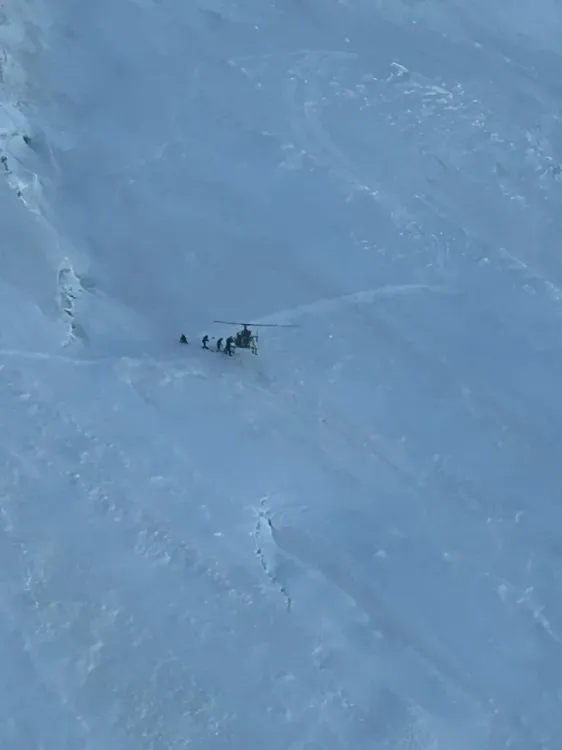
Indian Army Aviation pilots executed a daring high-altitude casualty evacuation at 18,600 feet near the Nun Kun massif in Jammu and Kashmir, rescuing a stranded person from a near-vertical mountain slope with no landing space and severe wind conditions. The mission, carried out on Saturday, stands among the most technically demanding rescues undertaken by Army Aviation in recent years.
How the Mission Was Executed
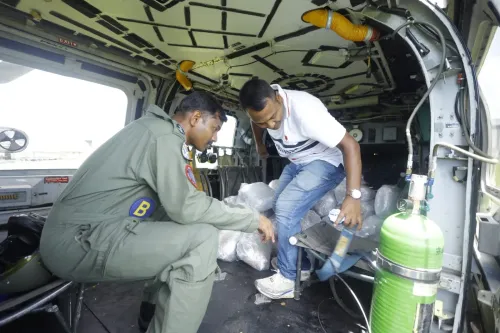
The crew faced a shrinking window of opportunity as daylight faded rapidly at that extreme altitude. Thin air at 18,600 feet severely reduces both engine performance and rotor lift, leaving pilots with minimal margin for error. To compensate, the crew stripped the helicopter of all non-essential equipment and flew with strictly limited fuel — trading range for the additional lift capacity needed to reach and extract the casualty.
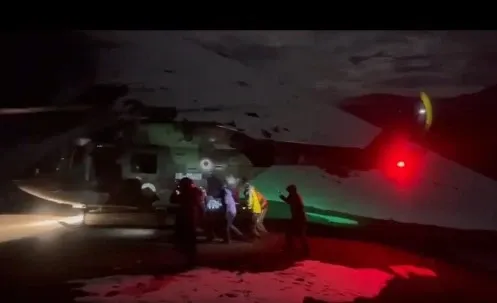
On arrival at the site, the pilots encountered powerful mountain winds and a steep, uneven slope with no flat surface to land on. In a critical manoeuvre, the crew held the aircraft in a low hover and carefully balanced it with one skid touching the mountain slope, stabilising the helicopter just long enough for the patient to be secured and loaded aboard.
What the Fire and Fury Corps Said
The official account of the Fire and Fury Corps of the Indian Army posted details of the rescue on X late on Saturday. 'In a daring rescue mission at 18,600 ft near Nun Kun, Indian Army Aviation pilots evacuated a casualty from an extremely challenging slope with no landing space and strong winds,' the post stated. 'With the helicopter lightened by removing non-essential equipment and carrying limited fuel, the aviators executed the evacuation with exceptional precision, courage and determination, including a critical landing with one skid touching the slope.'
The Corps added: 'The mission, undertaken at the last available landing window of the day, stands as a testament to the skill, courage and compassion of Indian Army Aviation.'
Why High-Altitude Rescues Are Exceptionally Difficult
The Nun Kun massif, located in the Kargil district of Jammu and Kashmir, is one of the highest twin-peak formations in the western Himalayas, with Nun reaching 7,135 metres. Helicopter operations above 15,000 feet are considered high-risk globally due to the 'high, hot, and heavy' problem — reduced air density simultaneously weakens engine thrust and rotor efficiency. Pilots must calculate precise weight limits and accept narrower safety margins with every metre of altitude gained.
This is not the first such mission by Army Aviation in the region. The corps has a documented record of casualty evacuations across the Siachen Glacier and Zanskar ranges, but a single-skid landing on a steep slope at this altitude is regarded as an exceptional feat even by those standards.
Significance and What It Reflects
The successful evacuation underscores the operational readiness and technical proficiency of Indian Army Aviation personnel deployed in some of the world's most hostile mountain environments. It also highlights the life-saving role military aviation plays in remote Himalayan terrain where civilian rescue infrastructure is absent. As adventure trekking and mountaineering activity in the Nun Kun region grows, the demand on Army Aviation for emergency response is expected to rise.
Point of View
600 feet — with stripped-down equipment, minimum fuel, and fading daylight — is not a routine operation; it is the outer edge of what rotary-wing aviation can do in the Himalayas. What the coverage tends to miss is the systemic implication: as civilian trekking and mountaineering traffic in zones like Nun Kun grows without a matching civilian rescue infrastructure, the Indian Army is quietly absorbing an expanding emergency-response burden that was never formally assigned to it. The question of how that burden is resourced, and whether Army Aviation's high-altitude fleet is being scaled to meet rising demand, is one that policymakers have yet to answer publicly.
NationPress
15 Oct 2026
Frequently Asked Questions
Where did the Indian Army Aviation rescue take place?
The rescue took place at an altitude of 18,600 feet near the Nun Kun massif in Jammu and Kashmir. The Nun Kun massif is one of the highest twin-peak formations in the western Himalayas, located in the Kargil district.
How did Army Aviation pilots manage to land at such extreme altitude?
The crew removed all non-essential equipment from the helicopter and flew with strictly limited fuel to maximise lift capacity. Unable to find a flat landing surface, the pilots executed a one-skid landing — balancing the helicopter with a single skid touching the steep slope while the casualty was secured and loaded.
Why is helicopter rescue so difficult above 15,000 feet?
At extreme altitudes, thin air reduces both engine thrust and rotor lift simultaneously, a problem pilots call 'high, hot, and heavy.' This forces crews to shed weight aggressively and accept narrower safety margins, making every operation above 15,000 feet a high-risk undertaking.
Who confirmed the Nun Kun rescue mission?
The Fire and Fury Corps, the Indian Army formation responsible for the region, confirmed the rescue in an official post on X late on Saturday, describing it as a testament to the 'skill, courage and compassion of Indian Army Aviation.'
Is this the first such high-altitude rescue by Indian Army Aviation?
No. Indian Army Aviation has a documented record of casualty evacuations across the Siachen Glacier and Zanskar ranges. However, a single-skid landing on a steep slope at 18,600 feet is considered an exceptional feat even by those standards.