Assam Rifles launches biometric drive for Myanmar nationals in Manipur's Kamjong
Synopsis
Assam Rifles has moved beyond fencing and patrols — Phase II of Operation Anchor puts names, faces, and fingerprints to the roughly 500 displaced Myanmar nationals sheltering in Kamjong's border villages. Combined with Mizoram's near-complete enrolment of 28,355 refugees, India's Northeast is quietly building the data infrastructure that will define its refugee policy for years to come.
Key Takeaways
Assam Rifles , Manipur Police , and civil administration launched a joint biometric registration drive in Kamjong district on 30 June .
The drive covered approximately 500 displaced Myanmar nationals across Phaikoh , Shangkhalok , and Aloyo villages.
A joint team of 40 personnel verified identities, enrolled biometric data, and documented demographic profiles.
The exercise is Phase II of Operation Anchor , shifting focus from border fencing and surveillance to interior accountability.
In Mizoram , over 98% of approximately 28,355 Myanmar nationals across 11 districts have already been biometrically enrolled since July 2025 .
The Ministry of Home Affairs (MHA) is overseeing enrolment through the Foreigners Identification Portal and the Biometric Enrolment System.
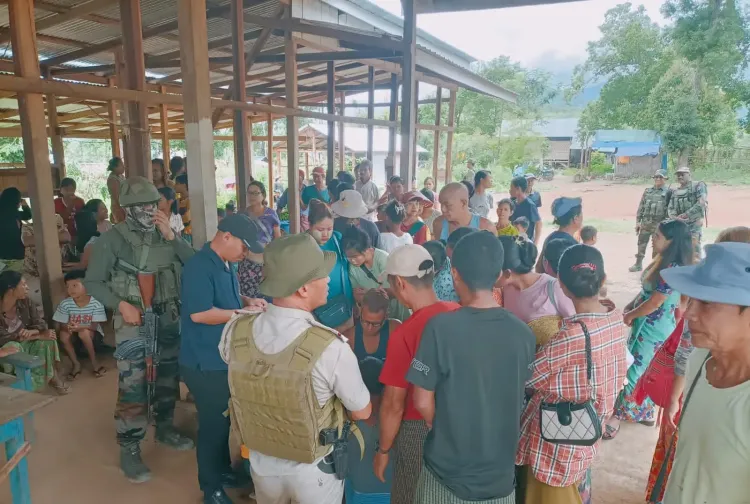
Assam Rifles, in close coordination with the Manipur Police and civil administration, on Tuesday, 30 June launched a joint identification, verification, and biometric registration drive for displaced Myanmar nationals in Kamjong district — eastern Manipur's border district that shares an unfenced international boundary with Myanmar.
What the Drive Covered
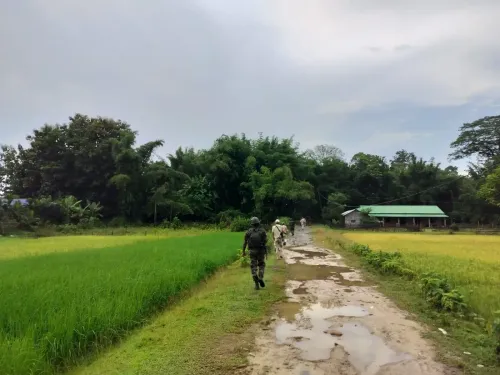
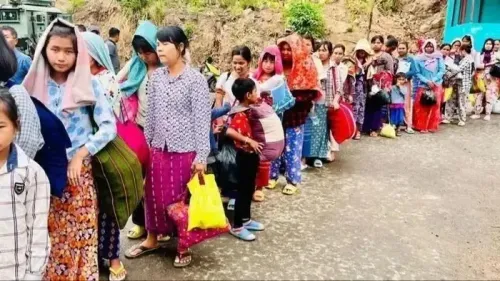
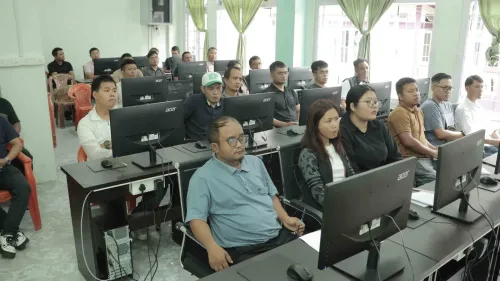
A joint team of 40 personnel — comprising civil officials, police, medical staff, and Assam Rifles soldiers — conducted the exercise across Phaikoh, Shangkhalok, and Aloyo villages in Kamjong district, where displaced Myanmar nationals fleeing ongoing unrest in the neighbouring country have been taking temporary shelter. The drive successfully covered approximately 500 individuals across the three locations, establishing what officials described as an authenticated and centralised database for administrative planning and security tracking.
Operation Anchor Phase II
Defence spokesman Lt Col Mahendra Rawat confirmed that this exercise constitutes Phase II of Operation Anchor, a structured civil-military initiative aimed at balancing national security imperatives with regulated humanitarian oversight along the sensitive India-Myanmar Border (IMB). Phase I had focused on strengthening physical border security through enhanced electronic surveillance, intensified patrolling, and targeted fencing to curb illegal cross-border movement and unregulated infiltration. With Phase II, the operational focus has expanded from border protection to ensuring accountability within the interior corridor by maintaining comprehensive records of individuals permitted temporary refuge.
Why the Biometric Database Matters
According to Lt Col Rawat, the creation of a secure biometric database will eliminate anonymity, assist the civil administration in delivering medical and humanitarian assistance transparently, and provide both the Union and state governments with reliable records for informed policy decisions on border governance and internal security. The initiative marks a significant step towards strengthening border governance and management while ensuring regulated humanitarian assistance, he said.
Broader Northeast Context
The Manipur government had earlier carried out biometric enrolment of displaced Myanmar nationals across several other districts of the state. In neighbouring Mizoram, authorities have completed biometric enrolment of more than 98 per cent of approximately 28,355 Myanmar nationals — including women and children — sheltering across the state's 11 districts, following the military coup in Myanmar in February 2021. Acting on the advice of the Ministry of Home Affairs (MHA), the biometric enrolment process for both Myanmar and Bangladeshi refugees has been under way in Mizoram since July 2025 through the Foreigners Identification Portal and the Biometric Enrolment System.
As cross-border displacement from Myanmar shows no sign of abating, the structured data architecture being built across Manipur and Mizoram is expected to become the baseline for any future Centre-level policy on refugee management along India's northeastern frontier.
Point of View
And a centralised biometric record of displaced Myanmar nationals does not, by itself, resolve their legal status. The MHA's parallel exercise in Mizoram, now near-complete at 98 per cent coverage, suggests the Centre is finally treating this as a national data problem rather than a state-level humanitarian one. Whether that data architecture translates into a coherent, rights-respecting policy — or simply into more efficient deportation machinery — remains the defining question that neither Imphal nor New Delhi has yet answered publicly.
NationPress
29 Sept 2026
Frequently Asked Questions
What is Operation Anchor Phase II in Manipur?
Operation Anchor Phase II is a structured civil-military initiative led by Assam Rifles, Manipur Police, and civil administration to biometrically register displaced Myanmar nationals sheltering in Kamjong district. It follows Phase I, which focused on physical border security through surveillance, patrolling, and fencing along the India-Myanmar Border.
How many Myanmar nationals were covered in the Kamjong biometric drive?
Approximately 500 displaced Myanmar nationals were covered across three villages — Phaikoh, Shangkhalok, and Aloyo — in Kamjong district during the 30 June drive. The exercise was conducted by a joint team of 40 civil, police, medical, and Assam Rifles personnel.
Why is Kamjong district significant in this context?
Kamjong district in eastern Manipur shares an unfenced international border with Myanmar, making it a primary entry point for displaced nationals fleeing ongoing unrest in the neighbouring country. Its porous boundary has made it a focal point for both humanitarian shelter and security concerns.
What is the status of biometric enrolment in Mizoram?
Mizoram has completed biometric enrolment of more than 98 per cent of approximately 28,355 Myanmar nationals sheltering across its 11 districts. The process has been under way since July 2025 through the MHA-directed Foreigners Identification Portal and Biometric Enrolment System.
What purpose does the biometric database serve?
According to officials, the secure biometric database will eliminate anonymity among displaced persons, enable transparent delivery of medical and humanitarian aid, and give both the Union and state governments reliable records for policy decisions on border governance and internal security.