Athawale Backs Marathi Rule for Drivers, Opposes Licence Cancellation
Synopsis
Union Minister Ramdas Athawale has backed Maharashtra's Marathi language rule for auto-taxi drivers but drawn a sharp line at licence cancellation, calling it 'injustice to the poor.' His dissent from within the NDA alliance could force the Maharashtra government to soften its May 1 enforcement deadline.
Key Takeaways
Union Minister Ramdas Athawale on April 25, 2025 backed Maharashtra's decision to make Marathi mandatory for all licensed auto-rickshaw and taxi drivers.
Transport Minister Pratap Sarnaik had announced the rule effective May 1, Maharashtra Day , with licence cancellation as the penalty for non-compliance.
Athawale firmly opposed the licence cancellation clause , calling it "an injustice to poor drivers" who can learn the language if given time.
The Maharashtra government has planned Marathi language classes for non-Marathi-speaking drivers as part of the compliance framework.
Athawale also praised over 90% voter turnout in West Bengal's first poll phase and credited central security forces for maintaining order.
The minister reiterated his demand for a law making voting compulsory across India.
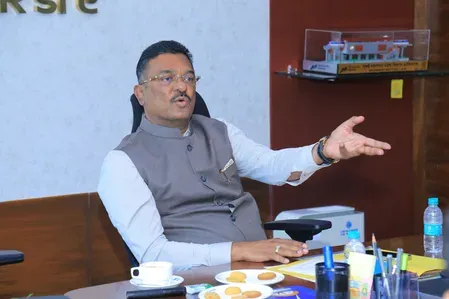
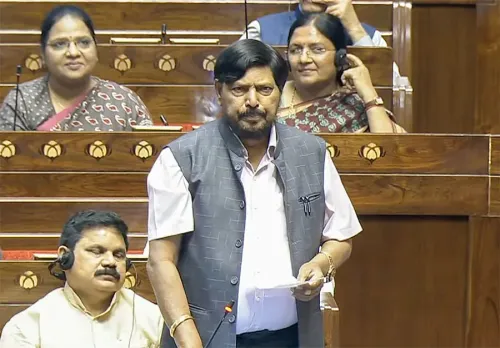
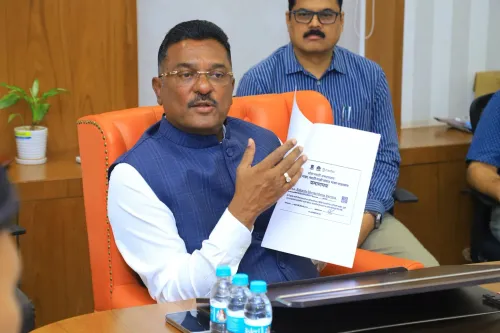
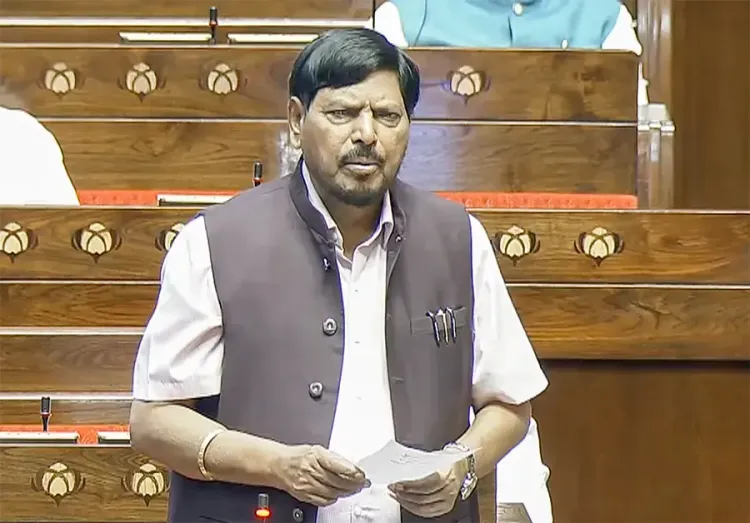
Mumbai, April 24: Union Minister of State for Social Justice and Empowerment Ramdas Athawale on Friday expressed support for the Maharashtra government's decision to make Marathi language compulsory for auto-rickshaw and taxi drivers, while firmly opposing the accompanying proposal to cancel the licences of drivers who cannot speak the language. The minister's nuanced stance draws a clear line between language promotion and economic punishment of the poor.
The Maharashtra Government's Marathi Mandate
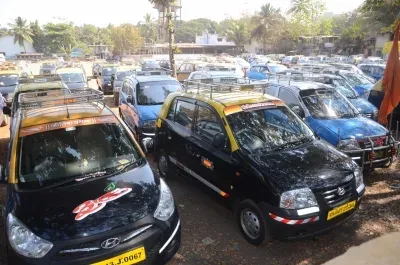
Maharashtra's Transport Minister Pratap Sarnaik had announced that effective May 1 — Maharashtra Day — all licensed auto-rickshaw and taxi drivers in the state must have working knowledge of Marathi. Failure to comply, Sarnaik warned, could result in the cancellation of their driving licences.
The announcement immediately sparked debate across political circles, with questions raised about its impact on the large number of non-Marathi-speaking migrant drivers who depend on their licences for their livelihoods. The Mumbai metropolitan region alone is home to tens of thousands of drivers who hail from states like Uttar Pradesh, Bihar, Rajasthan, and West Bengal.
Athawale's Conditional Support
Speaking to reporters, Athawale acknowledged the practical necessity of drivers knowing Marathi, citing the difficulties faced by passengers — particularly low-income commuters — who are not fluent in Hindi and struggle to communicate destinations or negotiate fares.
"It is necessary for those drivers to know the language because many poor people do not know Hindi and come from far-off places," the minister stated. He also noted that the government has planned Marathi language classes for drivers who are not yet proficient, adding that several non-Marathi drivers already speak the language adequately.
However, Athawale drew a firm line at licence cancellation. "It would be an injustice to cancel the licences of those poor people. They can learn to speak Marathi, but their licence should not be cancelled," he said, signalling a rift within the ruling alliance over the policy's implementation.
Deeper Impact: Migrant Drivers at the Crossroads
This policy lands at a politically sensitive moment. Maharashtra has historically been a flashpoint for nativist politics, with organisations like the Maharashtra Navnirman Sena (MNS) and factions within the Shiv Sena having long demanded preferential treatment for Marathi-speaking locals in employment and public services. The current government's move can be seen as a response to this persistent political pressure.
Critics, however, argue that singling out auto and taxi drivers — among the most economically vulnerable urban workers — for language-based licence revocation sets a dangerous precedent. According to available transport data, lakhs of drivers across Mumbai, Pune, Nagpur, and Nashik are migrants who have been operating legally for years. Stripping their licences without adequate transition time could push thousands into unemployment overnight.
Notably, the government's own acknowledgment that Marathi classes will be arranged suggests an awareness that the hard deadline may be aspirational rather than enforceable. The real test will be whether the state builds accessible, free, and widespread language training infrastructure before May 1.
Athawale on West Bengal Polls and Voter Turnout
Separately, Athawale commented on the high voter turnout recorded during the Tamil Nadu Assembly elections and the first phase of West Bengal polls, calling it a sign of strengthening democracy. "Over 90 per cent polling in West Bengal reflects that no one could indulge in hooliganism this time," he said, taking a pointed jab at West Bengal Chief Minister Mamata Banerjee.
He credited central security forces for maintaining order during polling and reiterated his demand for a law mandating compulsory voting across India. Athawale also defended Union Home Minister Amit Shah's strong warning to political 'goons' in Bengal, saying the BJP was committed to ending electoral violence in the state.
What Comes Next
With May 1, Maharashtra Day, fast approaching, the state government faces pressure to clarify the exact enforcement mechanism of the Marathi mandate. Athawale's public dissent — coming from within the ruling NDA alliance — may compel the Maharashtra government to revisit the licence cancellation clause and introduce a more graduated compliance framework. Civil society groups and driver unions are expected to mount legal challenges if the policy is implemented without adequate safeguards. All eyes are now on Transport Minister Sarnaik's next move.
Point of View
Suggesting the licence cancellation clause may have been announced for political optics rather than genuine enforcement. The real accountability question is: will the government build actual Marathi training systems before May 1, or will this become yet another deadline that quietly disappears?
NationPress
19 Sept 2026
Frequently Asked Questions
What is Maharashtra's new Marathi language rule for auto and taxi drivers?
The Maharashtra government has announced that from May 1, 2025 — Maharashtra Day — all licensed auto-rickshaw and taxi drivers must know Marathi. Transport Minister Pratap Sarnaik stated that failure to comply could lead to cancellation of their driving licences.
Why did Ramdas Athawale oppose the licence cancellation for non-Marathi drivers?
Union Minister Ramdas Athawale argued that cancelling licences of drivers who cannot speak Marathi would be an injustice to poor workers who depend on driving for their livelihood. He supported the language requirement itself but said drivers should be given time and training to learn Marathi.
Will Marathi language classes be provided to auto and taxi drivers in Maharashtra?
Yes, Transport Minister Pratap Sarnaik announced that Marathi language classes will be arranged for drivers who do not yet know the language. The government aims to train non-Marathi speakers rather than immediately penalise them.
How many auto and taxi drivers could be affected by Maharashtra's Marathi mandate?
A large number of auto-rickshaw and taxi drivers in cities like Mumbai, Pune, and Nagpur are migrants from states like UP, Bihar, and Rajasthan who may not be fluent in Marathi. The exact number affected has not been officially disclosed, but the figure is estimated to run into the lakhs.
What did Ramdas Athawale say about West Bengal elections?
Athawale praised the high voter turnout in West Bengal's first polling phase, saying it reflected that political hooliganism had been curbed. He credited central security forces and defended Home Minister Amit Shah's strong warning to political goons in the state.