Australia's Annual Inflation Rate Declines to 3.7%

Synopsis
In a surprising turn, Australia's annual inflation rate has decreased to 3.7% for February, against economists' predictions. This shift signals potential changes in the economic landscape, prompting discussions on the government's response to inflation and the impact of global events.
Key Takeaways
Australia's inflation rate is now at 3.7% .
Economists expected it to remain at 3.8% .
Housing prices rose by 7.2% , driving inflation.
Food and non-alcoholic beverage prices increased by 3.1% .
RBA raised cash rate to 4.1% amid rising inflation concerns.
Canberra, March 25 (NationPress) The annual inflation rate in Australia has dropped to 3.7 percent as of February, surprising economists who anticipated it would hold steady at 3.8 percent.
Official statistics released by the Australian Bureau of Statistics (ABS) on Wednesday indicate that the consumer price index (CPI) increased by 3.7 percent over the year leading up to February, a decline from the 3.8 percent reported in both December and January.
Earlier reports from the Australian Broadcasting Corporation suggested that financial markets were bracing for inflation to remain unchanged at 3.8 percent for three months in a row.
The ABS also revealed that the annual trimmed mean—a key measure of core inflation favored by the Reserve Bank of Australia (RBA)—stayed constant at 3.3 percent in February, exceeding the bank's target range of 2-3 percent.
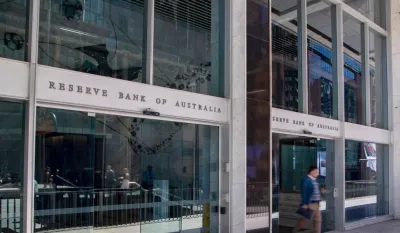
This data follows the RBA's Monetary Policy Board decision on March 17 to raise the official cash rate to 4.1 percent for the second time in a row.
At that time, the board noted that escalating fuel prices, exacerbated by the ongoing conflict in the Middle East, would contribute to rising inflation.
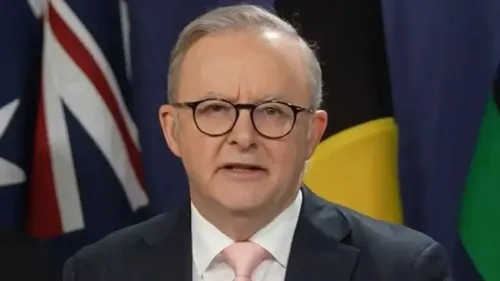
In reaction to the ABS findings, Treasurer Jim Chalmers stated via social media that inflation had already been excessive prior to the war, and the conflict would likely worsen the situation, according to the Xinhua news agency.
Earlier this month, Chalmers warned that a prolonged conflict could see inflation exceed 5.0 percent by 2026. He also mentioned in a recent business speech that the government is exploring a "broader than usual range of options" to mitigate inflation.
The ABS highlighted that a 7.2 percent surge in housing prices was the primary factor driving inflation over the past year, closely followed by a 3.1 percent increase in the prices of food and non-alcoholic beverages.
Point of View
Challenging previous economic expectations. While it offers a glimmer of hope for consumers, the underlying factors, including global conflicts and rising housing costs, suggest that inflation remains a significant concern for policymakers.
NationPress
22 Sept 2026
Frequently Asked Questions
What is the current inflation rate in Australia?
As of February, the annual inflation rate in Australia stands at 3.7%.
What factors are contributing to inflation in Australia?
Key contributors include rising housing prices and increased costs of food and non-alcoholic beverages.
What did the Australian Bureau of Statistics report?
The ABS reported a drop in the consumer price index to 3.7% in February, down from 3.8% in the previous months.
How has the Reserve Bank of Australia responded to inflation?
The RBA has raised the official cash rate to 4.1% in response to inflationary pressures.
What are the predictions for inflation in the near future?
Treasurer Jim Chalmers has warned that inflation could exceed 5.0% by 2026 if global conflicts persist.