Is Australia's Unemployment Rate Holding Steady at 4.1 Percent?

Synopsis
In January, Australia's unemployment rate remained steady at 4.1%, defying expectations of a slight increase. Full-time employment rose while part-time jobs fell. With inflation concerns prompting the Reserve Bank to adjust interest rates, the labor market shows signs of resilience amidst economic shifts. What does this mean for the future?
Key Takeaways
Australia's unemployment rate remains at 4.1% .
Full-time employment increased by 50,500 jobs.
Part-time employment fell by 32,700 jobs.
Participation rate is 66.7% , down from 67.3% last year.
RBA raised the cash rate to 3.85% in response to inflation.
Canberra, Feb 19 (NationPress) The unemployment rate in Australia has held steady at 4.1 percent for the month of January, based on recent official statistics published on Thursday.
According to the latest monthly labour force report from the Australian Bureau of Statistics (ABS), the number of full-time jobs rose by 50,500 from December to January, although this increase was somewhat counterbalanced by a drop of 32,700 in part-time positions, as reported by Xinhua News Agency.
The official unemployment figure remained unchanged at 4.1 percent in January, following its decrease from 4.3 percent between November and December.
Many economists had anticipated a slight uptick to 4.2 percent for January, as reported by local news outlets.
The ABS noted that the participation rate, which indicates the percentage of the working-age populace either employed or actively seeking employment, stood at 66.7 percent in January, a decline from the record-high of 67.3 percent a year earlier.
The overall hours worked by Australians increased by 0.6 percent from December to January, totaling 2.01 billion hours.
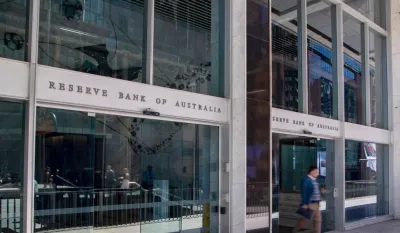
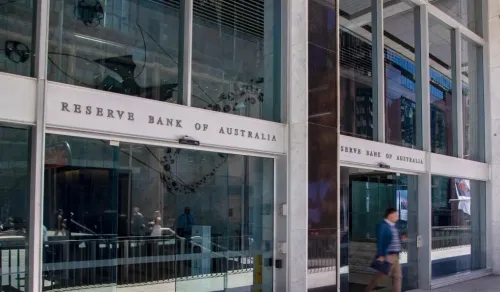
On February 3, Australia’s central bank increased its key interest rate for the first time in over two years due to a surge in inflation.
The Reserve Bank of Australia (RBA) announced that its Monetary Policy Board unanimously decided to elevate the cash rate target from 3.60 percent to 3.85 percent.
This signifies the first adjustment to the cash rate target since November 2023 and follows three separate rate cuts of 0.25 percentage points in 2025.
According to the Monetary Policy Board, while inflation has decreased significantly since its peak in 2022, it has noticeably risen in the latter half of 2025.
The latest statistics from the ABS reveal that the consumer price index (CPI) climbed by 3.8 percent in the year ending December 2025, up from 3.4 percent in November.
The trimmed mean, a preferred measure of core inflation by the RBA, increased by 3.3 percent over the year ending December, compared to 3.2 percent in November.
The Monetary Policy Board has stated that inflation is expected to stay above the 2-3 percent target range "for some time."
"It is clear that private demand is expanding faster than anticipated, capacity pressures are more significant than previously evaluated, and labor market conditions have tightened slightly," they noted.
In revised forecasts, the RBA anticipates annual CPI growth to reach 4.2 percent by June 2026, up from the 3.7 percent projected in November, before dropping to 2.9 percent by June 2027.
Point of View
The steady unemployment rate of 4.1% reflects a complex interplay between job creation and economic pressures. While the rise in full-time employment is encouraging, the decrease in part-time roles and inflationary concerns signal that the labor market is navigating challenging waters. It's crucial to monitor these trends as they evolve.
NationPress
19 Sept 2026
Frequently Asked Questions
What was Australia's unemployment rate in January?
Australia's unemployment rate remained steady at 4.1% in January.
How many full-time jobs were created in January?
In January, 50,500 full-time jobs were added.
What is the participation rate in January?
The participation rate was 66.7% in January.
What action did the RBA take regarding interest rates?
The RBA raised the cash rate target from 3.60% to 3.85%.
What is the projected CPI growth for June 2026?
The RBA expects annual CPI growth to reach 4.2% by June 2026.