Australia's Parliament Takes a Stand on Tibet's Human Rights Issues
Synopsis
On March 17, Australian Senator Deborah O’Neill introduced a significant cross-party motion in the Senate regarding human rights in Tibet. This motion emphasizes the need for international attention and calls for dialogue regarding Tibetan cultural identity. Discover the implications of this pivotal initiative.
Key Takeaways
Senator Deborah O’Neill introduced a cross-party motion on Tibet.
Australia is the first IPAC nation to pass such a motion.
The motion emphasizes the need for protecting Tibetan cultural identity .
It calls for genuine dialogue with the Dalai Lama.
Concerns over Chinese government repression are highlighted.
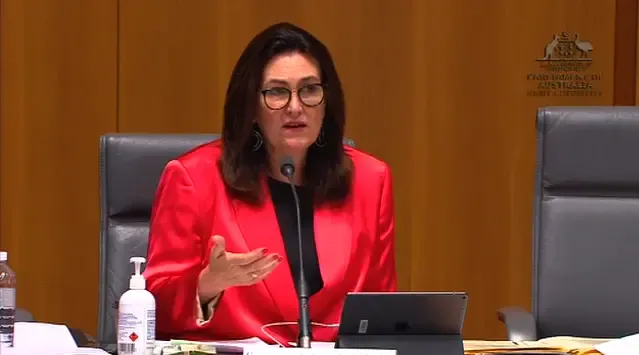
Canberra, March 17 (NationPress) Senator Deborah O’Neill (Labour), co-chair of the Inter-Parliamentary Alliance on China (IPAC), is bringing to light the global concerns regarding human rights abuses in Tibet and the need to safeguard the Tibetan cultural and religious identity. Recently, she proposed a cross-party motion concerning Tibet in the Australian Senate. This motion aligns with the 67th anniversary of the 1959 Tibetan Uprising, and a similar resolution was also adopted in the House of Representatives.
This initiative positions Australia as the inaugural nation within the IPAC network to present a parliamentary motion focused on Tibet following the Alliance's commitment at the IPAC Brussels Summit 2025 to promote collaborative parliamentary actions regarding Tibet.
Senators from multiple political factions co-sponsored the motion, reflecting a robust cross-party agreement within the Australian Senate on the crucial need to uphold Tibetan human rights and protect religious freedoms.
The motion expressed well-wishes to the Dalai Lama on his 90th birthday, praising his unwavering dedication to the promotion of human rights, nonviolence, interfaith harmony, environmental consciousness, and democracy. It emphasized that governments should refrain from interfering in the selection of religious leaders, including the reincarnation of the 14th Dalai Lama.
Additionally, it voiced serious concerns regarding the Chinese Government's repressive measures in Tibet, aimed at extinguishing the unique cultural and religious identity of the Tibetan people, including attempts to meddle in the ancient spiritual practices surrounding the Dalai Lama's reincarnation. The motion urged the Chinese authorities to acknowledge the basic human rights of the Tibetan populace and engage in sincere dialogue, without preconditions, with the Dalai Lama to foster lasting peace and liberty in Tibet.
Recently, Human Rights Watch (HRW) reported that in its 2026 World Report, the Chinese government has escalated its oppressive actions in 2025, with President Xi Jinping mandating the government to enforce ideological conformity and loyalty to himself and the Communist Party.
HRW stated that Uyghurs, Tibetans, and other distinct communities, including individuals from unofficial religious groups, are experiencing the gravest infringements of their rights. The report also noted that the Chinese government has intensified repression in Hong Kong.
Maya Wang, Deputy Asia Director at HRW, commented, "The Chinese government under Xi Jinping has built an increasingly alarming human rights record, broadening its crackdown on fundamental freedoms. Foreign governments have largely been hesitant to confront the threats posed by the Chinese government to the international human rights framework, not to mention within China itself."
According to HRW, Xi Jinping's visits to Tibet and Xinjiang appear aimed at demonstrating his government’s firm grip on these regions. The Chinese authorities are anticipated to enact a draft law that would legitimize the repression of minorities, deepen ideological control, and extend their influence abroad.
The report further highlighted that thousands of Uyghurs remain unjustly imprisoned in China. Additionally, the Chinese government prohibited celebrations for the Dalai Lama’s 90th birthday in Tibet, indicating an increase in repression following the implementation of the National Security Law in Hong Kong.
Point of View
The ongoing situation in Tibet raises critical concerns about human rights and cultural preservation. The Australian Parliament's cross-party motion reflects a unified stance on this pressing issue, highlighting the importance of international dialogue and support for Tibetan rights.
NationPress
30 Sept 2026
Frequently Asked Questions
What is the significance of the cross-party motion introduced by Senator O’Neill?
The motion highlights Australia's commitment to addressing human rights violations in Tibet and represents the first parliamentary action on the issue within the IPAC framework.
What does the motion call for regarding the Dalai Lama?
It extends birthday wishes to the Dalai Lama and emphasizes that governments should not interfere in the selection of religious leaders, including his reincarnation.
What concerns does the motion express about the Chinese government?
It raises alarm over repressive policies targeting Tibetan culture and calls for recognition of Tibetan human rights and a genuine dialogue with the Dalai Lama.
How has the Chinese government responded to international criticism?
The Chinese government has intensified repression, particularly under President Xi Jinping, directing efforts to enforce loyalty to the Communist Party.
What role does Human Rights Watch play in this context?
Human Rights Watch provides critical reports on the human rights situation in Tibet and other regions, highlighting abuses and advocating for international attention.