Why Did Awami League Reject Dhaka Court's Verdict Against Hasina and Family?
Synopsis
In a bold reaction, the Awami League has dismissed a Dhaka court's ruling against former Prime Minister Sheikh Hasina and her family, calling it predictable and politically motivated. This unfolding drama raises questions about judicial integrity and political power plays in Bangladesh, as allegations of corruption swirl in the backdrop of a contentious interim government.
Key Takeaways
The verdict against Sheikh Hasina raises questions about judicial fairness.
The Awami League claims political motivations behind the ruling.
Irregularities were cited in the allocation of plots under the Purbachal New Town project.
Concerns grow regarding the integrity of the Anti-Corruption Commission.
The situation may affect Bangladesh's international relations.
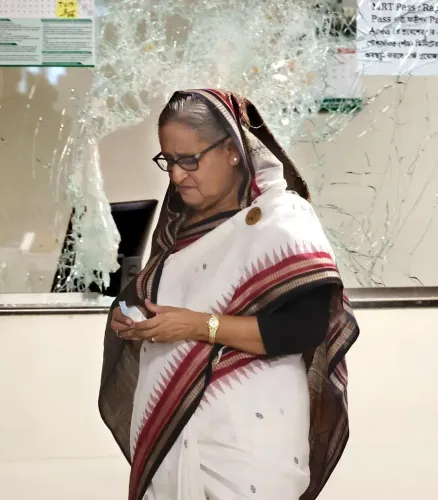
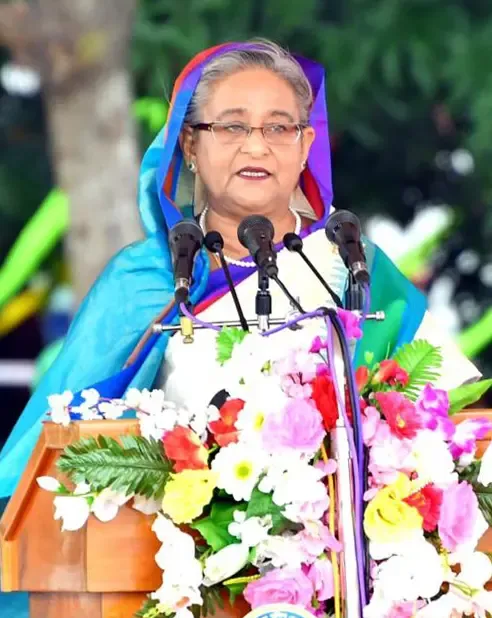
Dhaka, Dec 1 (NationPress) The Awami League on Monday dismissed the ruling from a Dhaka court regarding former Prime Minister Sheikh Hasina and her relatives in a case initiated by the Anti-Corruption Commission (ACC), labeling the decision as “entirely predictable”.
Criticizing the interim government led by Muhammad Yunus, the party contended that this verdict, alongside other recent ACC decisions, illustrates how the commission has been weaponized for political ends by “desperate, unelected men”.
The statement followed a Monday verdict from a Dhaka court that sentenced Hasina to five years in prison due to irregularities in the land allocation for the Purbachal New Town project.
Furthermore, Hasina's sister, Sheikh Rehana, received a seven-year sentence, while her niece, British MP Tulip Siddiq, was sentenced to two years.
According to the Awami League, “No convincing evidence of corruption was presented at the ACC because none exists. The defendants lacked adequate legal representation at the ACC and were judged in absentia. This process fails to meet any reasonable standard of judicial fairness,” the party stated, echoing sentiments from both local and international legal experts.
The party claimed that unelected Yunus has intensified his personal vendetta against Hasina, accusing elected officials abroad without any evidence. They noted that this judicial and diplomatic debacle is counterproductive and detrimental to Bangladesh’s reputation on the global stage.
“Every nation grapples with corruption. However, investigations must be conducted in a fair manner. The ACC has failed this test today. It is controlled by an unelected government led by the Awami League's political adversaries. It has exclusively targeted Awami League members or those perceived to support our party, doing nothing to address the cronyism that has surged in Bangladesh since Yunus and his interim government assumed control,” Hasina asserted following the verdict.
She accused Yunus of using the ACC as a “smokescreen” to divert attention from his governance shortcomings.
“He is also employing it to suppress a political party that has been elected nine times since Independence, including the last election when Bangladeshis could vote. He recently barred the Awami League from participating in next year's elections, disenfranchising millions and jeopardizing our nation’s prospects for genuine political reconciliation,” she added.
The former Prime Minister warned that the verdict serves only the interests of “Yunus and his coalition of extremists and opportunists,” cautioning that this entire situation threatens to undermine Bangladesh’s standing with vital trade partners.
Point of View
It is crucial to recognize the complex dynamics at play in this developing story. The Awami League's rejection of the Dhaka court's verdict raises significant concerns about the fairness of judicial processes in Bangladesh and the potential misuse of power by interim governments. The global community will be watching closely as this situation evolves, highlighting the need for transparency and accountability in political matters.
NationPress
25 Sept 2026
Frequently Asked Questions
What was the verdict against Sheikh Hasina?
Sheikh Hasina was sentenced to five years in prison for alleged irregularities in the allocation of plots under the Purbachal New Town project.
Why does the Awami League reject the court's decision?
The Awami League claims the verdict is politically motivated and reflects a lack of judicial fairness, alleging that the Anti-Corruption Commission is being used as a political weapon.
What other sentences were given in this case?
Hasina's sister, Sheikh Rehana, received a seven-year sentence, while her niece, British MP Tulip Siddiq, was sentenced to two years in prison.
What does the Awami League accuse the interim government of?
The Awami League accuses the interim government, led by Muhammad Yunus, of pursuing a personal vendetta against Hasina and of suppressing political opposition.
How does this verdict impact Bangladesh's international reputation?
The Awami League warns that the verdict could harm Bangladesh's standing with key trading partners and complicate political reconciliation efforts.