Why Are Government Employees Protesting in Balochistan?
Synopsis
In a dramatic scene unfolding in Balochistan, government employees demand the implementation of the Disparity Reduction Allowance, leading to significant unrest. With road blockades and escalating protests, the situation is reaching a critical point as employees push back against perceived injustices in their salaries.
Key Takeaways
Protests: Ongoing demonstrations by government employees in Balochistan.
Allowance Demand: Employees demand a 30% Disparity Reduction Allowance.
Government Response: Crackdown on protest leaders, with many arrests.
Suspensions: Previous suspensions of educators for strike participation.
Future Actions: Planned protests leading to a significant sit-in on January 20.
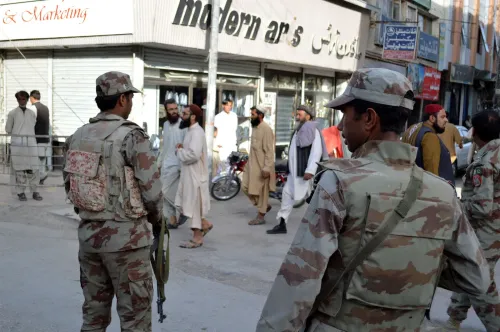
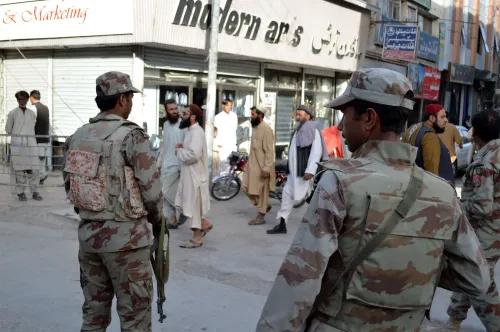
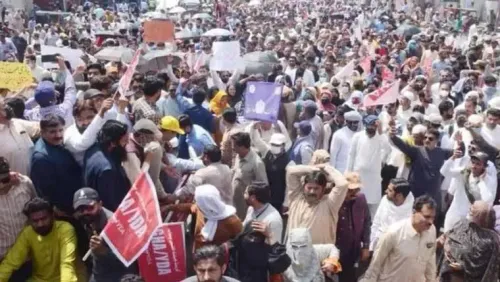
Quetta, Jan 13 (NationPress) In a significant display of discontent, government employees in Balochistan, Pakistan, have taken to the streets, demanding the prompt execution of the Disparity Reduction Allowance (DRA). These protests have resulted in extensive road blockages and numerous arrests, as reported by local media.
For the past seven months, workers from diverse government sectors have rallied for a 30 percent DRA, mirroring allowances already granted in Punjab and Sindh provinces.
The protests are organized by the Balochistan Grand Alliance (BGA), which asserts that employees in institutions such as the Governor's House, Chief Minister's Secretariat, and High Court are receiving higher salaries despite being in the same grade as their counterparts in other departments, according to The Balochistan Post.
The BGA has highlighted the pressing need to rectify this salary inequality, pointing out that a committee formed by the Balochistan government has already suggested the DRA. However, the Chief Minister of Balochistan has yet to take any action on this matter.
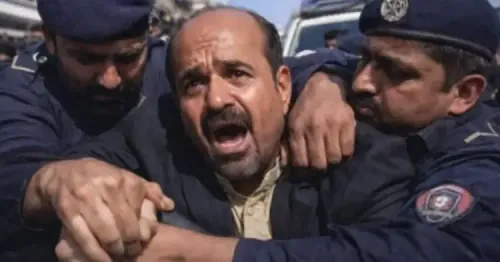
In response to the protests, the provincial government has reportedly initiated a crackdown on protest leaders, resulting in the arrest of over 50 employees thus far.
Earlier, 38 assistant professors and lecturers from government colleges faced suspension for their involvement in the protests.
In retaliation to government actions, the protesting employees have escalated their demonstrations, employing strikes, road blockages, and mass deportations. On Monday, they obstructed major highways linking Quetta to Karachi, Taftan, Gwadar, and Sindh in cities such as Khuzdar, Lasbela, and Nasirabad, disrupting traffic significantly.
The BGA has declared its intention to conduct protests in phases, with the initial phase involving road closures until January 14, followed by a total shutdown of government offices in Balochistan on January 15.
The ultimate stage of these protests is scheduled for January 20, with a sit-in planned near the Red Zone in Quetta. The employees have cautioned the government that they will initiate a 'Jail Bharo' (Fill the Jails) movement if their demands are not met.
Previously, the provincial government suspended 38 assistant professors and lecturers, including six female educators from various college departments, for three months due to their participation in strikes and protests, as reported by local media on Monday.
A notification issued by the Balochistan Chief Secretary indicated that these actions were taken under the Balochistan Employees' Efficiency and Discipline Act (BEDA) for participating in a strike, locking government offices, and obstructing official work, alleging that the suspended educators breached governmental rules and regulations.
According to reports from The Balochistan Post, among those suspended is Abdul Qudoos Kakar, the chairman of the BGA, a coalition of government employees that has been at the forefront of the protest movement advocating for multiple employee rights.
Employee organizations have condemned the government’s actions, expressing concerns that these suspensions represent an effort to suppress the right to protest. They warned that punitive measures against educators would only heighten tensions between the government and its employees.
Point of View
It’s imperative to recognize that the ongoing protests in Balochistan highlight a significant issue of employee rights and salary equity. The government’s inaction in addressing these disparities raises questions about its commitment to fair treatment for all workers. Both sides must engage in dialogue to find a resolution.
NationPress
7 Oct 2026
Frequently Asked Questions
What is the Disparity Reduction Allowance?
The Disparity Reduction Allowance (DRA) is a financial compensation aimed at reducing salary inequalities among government employees.
Why are the protests happening?
Employees are protesting to demand a 30% DRA, similar to what has been granted in Punjab and Sindh provinces.
What actions has the government taken against protesters?
The Balochistan government has arrested over 50 employees and suspended 38 educators for participating in the protests.
What are the next steps for the protesting employees?
The BGA plans to continue protests in phases, with key demonstrations scheduled for January 14 and January 20.
What are the consequences of the government's actions?
Employee organizations warn that punitive measures against educators could escalate tensions and further complicate negotiations.