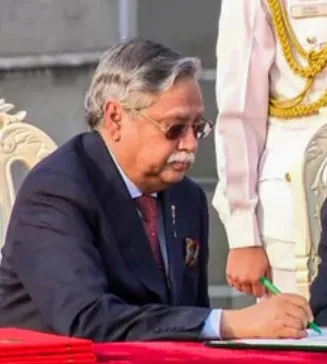
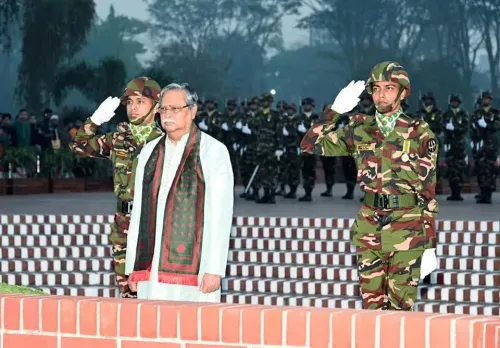
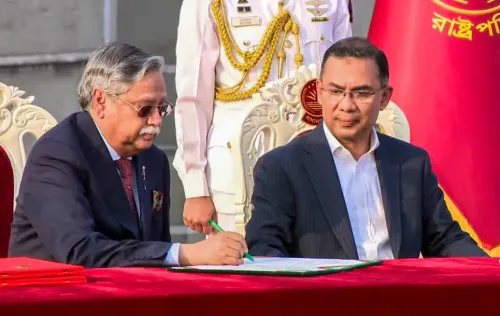
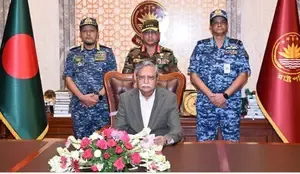
Bangladesh President Mohammed Shahabuddin resigns, cites health
Synopsis
Bangladesh's last institutional link to the pre-July 2024 political order is gone. President Mohammed Shahabuddin's resignation — officially on health grounds but shadowed by a reported phone call with exiled ex-PM Sheikh Hasina — marks a decisive shift in a country still navigating the aftermath of its mass uprising, with the BNP tightening its grip and the Awami League under sustained assault.
Key Takeaways
Mohammed Shahabuddin resigned as Bangladesh President on 24 July , with Parliament's Speaker formally accepting the letter.
He cited health complications as the reason, but reports link his exit to a phone call with exiled ex-PM Sheikh Hasina in May 2025 .
Intelligence agencies reportedly learned of the call, after which Shahabuddin was asked to step down, according to local media.
A senior BNP leader said the phone call was not the only reason, calling the situation 'more complex.' Shahabuddin had been the sole top constitutional office-holder to remain since the July 2024 protests that ousted the Awami League government.
His departure leaves Bangladesh facing fresh questions over presidential succession and constitutional continuity.
Bangladesh President Mohammed Shahabuddin resigned from office on Friday, 24 July, with the Speaker of the national Parliament formally accepting his resignation letter, local media reported. Shahabuddin, who had assumed the presidency in April 2023, stepped down nearly two years before the conclusion of his term, which was due to run until April 2028.
What Shahabuddin Said
Speaking to Bangladeshi newspaper The Daily Star, Shahabuddin attributed his departure to deteriorating health. 'I am suffering from various health complications. I have nothing more to add at this moment,' he said. He did not elaborate further on the nature of his ailments.
The Phone Call That Raised Questions
His resignation, however, came amid reports of a telephonic conversation between Shahabuddin and former Prime Minister Sheikh Hasina — who has been in exile since the July 2024 protests that toppled her Awami League government — while he was in London for medical treatment in May 2025, according to The Daily Star, citing sources. Intelligence agencies reportedly learned of the call, following which the President was asked to step down.
A senior leader of the Bangladesh Nationalist Party (BNP), however, cautioned that the reported phone conversation was not the sole reason behind the resignation, describing the matter as 'more complex.'
A Presidency Under Sustained Pressure
Shahabuddin had been the sole top constitutional office-holder to remain in position following the July 2024 mass demonstrations that ousted the Hasina-led government. His continuation in office had since become a focal point of political controversy, according to leading Bangladeshi daily Prothom Alo.
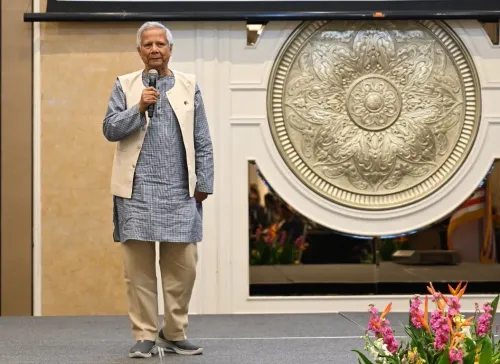
Earlier this year, in an interview with Bangladeshi Bengali daily Kaler Kantho at Bangabhaban — his official residence in Dhaka — Shahabuddin alleged that he had been sidelined during the one-and-a-half-year tenure of the Muhammad Yunus-led interim government and that conspiracies had been hatched to remove him from power. 'During those one and a half years, I have not been in any discussion, yet various conspiracies are being hatched against me. There have been many attempts to permanently destroy the peace and order of the country and create a constitutional vacuum,' he stated.
Broader Political Context
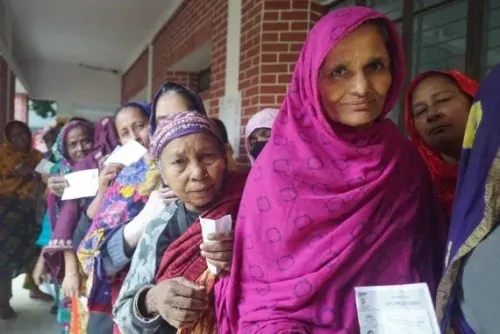
The resignation unfolds as Bangladesh navigates a turbulent political transition. The BNP-led government has intensified its crackdown on leaders associated with the Awami League since assuming power. Shahabuddin's exit removes the last significant institutional link to the pre-July 2024 political order, deepening the country's ongoing constitutional realignment.
With the presidency now vacant, Bangladesh faces fresh questions about succession, institutional continuity, and the pace of its political normalisation.
Point of View
Suggesting that the pressure to resign was coordinated, not spontaneous. Bangladesh's transition is far from settled: removing Shahabuddin closes one chapter but opens a new contest over who fills the vacuum — and on whose terms.
NationPress
22 Oct 2026
Frequently Asked Questions
Why did Bangladesh President Mohammed Shahabuddin resign?
Shahabuddin officially cited health complications as his reason for resigning on 24 July. However, reports indicate that intelligence agencies learned of a phone call he had with exiled former Prime Minister Sheikh Hasina during a medical visit to London in May 2025, after which he was reportedly asked to step down.
When did Mohammed Shahabuddin become Bangladesh's President?
Shahabuddin assumed the presidency in April 2023. His term was due to run until April 2028, meaning he resigned nearly two years before its scheduled end.
What was the significance of Shahabuddin's role after the July 2024 protests?
Following the mass demonstrations in July 2024 that ousted Sheikh Hasina's Awami League government, Shahabuddin was the only senior constitutional office-holder to remain in post. His continuation had been a source of sustained political controversy in Bangladesh.
What did Shahabuddin allege about his treatment during the interim government?
In an interview with Bangladeshi daily Kaler Kantho earlier this year, Shahabuddin alleged he was excluded from key decisions during the Muhammad Yunus-led interim government's one-and-a-half-year tenure. He claimed conspiracies were hatched to remove him and that attempts were made to create a constitutional vacuum in the country.
What happens next in Bangladesh after the President's resignation?
With the presidency now vacant, Bangladesh faces questions about succession and constitutional continuity. The resignation comes as the BNP-led government intensifies its crackdown on Awami League-affiliated leaders, deepening the country's ongoing political transition.