Are Bangladesh Terror Groups HuJI and JMB Using Proxies to Target India?

Synopsis
Intelligence agencies warn that Bangladesh's top terror groups, HuJI and JMB, are increasingly utilizing proxies to execute operations in India. This strategy reflects a growing trend of creating local affiliates to maintain plausible deniability. With elections approaching in West Bengal, security agencies are on high alert as these groups aim to expand their reach.
Key Takeaways
HuJI and JMB are utilizing proxies for operations in India.
These groups aim to establish local affiliates while ensuring deniability for Bangladesh.
Security agencies are on high alert in bordering states.
The upcoming elections in West Bengal may be a focal point for these operations.
Monitoring of illegal immigration has intensified to prevent recruitment into terror groups.
New Delhi, Jan 1 (NationPress) The Harkat-ul-Jihad Islami (HuJI) and Jamaat-ul-Mujahideen, Bangladesh (JMB), two prominent terror organizations in Bangladesh, are progressively opting to utilize their proxies for operations within India, as indicated by intelligence agencies.
These factions are also striving to establish local groups in India, thereby providing Bangladesh with a degree of deniability.
This tactic mirrors the strategies employed by Lashkar-e-Tayiba and Jaish-e-Mohammad within Indian borders. For instance, Lashkar-e-Tayiba has collaborated with factions like The Resistance Front to conduct activities in Jammu and Kashmir (J&K).
In contrast, Jaish-e-Mohammad utilizes proxies such as the People’s Anti-Fascist Front (PAAF) and Kashmir Tigers (KT). Despite being mere proxies, both Lashkar-e-Tayiba and Jaish-e-Mohammad attempt to convince the public that these are homegrown organizations.
The emphasis on these terror groups by the ISI and Jamaat-e-Islami is significant. Many of their operatives previously detained were released without clear reasoning following the removal of Sheikh Hasina. They now operate with considerable freedom, with directives to concentrate their attacks on India.
While the immediate risk is more pronounced in border states, officials assert that these groups possess the capability to function in both northern and southern India.
An official from the Intelligence Bureau noted a novel trend concerning HuJI and JMB. Their networks across India are functioning under various aliases, a clear strategy aimed at eluding security forces.
The police in Assam and Tripura recently dismantled a module known as Imam Mahamude Kafila (IMK), which is a proxy of JMB. Investigations revealed this module had been dormant but was recently reactivated to execute attacks in India. JMB also has other Indian branches, including Jamaat-ul-Mujahideen India and Jamaat-ul-Mujahideen Hindustan.
Similarly, HuJI is activating multiple proxies in India ahead of the West Bengal elections, according to officials.
Historically, HuJI collaborated with the Indian Mujahideen and has proxies like Harkat-ul-Ansar (HuL) and Asif Reza Commando Force (ARCF), which was responsible for the 2002 assault on the American Centre in Kolkata.
Proxies such as IMK and ARCF predominantly consist of Indians and illegal migrants from Bangladesh. Both HuJI and JMB have mobilized these proxies, with authorities closely monitoring not just the borders but also movements within the country for illegal immigrants. A significant effort is underway to recruit more migrants into these terror organizations, aiming to establish networks across the country, primarily targeting the northeast, West Bengal, and southern regions, as explained by an official.
This approach has been predominantly utilized by terror factions based in Pakistan. The primary challenge faced by agencies is the delay in investigations following the dismantling of such modules. The tactic of operating under different names is intended to create confusion. It can take time for authorities to trace activities back to the actual terror group, an officer pointed out.
Having multiple proxies for each terror group is a strategy recommended by the ISI, ensuring that no connections lead back to Bangladesh in the event of a terror incident.
Pakistan has employed similar methods to deflect blame, aspiring for the same in Bangladesh to avoid scrutiny from international bodies like the Financial Action Task Force (FATF).
Another official commented that the execution of these strategies indicates a pressing urgency to execute significant operations in India.
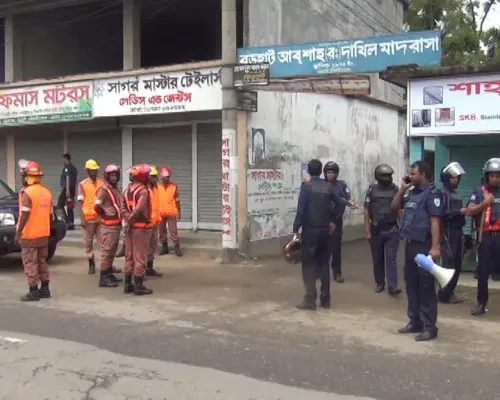
Security agencies, particularly in states bordering Bangladesh, are on high alert due to a marked increase in terror-related activities.
At the borders, significant efforts are being made to infiltrate illegal immigrants into the country. According to officials, these terror factions are attempting to push more illegal migrants with the aim of enlisting them into the proxy organizations operating within India.
Point of View
It is crucial to underscore the gravity of the situation regarding the activities of HuJI and JMB. The establishment of proxies signifies a strategic evolution in their operations, which warrants heightened awareness and proactive measures from security agencies. Our commitment remains steadfast in safeguarding national interests and ensuring public safety.
NationPress
30 Sept 2026
Frequently Asked Questions
What are HuJI and JMB?
HuJI (Harkat-ul-Jihad Islami) and JMB (Jamaat-ul-Mujahideen, Bangladesh) are two prominent terrorist organizations based in Bangladesh, known for their involvement in various attacks and operations aimed at India.
How are these groups using proxies?
These groups are increasingly employing proxies to carry out operations within India, allowing them to create local affiliations and maintain a degree of deniability.
What implications do these developments have for India?
The use of proxies by HuJI and JMB poses a significant threat to India's security, particularly with upcoming elections in states like West Bengal, necessitating heightened vigilance from security agencies.
What has been the response from Indian security agencies?
Security agencies are on high alert, particularly in border states, and are closely monitoring movements related to these terrorist groups, focusing on illegal immigration and recruitment efforts.
Is there a historical context to this situation?
Yes, both HuJI and JMB have a history of collaboration with other terrorist groups and have utilized similar tactics to evade detection and responsibility for their actions.