What Does the Beating Retreat Ceremony Reveal About India’s Military Heritage?
Synopsis
On January 29, the Beating Retreat ceremony at Vijay Chowk marks the conclusion of India's Republic Day celebrations. With a spectacular display of military heritage and musical performances, this event reflects national pride and honors the dedication of the Armed Forces. Join us as we explore the significance of this time-honored tradition!
Key Takeaways
The Beating Retreat ceremony marks the end of Republic Day festivities.
It showcases the musical talents of India's Armed Forces.
The event is presided over by the President of India .
It reflects India's military heritage and national pride.
Seating enclosures celebrate Indian classical music .
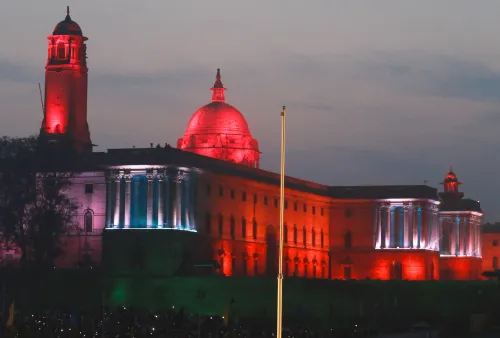
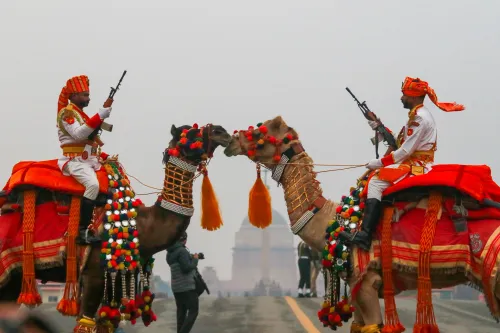
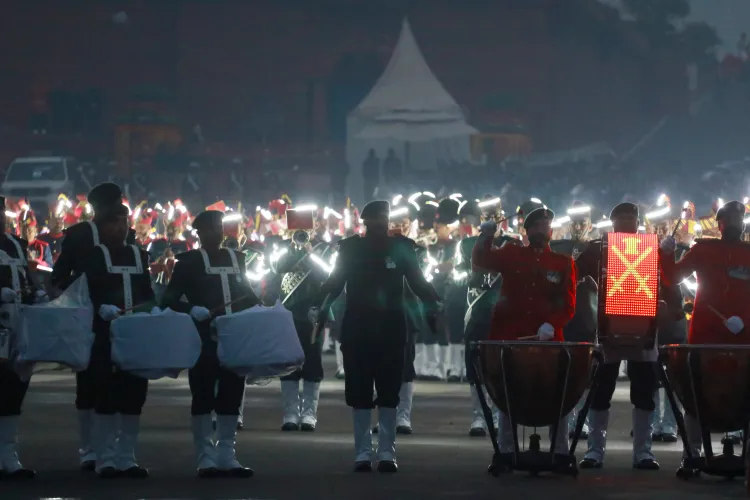
New Delhi, Jan 29 (NationPress) The Beating Retreat ceremony is set to take place on Thursday at Vijay Chowk in New Delhi, officially signaling the end of the Republic Day celebrations.
This annual event occurs every year on the evening of January 29, three days post-Republic Day, serving as a ceremonial conclusion to the national festivities.
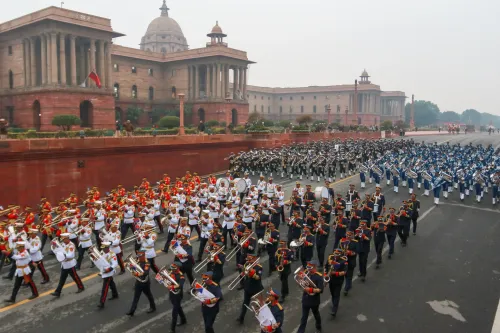
The ceremony will showcase a vibrant musical program featuring bands from the Indian Army, Indian Navy, Indian Air Force, Delhi Police, and the Central Armed Police Forces (CAPF). The event will be presided over by President Droupadi Murmu, the Supreme Commander of the Indian Armed Forces.
Prime Minister Narendra Modi has referred to the Beating Retreat ceremony as a proud representation of India’s military legacy.
In a post on X, the Prime Minister stated, “This evening, the Beating Retreat ceremony will take place. It signifies the conclusion of the Republic Day celebrations. This event will showcase the strength of India’s rich military heritage. We take immense pride in our armed forces, who are committed to safeguarding our nation.”
Defence Minister Rajnath Singh also took to X to emphasize the importance of this event, stating, “At 5.00 p.m. today, the ‘Beating the Retreat’ ceremony will commence at Vijay Chowk in New Delhi. This ceremony is a solemn and dignified tradition that wraps up the Republic Day festivities. Set against the backdrop of Vijay Chowk, it embodies the discipline, unity, and timeless ethos of our Armed Forces, serving as a symbol of national pride and military heritage.”
The Beating Retreat ceremony has its origins in the 1950s during the state visit of Queen Elizabeth and Prince Philip. Over the years, it has transformed into an annual tradition that honors the courage, discipline, and sacrifice of the Indian Armed Forces.
President Murmu, Vice-President C.P. Radhakrishnan, Prime Minister Modi, and Defence Minister Rajnath Singh, along with Union Ministers, senior government officials, and members of the public, will witness this ceremonial event at Vijay Chowk.
The evening will kick off with the massed bands performing the stirring ‘Kadam Kadam Badhaye Ja’. This will be followed by an enchanting performance by the Pipes and Drums ensemble, featuring compositions like ‘Atulya Bharat’, ‘Veer Sainik’, ‘Mili Jhuli’, ‘Nritya Sarita’, ‘Marooni’, and ‘Jhelum’.
Bands from the Central Armed Police Forces will then take the stage, delivering energetic renditions of ‘Vijay Bharat’, ‘Hathrohi’, ‘Jai Ho’, and ‘Veer Seepahi’.
The Indian Air Force band will present uplifting tunes such as ‘Brave Warrior’, ‘Twilight’, ‘Alert’, and ‘Flying Star’, while the Indian Navy band will perform nautical-themed melodies like ‘Namaste’, ‘Sagar Pawan’, ‘Matribhumi’, ‘Tejasvi’, and ‘Jai Bharati’.
The Indian Army band will follow with powerful and emotive pieces including ‘Vijayee Bharat’, ‘Aarambh Hai, Prachand Hai’, ‘Aye Watan, Aye Watan’, ‘Anand Math’, ‘Sugamya Bharat’, and ‘Sitare Hind’. The massed bands will reunite for ‘Bharat Ke Shaan’, the classic ‘Vande Mataram’, and the rhythmic ‘Drummers Call’.
The ceremony will culminate with the buglers playing the iconic ‘Sare Jahan Se Acha’, symbolizing unity and the enduring spirit of the nation. The grand musical performance will be conducted by principal conductor Squadron Leader Leimapokpam Rupachandra Singh.
Individual contingents will be led by Subedar Major Prakash Joshi of the Indian Army, M Antony, MCPO MUS II of the Indian Navy, Warrant Officer Ashok Kumar of the Indian Air Force, INSP Chetram of the Central Armed Police Forces, Subedar S.P. Chourasia of the Pipes and Drums, and Subedar Manoj Kumar of the Buglers.
This year, the seating enclosures at Vijay Chowk have been uniquely named after esteemed Indian classical musical instruments such as Bansuri, Damaru, Ektara, Esraj, Mridangam, Nogada, Pakhawaj, Santoor, Sarangi, Sarinda, Sarod, Shehnai, Sitar, Surbahar, Tabla, and Veena, celebrating India’s vibrant musical heritage.
Rooted in colonial-era military traditions and infused with indigenous musical customs, the Beating Retreat ceremony has evolved into a profound representation of the discipline, valor, and cultural richness of India’s Armed Forces.
Point of View
The Beating Retreat ceremony serves as a poignant reminder of the rich military legacy that defines India. In a time when unity and pride are paramount, this event reinforces our commitment to celebrating the valor and discipline of those who serve. It is essential that we recognize and appreciate such traditions that bind the nation.
NationPress
5 Oct 2026
Frequently Asked Questions
What is the Beating Retreat ceremony?
The Beating Retreat ceremony is an annual event held in India to mark the conclusion of Republic Day celebrations, showcasing the musical prowess and discipline of the Armed Forces.
When does the Beating Retreat ceremony take place?
The ceremony is traditionally held on January 29, three days after Republic Day.
Who presides over the Beating Retreat ceremony?
The event is presided over by the President of India, who is also the Supreme Commander of the Armed Forces.
Which bands perform at the ceremony?
The ceremony features bands from the Indian Army, Navy, Air Force, Delhi Police, and Central Armed Police Forces.
What are some highlights of the ceremony?
Highlights include performances of traditional military tunes, patriotic songs, and the symbolic playing of 'Sare Jahan Se Acha' at the ceremony's conclusion.