Beijing floods: 95,657 evacuated as heavy rains and twin typhoons raise flood risk
Synopsis
Beijing has evacuated over 95,000 people as a fresh bout of heavy rain compounds a widening national flood crisis — with Super Typhoon Bavi now bearing down on China's eastern coast and set to threaten six major river basins for a week. The twin-typhoon scenario, layered on already-flooded southern provinces, is among the most complex flood emergencies China has faced this season.
Key Takeaways
95,657 people from 36,279 households evacuated in Beijing as of 5 pm, 10 July .
Average rainfall in Beijing reached 12 mm from 8 am to 5 pm Friday; Pinggu district recorded 164 mm .
All large and medium-sized reservoirs in Beijing are reportedly operating below upper water-level limits.
Typhoon Maysak has already caused severe flooding in Guangxi and the Pearl River basin ; both Guangxi and Guangdong have issued highest-level flood red warnings.
Super Typhoon Bavi is expected to affect China's six major river basins for about a week from Friday.
The Ministry of Water Resources has directed intensified reservoir safety checks, dike inspections, and early warning upgrades.
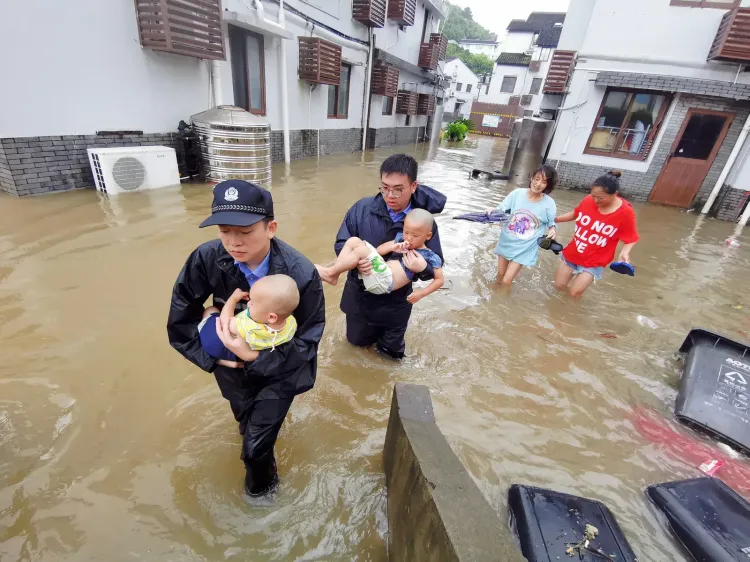
More than 95,657 people from 36,279 households in Beijing had been evacuated as of 5 pm on Friday, 10 July, as authorities intensified flood-control operations and carried out emergency relocations ahead of forecast torrential rainfall. The scale of the evacuation underscores the severity of the flood threat gripping China's capital and several other regions simultaneously.
Rainfall Levels and Reservoir Status
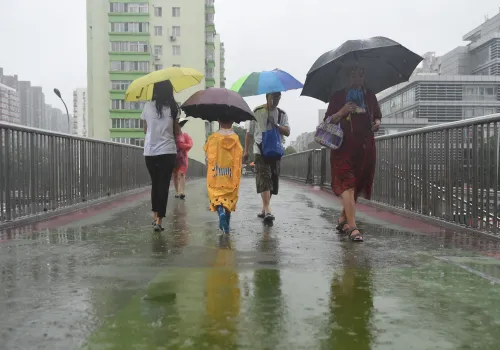
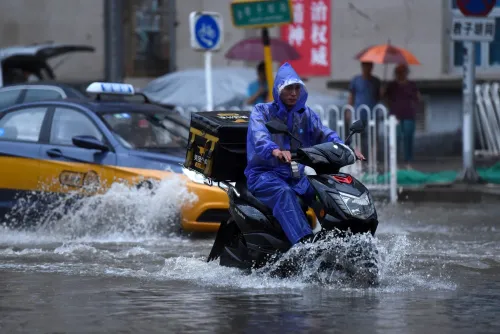
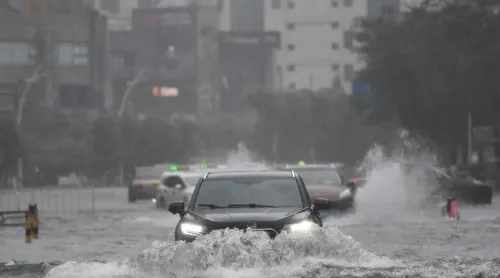
A fresh wave of heavy rain began lashing Beijing from 8 am on Friday, with average precipitation reaching 12 mm by 5 pm, according to the Beijing municipal flood control office. The most intense rainfall was recorded at a marketplace in the suburban district of Pinggu, where cumulative precipitation hit 164 mm — more than 13 times the city average for the same period.
All large and medium-sized reservoirs across Beijing are reportedly operating below their upper water-level limits, offering some buffer against further inflows. However, local meteorological authorities have forecast torrential rain and isolated heavy downpours through Friday evening and overnight, with moderate to torrential rainfall expected to persist into Saturday.
Twin Typhoon Threat Widens the Crisis
The Beijing emergency comes as China simultaneously contends with the compounding threat of two typhoons. Typhoon Maysak, the 10th typhoon of the year, has already triggered extreme rainstorms across parts of Guangxi Zhuang Autonomous Region in south China, causing severe flooding in the Pearl River basin. Continued rain and flooding in the region could pose further threats, the Ministry of Water Resources warned.
On Tuesday, Guangxi upgraded its flood alert to the highest-level red warning, a designation quickly matched by neighbouring Guangdong Province, which also issued a flood red alert. The back-to-back red warnings across two major southern provinces signal an unusually broad and sustained flood emergency.
From Friday, Super Typhoon Bavi is expected to approach China's eastern coast and affect the country's six major river basins for approximately a week, bringing a high risk of flood-related disasters across a wide geographic corridor.
Government Response and Directives
The Ministry of Water Resources has deployed flood-control and emergency response measures in anticipation of the dual typhoon impact. Authorities have been directed to strengthen flood prevention in Guangxi, improve monitoring and early warning systems, ensure reservoir safety, guard against mountain torrents in small and medium-sized rivers, and step up inspections of dikes and water conservancy projects.
Residents in affected areas have been advised to reduce outdoor activities and closely monitor official weather warnings and emergency updates as conditions are expected to remain volatile through the weekend.
What to Watch
With Super Typhoon Bavi yet to make its full impact felt and rainfall forecast to continue through Saturday, flood risks across Beijing and multiple river basins remain elevated. The convergence of two active typhoon systems with already-saturated river catchments raises the prospect of cascading flood events over the coming week.
Point of View
000 people in a single city — is striking, but the deeper concern is systemic: China is managing two active typhoons simultaneously, with Bavi threatening six river basins for up to a week on top of Maysak's already-severe damage in Guangxi. Red warnings in both Guangxi and Guangdong on the same day is a rare and telling signal. The real stress test is not Beijing's reservoirs, which are reportedly within limits, but the cumulative load on river infrastructure across south and east China if Bavi tracks as forecast. Past seasons have shown that it is the second or third consecutive flood pulse — not the first — that overwhelms drainage and dike capacity.
NationPress
9 Oct 2026
Frequently Asked Questions
How many people have been evacuated in Beijing due to the floods?
As of 5 pm on Friday, 10 July, a total of 95,657 people from 36,279 households had been evacuated in Beijing. Authorities carried out the evacuations as part of intensified flood-control and emergency relocation measures ahead of forecast torrential rainfall.
What is Super Typhoon Bavi and why is it a concern?
Super Typhoon Bavi is a powerful storm expected to approach China's eastern coast from Friday and affect the country's six major river basins for approximately a week. Its arrival on top of already-flooded river catchments raises the risk of cascading flood disasters across a wide area.
Which areas of China are already facing flood red warnings?
Guangxi Zhuang Autonomous Region and neighbouring Guangdong Province have both issued highest-level flood red warnings following severe flooding triggered by Typhoon Maysak in the Pearl River basin. These are among the most serious flood alerts China issues.
What is the status of Beijing's reservoirs?
According to reports, all large and medium-sized reservoirs in Beijing are currently operating below their upper water-level limits, providing some capacity to absorb additional inflows. However, authorities continue to monitor the situation closely as rainfall is forecast to persist through Saturday.
What precautions are authorities advising residents to take?
Residents in affected areas have been advised to reduce outdoor activities and closely monitor official weather warnings and emergency updates. The Ministry of Water Resources has also directed local authorities to strengthen flood prevention, improve early warning systems, and inspect dikes and water conservancy infrastructure.