Will CAPF Deployment Double for the Upcoming Bengal Assembly Polls?

Synopsis
In an unprecedented move, the Central Armed Police Forces (CAPF) deployment for the upcoming Bengal Assembly elections could potentially double compared to previous elections, raising questions about security and electoral integrity. The implications of this decision are significant for political parties and voters alike.
Key Takeaways
CAPF deployment may double for upcoming elections.
Previous average deployment was around 1,000 companies.
Single-phase polling could limit voter intimidation.
Logistical challenges are expected with increased security.
Political parties may face operational difficulties under these conditions.
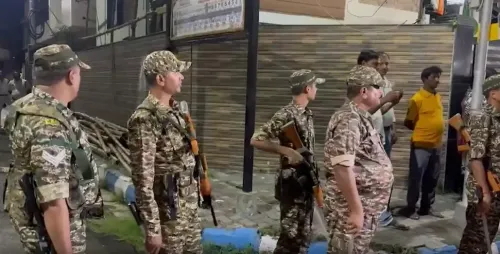
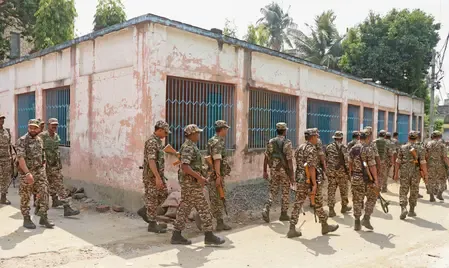
Kolkata, Jan 6 (NationPress) The allocation of Central Armed Police Forces (CAPF) personnel for the vital Assembly elections in West Bengal later this year is set to potentially double compared to previous elections in the state, which include the Assembly elections in 2016 and 2021, along with the Lok Sabha elections in 2019 and 2024.
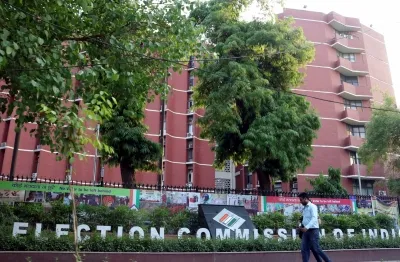
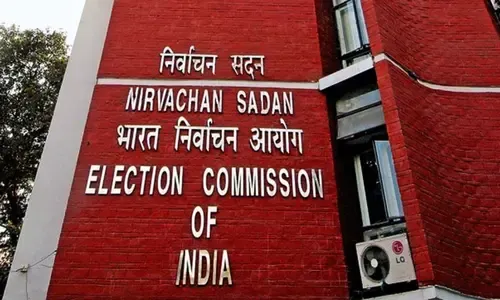
The Chief Electoral Officer (CEO) of West Bengal, Manoj Kumar Agarwal, participated in a meeting led by Chief Election Commissioner (CEC) Gyanesh Kumar at the Election Commission of India’s headquarters in New Delhi on Monday, where one of the primary discussions revolved around the CAPF deployment for this year’s Assembly elections.
According to the requirements outlined by the CEO during the meeting, this year's elections may necessitate the deployment of 2,000 companies of CAPF, particularly if the proposal to conduct the polling in either one or two phases is adopted, as reported by sources within the CEO's office.
"During the last four elections, the average CAPF deployment was around 1,000 companies, as the number of polling phases varied from seven to eight. However, should the Commission accept the CEO's recommendation for conducting the elections this year in one or two phases, the requirement is expected to naturally increase to 2,000 companies," stated sources from the CEO's office.
These sources also highlighted that the possibility of a single-phase or two-phase polling system in West Bengal presents both advantages and challenges.
"The benefit is that political factions will face restrictions in mobilizing their supporters from one area to another, addressing the longstanding concern of outsider mobilization on polling day or the day before, which often intimidates voters," sources from the CEO's office added.
Nevertheless, a single-phase or two-phase election would necessitate a more extensive deployment of CAPF, especially on polling day. "If the Commission can facilitate those arrangements, the concept of a single-phase or two-phase poll is indeed quite feasible," the sources remarked.
Point of View
I believe the potential doubling of CAPF deployment is a crucial step towards ensuring a fair electoral process. While it presents logistical challenges, the safety and integrity of the elections must remain our top priority. The decision reflects the Commission’s commitment to addressing voter concerns and maintaining peace during the elections.
NationPress
27 Sept 2026
Frequently Asked Questions
Why is CAPF deployment being increased for the Bengal Assembly elections?
The increase in CAPF deployment aims to enhance security and mitigate voter intimidation during the elections.
How many companies of CAPF are expected to be deployed?
Approximately 2,000 companies of CAPF are projected to be deployed for the upcoming elections.
What are the advantages of a single-phase election?
A single-phase election can prevent political parties from mobilizing supporters, reducing instances of voter intimidation.
What challenges does a single-phase election present?
It necessitates a larger deployment of CAPF, especially on polling day, which could pose logistical challenges.
When were the last Assembly elections held in West Bengal?
The last Assembly elections in West Bengal were held in 2021.