Kolkata footpaths to be cleared of illegal hawkers, says Bengal minister
Synopsis
West Bengal minister Dilip Ghosh has put Kolkata's illegal footpath hawkers on notice — clear out voluntarily or the state will act. The warning extends an ongoing railway-station crackdown to the city's congested pavements, reviving a decades-old battle that multiple governments have promised but never conclusively won.
Key Takeaways
Dilip Ghosh , West Bengal's Rural Development and Panchayat Affairs Minister, warned on 28 June that Kolkata footpaths would be cleared of illegal hawkers.
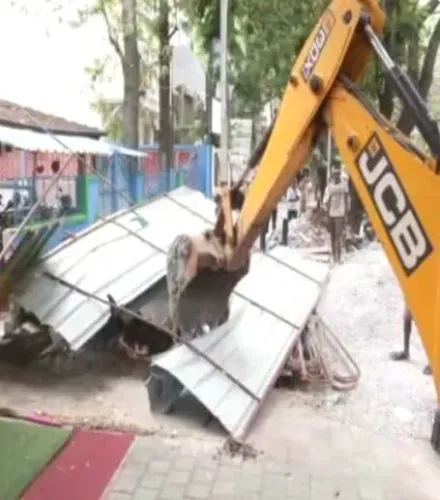
The drive mirrors an ongoing anti-encroachment action already under way at West Bengal railway stations .
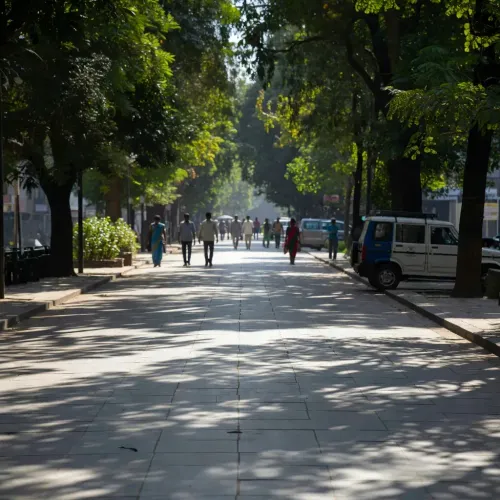
Ghosh cited pedestrian safety, arguing encroachments force people to walk on busy roads in an already congested city.
He also noted that illegal stalls block entrances of licensed shops whose owners pay taxes.
Footpath encroachment in Kolkata is a problem dating back to the 34-year Left Front regime, with complaints spanning North and South Kolkata .
No specific operational timeline was announced; the minister warned encroachers to move voluntarily or face legal action.
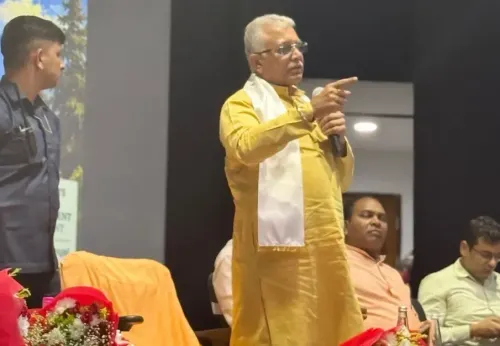
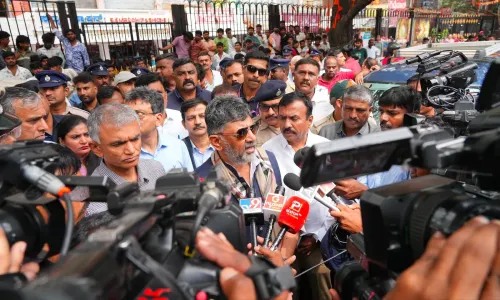
West Bengal Rural Development and Panchayat Affairs Minister Dilip Ghosh on Sunday, 28 June warned that pavements and footpaths across Kolkata would be cleared of illegal hawkers' stalls, mirroring the anti-encroachment drive already under way at railway stations across the state. Ghosh issued the warning while speaking to media persons and cautioned encroachers to vacate voluntarily or face legal action.
What the Minister Said
'Be it railway stations or the pavements and footpaths in Kolkata — these are not places for running a business. This should clearly be understood by those who are running businesses after illegally encroaching such areas and also by those who have allowed or encouraged them to encroach in the past,' Ghosh said.
He further argued that footpaths belong to tax-paying pedestrians and that illegal stalls also obstruct the entrances of licensed shops whose owners pay taxes to civic bodies. 'This is totally unfair for the people, both pedestrian and legal shop-owners, since both these categories of people pay tax,' he added.
Safety Concerns Driving the Push
Ghosh pointed to a direct safety hazard: encroached footpaths force pedestrians onto busy roads, compounding the risk in a city already notorious for severe traffic congestion. 'As it is, the roads in Kolkata are highly congested. Traffic jams are a daily affair. In addition, if pedestrians are forced to walk in the middle of the streets, the risks are aggravated,' he said, adding that the state would act as per law if voluntary clearance did not happen.
A Problem Decades in the Making
Illegal encroachment of Kolkata's footpaths is a long-standing issue that predates the current government, stretching back through the 34-year Left Front regime. Complaints about hawkers occupying pavements on key roads in both North Kolkata and South Kolkata have persisted for decades, with critics arguing that successive administrations looked the other way. Accidents linked to road congestion caused by displaced pedestrians have added urgency to the issue.
Who Is Dilip Ghosh
Dilip Ghosh, currently the state's Rural Development and Panchayat Affairs Minister, is also the former national vice-president of the Bharatiya Janata Party (BJP) and a former state president of the party in West Bengal. His remarks signal that the state government is now prepared to treat footpath encroachment as a law-and-order matter rather than a civic inconvenience.
What Happens Next
No specific timeline or operational plan for the crackdown was announced on Sunday. The minister's warning follows visible action at railway stations, suggesting that a phased, location-by-location approach may be adopted. Whether the drive will extend to politically sensitive hawker clusters — many of which have operated under informal patronage for years — will be the real test of the government's resolve.
Point of View
No nodal agency, no relocation plan for displaced hawkers. Kolkata's footpath encroachment problem has survived every government since the Left Front era precisely because hawker clusters are organised vote banks. The real question is not whether the state can clear pavements near railway stations, where central jurisdiction provides cover, but whether it will act on politically embedded clusters in North and South Kolkata. A crackdown without a rehabilitation plan also risks pushing informal livelihoods further underground rather than resolving the underlying urban governance failure.
NationPress
26 Sept 2026
Frequently Asked Questions
What did Bengal minister Dilip Ghosh say about Kolkata hawkers?
Minister Dilip Ghosh on 28 June warned that illegal hawkers occupying Kolkata's footpaths and pavements would be evicted, either voluntarily or through state legal action. He said footpaths belong to tax-paying pedestrians and that encroachments also block licensed shops.
Why is footpath encroachment a problem in Kolkata?
Illegal hawker stalls on Kolkata's pavements force pedestrians onto busy roads, increasing accident risk in an already congested city. The problem has existed since the 34-year Left Front regime, with complaints spanning key roads in both North and South Kolkata.
Is there a timeline for the Kolkata footpath crackdown?
No specific timeline was announced by Minister Ghosh on Sunday. He indicated the drive would follow the model of ongoing anti-encroachment action at West Bengal railway stations, suggesting a phased approach.
How does this relate to railway station evictions in West Bengal?
Anti-encroachment drives at several West Bengal railway stations have already been carried out, and Ghosh cited these as the model for the planned Kolkata footpath crackdown. The minister suggested both actions stem from the same principle — public spaces cannot be used for illegal commerce.