Bengaluru footpath drive: 300 pedestrians die yearly, GBA clears 2,000 km
Synopsis
Bengaluru's civic authority has launched a sweeping footpath reclamation drive — but the headline figure is the starkest argument for it: 300 pedestrians reportedly die every year simply because they cannot walk on the city's footpaths. With 2,000 km targeted across 16 locations and vendor protests already brewing, the real test is whether this drive outlasts the politics.
Key Takeaways
The Greater Bengaluru Authority (GBA) launched the 'Safe Footpath Campaign' on 1 July 2025 , starting near Ashoka Pillar .
Bengaluru Development Minister Krishna Byre Gowda said nearly 300 pedestrians die annually in road accidents due to encroached footpaths forcing them onto roads.
The current phase targets 2,000 km of footpaths — less than 20% of the city's total 15,000 km network.
Encroachments identified at 16 locations across four Assembly constituencies : Shivajinagar , Gandhinagar , Chickpet , and Chamarajpet .
The drive is mandated by Supreme Court directions and citizen demands; footpath vendors have protested, seeking uniform enforcement citywide.
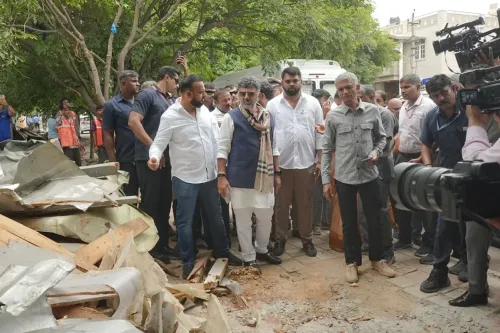
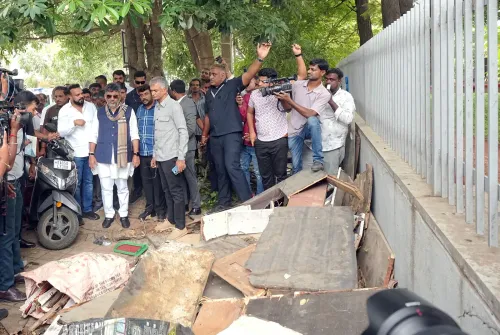
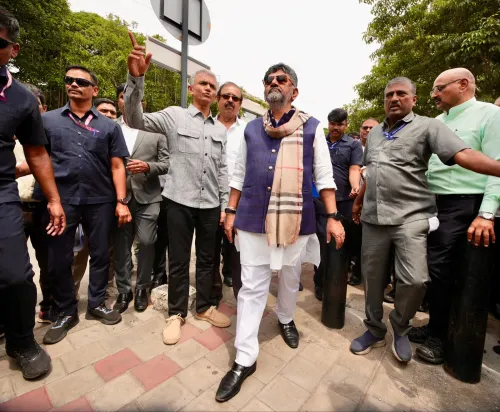
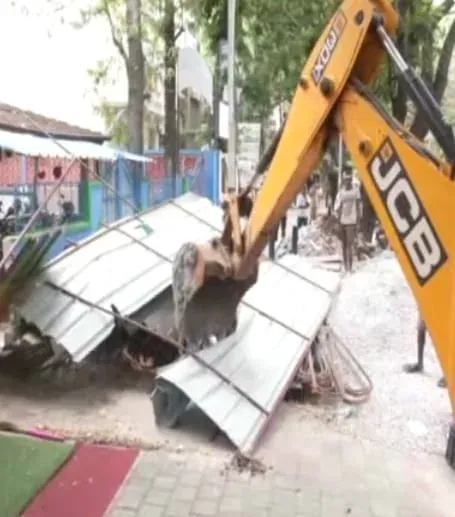
The Greater Bengaluru Authority (GBA) on 1 July 2025 launched the 'Safe Footpath Campaign', a phased anti-encroachment drive targeting pedestrian pathways across Bengaluru, with Bengaluru Development Minister Krishna Byre Gowda warning that nearly 300 pedestrians are killed in road accidents every year because encroached footpaths force them onto motorised traffic lanes. The campaign began with an enforcement drive near Ashoka Pillar, where GBA personnel removed shops, signboards, and other structures blocking pedestrian access.
Scale and Scope of the Drive
The current phase covers approximately 2,000 kilometres of footpaths — less than 20 per cent of Bengaluru's total 15,000-kilometre footpath network, according to Minister Gowda. Clearance operations are focused on roads with heavy pedestrian movement, with encroachments identified at 16 locations across four Assembly constituencies under the GBA Central Zone.
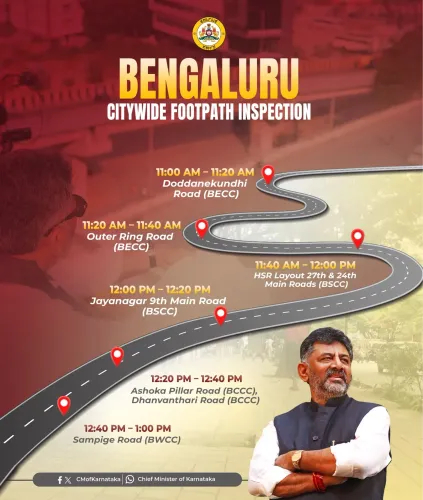
Specific stretches under the drive include Trinity Junction to M.G. Road and M.G. Park, the 100 Feet Road from Indiranagar to Domlur Flyover, Vivekananda Metro Station to Benniganahalli Railway Bridge, Ashoka Pillar to Madhavan Park, 8th Main Road and 9th Main Road in Jayanagar, and R.V. Road from Teachers' College to South End Circle. In the GBA North Zone, operations have commenced on Vidyaranyapura Main Road, Thanisandra Railway Parallel Road, Clark Road in Pulakeshinagar, and Banaswadi Main Road in Sarvagnanagar.
What the Government Said
Minister Krishna Byre Gowda framed the campaign as both a legal obligation and a moral one, stating it is being carried out in line with Supreme Court directions and repeated demands from city residents. 'People in Bengaluru are facing immense inconvenience because footpaths have been encroached upon. Every year, around 300 pedestrians die in accidents because they are unable to walk on footpaths and are forced onto the roads, where they are hit by vehicles. It is the moral responsibility of the government and every citizen to prevent these deaths,' he said.
He also appealed to shop owners and commercial establishments to voluntarily vacate encroachments. 'Footpaths belong to the people. Conducting business on footpaths is against the law. Similarly, parking cars and two-wheelers on footpaths or using them for commercial purposes is illegal,' Gowda added, clarifying that the drive targets public space reclamation, not businesses per se.
Assembly Constituency Breakdown
Under the GBA Central Zone, clearance is underway at six locations in Shivajinagar, four in Gandhinagar, four in Chickpet, and two in Chamarajpet. Officials said the campaign will be rolled out in phases citywide with the objective of improving road safety and ensuring unobstructed pedestrian movement.
Pushback from Vendors
The drive has triggered strong protests from footpath vendors, who have demanded that enforcement be uniform across the city rather than concentrated in select zones. This tension between public safety mandates and the livelihoods of informal traders is a recurring fault line in urban governance across Indian metros. Notably, this is not the first time Bengaluru authorities have attempted to clear footpath encroachments — previous drives have often stalled under political and commercial pressure.
What Comes Next
The GBA has indicated the campaign will expand in phases to cover a larger share of the city's footpath network. Whether enforcement holds beyond the initial phase — and whether it withstands the vendor protests — will determine if the 'Safe Footpath Campaign' marks a durable shift in how Bengaluru manages its public pedestrian infrastructure.
Point of View
000 of 15,000 kilometres — under 20 per cent — raises a pointed question: is this a genuine safety mandate or a high-visibility enforcement burst that fades under pressure? Vendor protests are already surfacing, and their demand for uniform enforcement is not unreasonable — selective drives historically become tools of arbitrary eviction rather than principled urban governance. The Supreme Court's backing gives this drive legal weight, but institutional follow-through, not court orders, is what Bengaluru's footpaths have always lacked.
NationPress
30 Sept 2026
Frequently Asked Questions
What is the GBA Safe Footpath Campaign in Bengaluru?
The Safe Footpath Campaign is a phased anti-encroachment drive launched by the Greater Bengaluru Authority on 1 July 2025 to clear shops, signboards, and other structures from pedestrian footpaths across the city. The current phase covers approximately 2,000 km of footpaths across 16 locations in four Assembly constituencies, with expansion planned citywide.
Why are 300 pedestrians dying on Bengaluru roads every year?
According to Bengaluru Development Minister Krishna Byre Gowda, encroachments on footpaths force pedestrians onto roads, where they are struck by vehicles — resulting in nearly 300 deaths annually. The Safe Footpath Campaign is directly aimed at eliminating this hazard by restoring usable pedestrian pathways.
Which areas of Bengaluru are covered under the footpath drive?
The Central Zone drive covers six locations in Shivajinagar, four in Gandhinagar, four in Chickpet, and two in Chamarajpet. Key stretches include Trinity Junction to M.G. Road, Indiranagar's 100 Feet Road to Domlur Flyover, and R.V. Road from Teachers' College to South End Circle. North Zone operations cover Vidyaranyapura Main Road, Thanisandra Railway Parallel Road, Clark Road in Pulakeshinagar, and Banaswadi Main Road in Sarvagnanagar.
What legal authority backs the Bengaluru footpath encroachment drive?
Minister Krishna Byre Gowda stated the campaign is being carried out in accordance with directions from the Supreme Court of India, in addition to repeated demands from Bengaluru residents for safe and accessible footpaths.
Have footpath vendors protested the GBA drive?
Yes. Footpath vendors have mounted strong protests against the campaign, demanding that encroachment removal be implemented uniformly across the entire city rather than selectively in specific zones. Their concern is that targeted enforcement could disproportionately impact smaller traders while leaving encroachments in other areas untouched.