Bengal's first BJP govt gets ₹2,700 crore Jal Jeevan Mission boost on Day 1
Synopsis
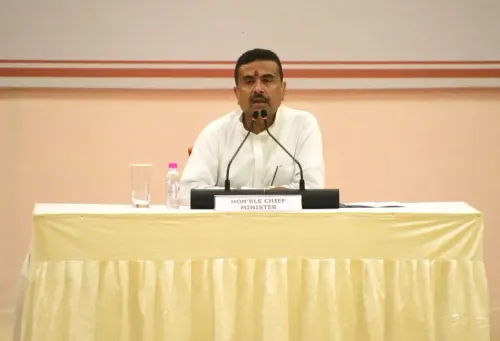
On the eve of West Bengal's historic first BJP government taking oath, the Centre has cleared ₹2,700 crore under the Jal Jeevan Mission — funds that had been blocked for two years under the previous TMC administration. Talks on Ayushman Bharat implementation have also begun, signalling a rapid reset of Centre-state relations under Chief Minister Suvendu Adhikari.
Key Takeaways
The Union Jal Shakti Ministry has cleared ₹2,700 crore under the Jal Jeevan Mission for West Bengal, to be released after MoU signing.
The funds were pending for nearly two years due to the previous TMC government's refusal to accept MoU terms.
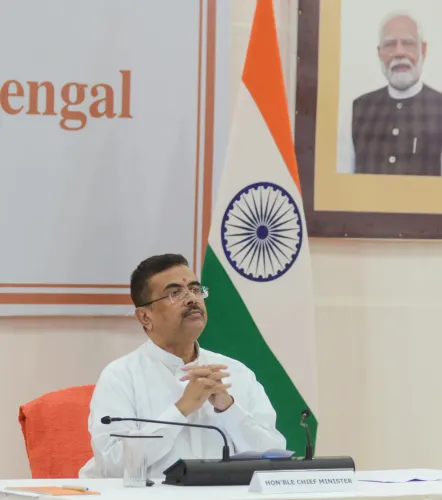
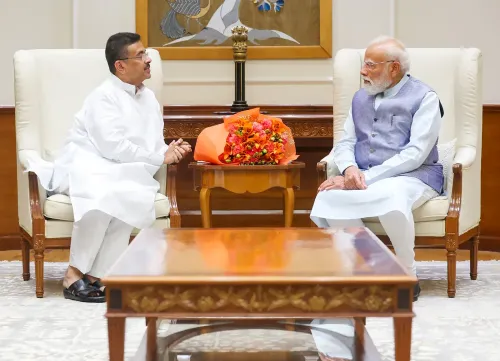
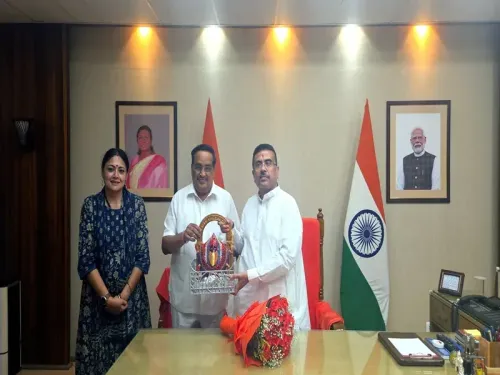
Chief Minister Suvendu Adhikari is set to lead West Bengal's first-ever BJP state government , sworn in on Saturday .
Talks have begun between the Union Health Ministry and the state for implementing Ayushman Bharat , previously blocked under the Banerjee government.
The Jal Jeevan Mission , launched in 2019 and extended as JJM 2.0 through 2028 , has connected over 15.8 crore rural households nationally.
West Bengal's first Bharatiya Janata Party (BJP)-led state government, headed by Chief Minister Suvendu Adhikari, is set to begin its tenure with a significant financial boost — the Union Jal Shakti Ministry has cleared ₹2,700 crore under the Jal Jeevan Mission (JJM) for the state, with the funds expected to reach the state exchequer immediately after the signing of a memorandum of understanding (MoU) between the Centre and the new state government. A formal communication to this effect reached the state secretariat at Nabanna on Friday evening, ahead of the oath ceremony on Saturday.
Why the Funds Were Held Back
According to an insider at the state secretariat, the ₹2,700 crore had remained pending for nearly two years due to the previous All India Trinamool Congress (TMC) government's reluctance to accept the terms and conditions of the MoU. The Mamata Banerjee-led administration had reportedly stalled the process, leaving a significant tranche of central welfare funding in limbo.
The deadlock was broken only recently, following a high-level meeting between secretaries of the Union Jal Shakti Ministry and the West Bengal Public Health Engineering Department, where outstanding complexities were resolved and the state's representative gave a firm commitment to adhere to the MoU's terms, the insider confirmed.
What Jal Jeevan Mission Covers
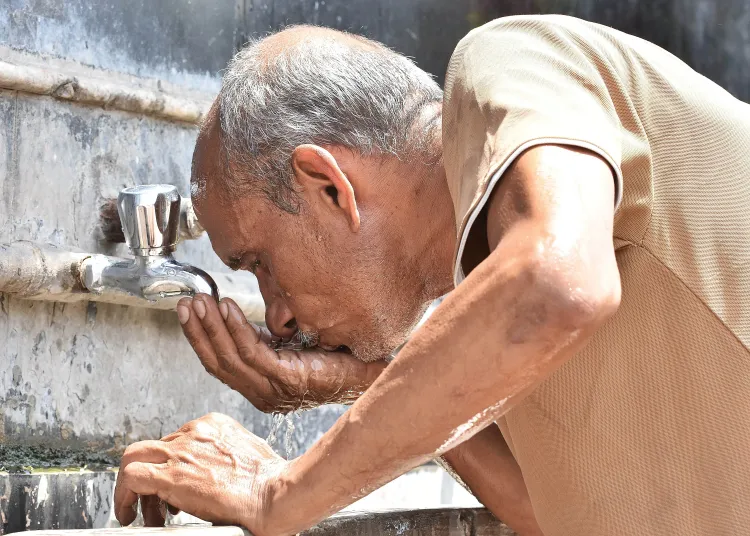
The Jal Jeevan Mission, launched in 2019, was designed to provide safe piped drinking water to every rural household in India. The programme has since been extended as JJM 2.0 through 2028. As of early 2026, over 15.8 crore rural households — approximately 81.87% of the target — have received functional tap connections nationwide. West Bengal's rural population stands to benefit directly once the MoU is executed and disbursements begin.
Ayushman Bharat Talks Also Underway
Separately, the state secretariat insider confirmed that preliminary dialogues have commenced between senior officers of the Union Health Ministry and the West Bengal Health Department for the implementation of Ayushman Bharat, the Centre's flagship health insurance scheme, in the state.
The scheme had been entirely absent from West Bengal under the previous government. The Banerjee administration had consistently refused to adopt Ayushman Bharat, arguing that the state's own health insurance programme, Swastha Sathi, made the central scheme redundant. Prime Minister Narendra Modi had repeatedly raised this issue during his campaign rallies ahead of the recently-concluded Assembly elections, accusing the former government of denying citizens access to central welfare benefits in favour of state-branded alternatives.
What the Change in Government Could Mean
The BJP's electoral victory in West Bengal marks a historic shift — the party has never previously governed the state. The clearance of ₹2,700 crore on the eve of the swearing-in, combined with the resumption of Ayushman Bharat talks, signals a deliberate effort by the Centre to fast-track previously stalled welfare schemes in the state. How quickly the new administration can operationalise these programmes — and whether the funds translate into on-ground infrastructure — will be the first real test of governance for Chief Minister Suvendu Adhikari.
Point of View
700 crore clearance — communicated to Nabanna on the eve of the swearing-in — is as much political symbolism as administrative action. The Centre is making a pointed argument: that West Bengal's rural poor were denied central welfare funds not because of policy failure, but because of the previous government's political calculus. The real accountability question, however, now shifts to the BJP — it must demonstrate that these funds produce functional water connections, not just MoU signatures. West Bengal's rural infrastructure backlog is deep, and the gap between disbursement and delivery has historically been wide across states. Ayushman Bharat's resumption of talks is similarly significant, but talks are not implementation. The new government's first 100 days will reveal whether this is a genuine welfare reset or an opening round of credit-claiming.
NationPress
22 Sept 2026
Frequently Asked Questions
Why was the ₹2,700 crore Jal Jeevan Mission fund blocked in West Bengal?
The ₹2,700 crore was held back for nearly two years because the previous TMC government under Mamata Banerjee refused to accept the terms and conditions of the MoU required to release the central funds. The deadlock was resolved after a meeting between Union Jal Shakti Ministry and state department officials.
Who is West Bengal's first BJP Chief Minister?
Suvendu Adhikari is set to become West Bengal's first BJP Chief Minister, taking oath on Saturday. This marks the first time the BJP has formed a government in the state.
What is the Jal Jeevan Mission and how does it work?
The Jal Jeevan Mission, launched in 2019, aims to provide safe piped drinking water to every rural household in India. Funds are released to states upon signing an MoU with the Centre, with the programme now extended as JJM 2.0 through 2028.
Will Ayushman Bharat now be implemented in West Bengal?
Preliminary talks have begun between the Union Health Ministry and the West Bengal Health Department for Ayushman Bharat's implementation. The scheme was previously absent from the state, as the Banerjee government had rejected it in favour of the state's own Swastha Sathi scheme.
How many households has the Jal Jeevan Mission covered nationally?
As of early 2026, over 15.8 crore rural households — approximately 81.87% of the national target — have received functional tap water connections under the Jal Jeevan Mission.