Bidadi Township row: Shivakumar says farmers misled, Kumaraswamy questions compensation
Synopsis
Karnataka's Bidadi Township dispute has turned into a full-blown political war of ownership — both Shivakumar and Kumaraswamy claim the other started it, while farmers caught in the middle face a compensation offer of ₹2.5 crore per acre that critics say will be worth a fraction of the land's future value. With 80% farmer consent claimed and a 'blood revolution' warning issued, the stakes could not be higher.
Key Takeaways
Shivakumar and Union Minister H.D.
Kumaraswamy clashed on 20 June over the Bidadi Township project near Bengaluru.
Shivakumar raised the farmers' compensation share from 40% to 50% of developed land, with cash payouts at ₹2.5 crore per acre starting Friday.
The CM claims nearly 80% of farmers have voluntarily agreed to part with their land.
Kumaraswamy argues a ₹2.30 crore payout placed in a fixed deposit for 20 years yields only around ₹40 lakh in interest, versus land that could appreciate to ₹20 crore .
Shivakumar says the project was originally notified under Kumaraswamy and continued under former CM B.S.
Yediyurappa — the Congress government did not initiate it.
Kumaraswamy has announced a detailed press conference with documents to clarify his historical position on the project.
Karnataka Chief Minister D.K. Shivakumar and Union Minister H.D. Kumaraswamy clashed sharply on Saturday, 20 June over the proposed Bidadi Township project, trading accusations over the project's origins, land acquisition, and the adequacy of compensation being offered to farmers in the region near Bengaluru. The confrontation underscores the deepening political fault lines over industrial land acquisition in Karnataka.
Shivakumar's Stand: Project Predates Congress Rule
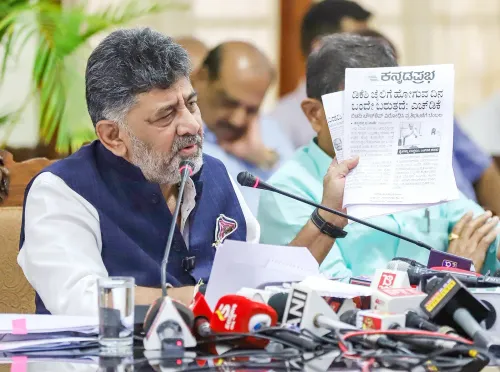
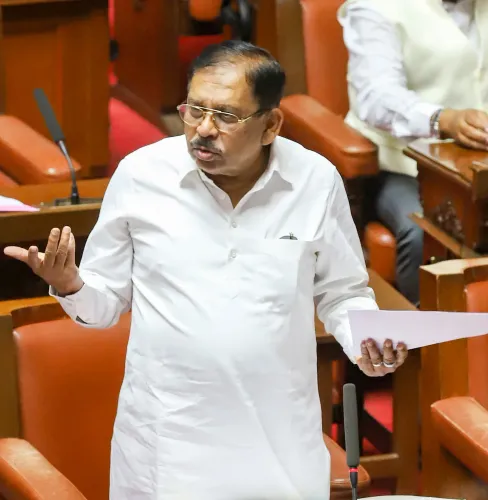
Addressing reporters after a Cabinet meeting at Vidhana Soudha, Chief Minister Shivakumar insisted that the Bidadi Township project was not a Congress initiative, calling Kumaraswamy its original 'architect.' He said the project was first notified during Kumaraswamy's own tenure as Chief Minister and subsequently continued under former Chief Minister B.S. Yediyurappa.
'Kumaraswamy issued the notification for the project. Yediyurappa continued it. We are only taking the project further; we have not initiated anything new,' Shivakumar said. He also questioned why Kumaraswamy had declared the Bidadi region a 'red zone' and issued the original notification if he now opposed the project, and asked why Yediyurappa had not de-notified the land during his tenure.
Shivakumar added that the current government had improved compensation terms — raising the share of developed land offered to farmers from 40 per cent under the earlier proposal to 50 per cent — and that cash disbursements at ₹2.5 crore per acre had commenced on Friday. He claimed nearly 80 per cent of farmers had voluntarily agreed to part with their land.
Farmers Being Misled, Says CM
The Chief Minister accused the Opposition of politicising the issue while simultaneously demanding industrial investment in the state. 'The farmers of Bidadi are good people, but they are being misled,' Shivakumar said, adding that he was not prepared to de-notify the land and face legal consequences.
Responding to Kumaraswamy's recent warning that the issue could trigger a 'blood revolution,' the Chief Minister challenged the Union Minister to specify where land could be acquired for new industries without displacing agricultural holdings.
Kumaraswamy Defends His Position
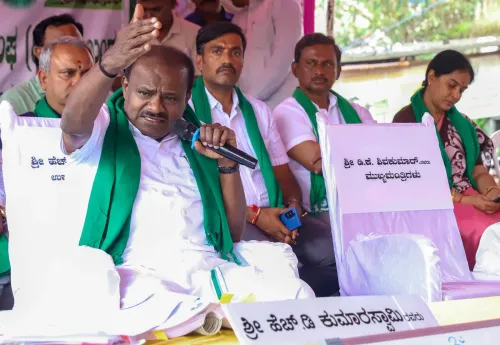
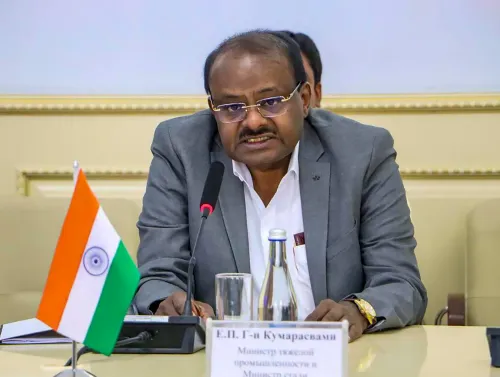
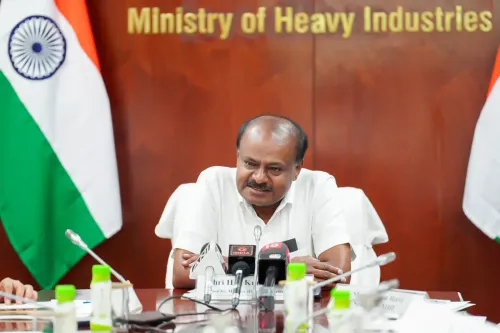
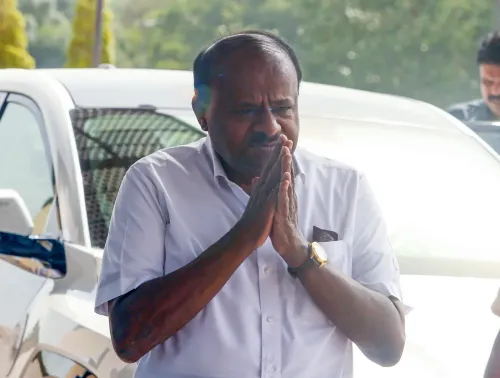
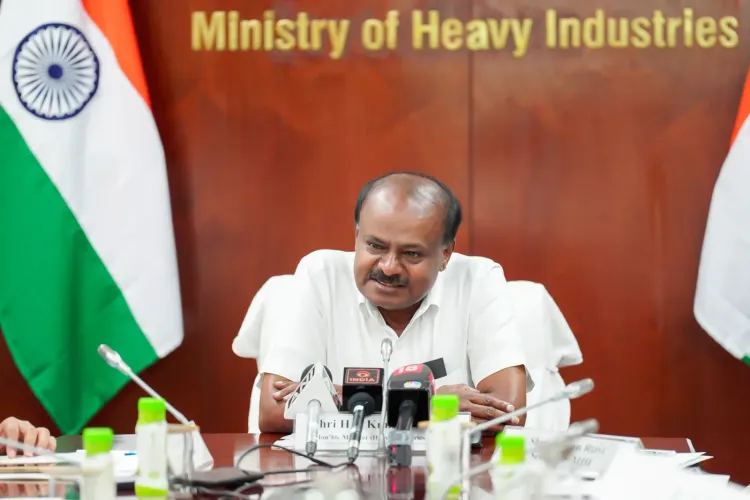
Kumaraswamy, who holds the Heavy Industries portfolio at the Centre, defended his opposition to the current proposal, arguing that fertile agricultural land should not be acquired. He recalled that during his tenure as Chief Minister, the Bidadi Township issue had been debated in the Karnataka Legislative Assembly and that his recorded position was against acquiring even 'an inch of fertile agricultural land.'
He noted that the Bidadi project was part of a larger plan to develop five townships across Karnataka, and said the Congress had formed a fact-finding committee to examine it at the time. He announced plans to hold a detailed press conference to present documents supporting his position.
Compensation Value Under Scrutiny
Kumaraswamy questioned the long-term adequacy of the compensation being offered, arguing that cash payouts could not match the appreciation in agricultural land value over time. He cited the example of a ₹2.30 crore compensation cheque, saying that if placed in a fixed deposit for 20 years, the interest earned may not exceed around ₹40 lakh, whereas the same land could appreciate to nearly ₹20 crore over the same period.
He also questioned the manner in which compensation was being distributed, saying such responsibilities should rest with designated land acquisition officers and district authorities rather than elected representatives.
What Comes Next
Kumaraswamy indicated he would present documentary evidence at an upcoming press conference to clarify his historical position on the project. The Karnataka government, meanwhile, has stated it will proceed with acquisition in accordance with the law. With both sides entrenched, the Bidadi dispute is set to remain a flashpoint between the ruling Congress and the Opposition ahead of future electoral contests in the state.
Point of View
With farmers absorbing the uncertainty in between. Kumaraswamy's compensation arithmetic — ₹2.30 crore yielding ₹40 lakh over 20 years versus land worth ₹20 crore — is a pointed critique that the government has not effectively rebutted. Shivakumar's 80% consent figure, meanwhile, is unverified and contested; independent confirmation would matter here. The deeper contradiction is that both sides claim to champion farmers while arguing over who gets credit for a project that displaces them.
NationPress
19 Sept 2026
Frequently Asked Questions
What is the Bidadi Township project in Karnataka?
The Bidadi Township project is a proposed industrial township near Bengaluru involving the acquisition of agricultural land for industrial development. It was originally notified during H.D. Kumaraswamy's tenure as Karnataka Chief Minister and subsequently continued under former CM B.S. Yediyurappa before the current Congress government took it forward.
What compensation are Bidadi farmers being offered?
The Karnataka government has offered farmers ₹2.5 crore per acre in cash, with disbursements commencing on Friday, 20 June. Additionally, farmers are to receive 50% of the developed land — up from the 40% reportedly proposed under the earlier administration.
Why is Kumaraswamy opposing the Bidadi project now?
Kumaraswamy argues that fertile agricultural land should not be acquired and questions the long-term value of the compensation being offered. He maintains his recorded Assembly position was against acquiring even an inch of fertile land, and has announced a press conference to present supporting documents.
Who started the Bidadi Township project — Congress or a previous government?
According to CM Shivakumar, the project was originally notified by Kumaraswamy during his tenure as Chief Minister and later continued by former CM B.S. Yediyurappa. Kumaraswamy contests this characterisation, saying his Assembly position was explicitly against acquiring fertile agricultural land for the project.
What happens next in the Bidadi land acquisition dispute?
The Karnataka government has stated it will proceed with acquisition in accordance with the law. Kumaraswamy has announced an upcoming press conference to present documentary evidence of his position. The dispute is expected to intensify, with both the ruling Congress and the Opposition deeply entrenched.