BJD will not back INDIA Bloc's Odisha bandh on October 8
Synopsis
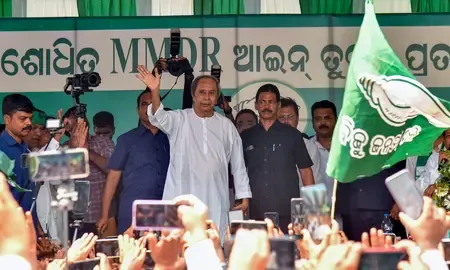
The BJD threw the INDIA bloc's Odisha bandh call into uncertainty after senior leader Pramila Mallik first appeared to back it, then retracted within hours. The reversal lays bare the regional party's tightrope act — selectively engaging with opposition causes, like the CEC controversy, while refusing to be absorbed into any formal bloc, including the INDIA alliance.
Key Takeaways
The Biju Janata Dal (BJD) on 7 October 2026 said it will not support the INDIA bloc's Odisha bandh called for 8 October .
The bandh demands include repeal of the Mines and Minerals Amendment Act, 2026 , resignation of Minister Nityananda Gond , and resignation of CEC Gyanesh Kumar .
Senior BJD leader Pramila Mallik retracted an earlier statement that had appeared to signal party support for the shutdown.
The BJD maintains an equidistance policy and confirmed it is not a member of the INDIA bloc.
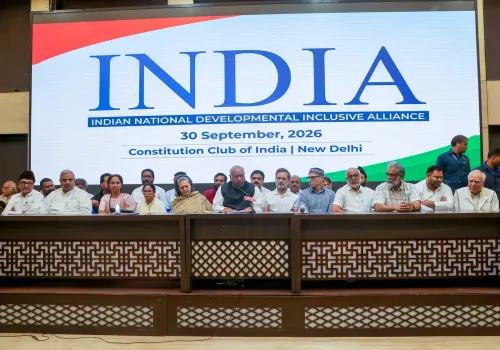
BJD MPs had separately joined an INDIA bloc march in New Delhi on Tuesday over alleged voter roll deletions but did so on an issue-specific basis.
The INDIA bloc reportedly did not consult the BJD before announcing the bandh call.
The Biju Janata Dal (BJD) on Wednesday, 7 October categorically stated it would not extend support to the Odisha bandh called by the Congress-led INDIA bloc for 8 October, drawing a clear line between its selective engagement with opposition causes and full-fledged bloc membership. The clarification came after a confusing sequence of statements by a senior party leader earlier the same day.
What the Bandh Is About
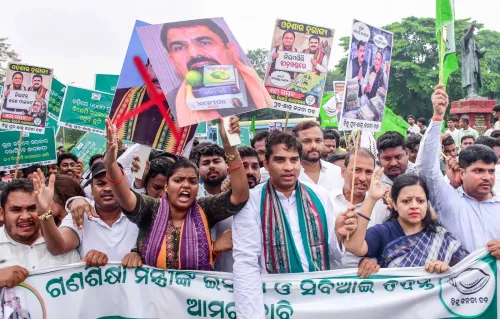
Political parties under the INDIA bloc announced the statewide shutdown with three primary demands: the repeal of the Mines and Minerals (Development and Regulation) Amendment Act, 2026; the resignation of School and Mass Education Minister Nityananda Gond over textbook errors; and the resignation of Chief Election Commissioner (CEC) Gyanesh Kumar over alleged irregularities in the electoral process, including disputed deletions from voter rolls under the Special Intensive Revision (SIR) process.
BJD's Shifting Stand
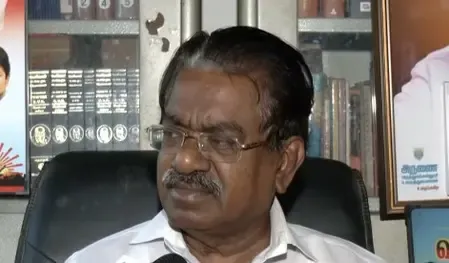
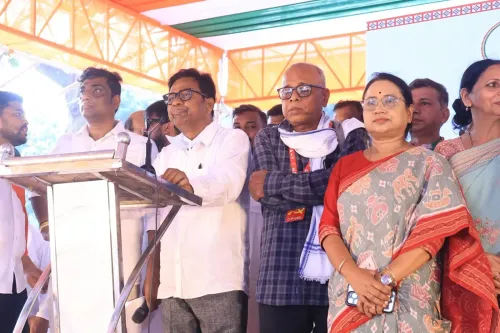
The confusion originated when Opposition Chief Whip and senior BJD leader Pramila Mallik initially appeared to signal support for the bandh while speaking to reporters earlier on Wednesday. Within a few hours, however, she retracted the statement and issued a firm clarification before the media — an unusual back-and-forth that drew attention to the regional party's delicate positioning.
Mallik stated that BJD president Naveen Patnaik had himself called for action against CEC Gyanesh Kumar over alleged irregularities in the SIR process and the handling of Electronic Voting Machines (EVMs), framing the party's stance as issue-based rather than ideologically aligned with any bloc.
The Equidistance Policy Explained
Mallik was emphatic that the BJD's MPs who joined the INDIA bloc-organised march in New Delhi on Tuesday — protesting alleged voter roll deletions and the SIR process — did so independently, not as members of any political coalition. She reiterated the party's long-standing equidistance policy, under which the BJD avoids formal alignment with either the Bharatiya Janata Party (BJP)-led National Democratic Alliance or the INDIA bloc.
'The party is not part of any particular bloc and will not support any programme by any group,' Mallik said, also noting that the INDIA bloc had not held any prior discussions with the BJD before calling the bandh.
What This Means for the Shutdown
The BJD's non-participation is a notable setback for the INDIA bloc's mobilisation in Odisha, where the regional party commands significant organisational reach despite its 2024 electoral defeat to the BJP. Without BJD's backing, the bandh's statewide impact is expected to be limited, particularly outside urban centres where Congress and its allies have a thinner presence. The episode also highlights the BJD's continued effort to project itself as an autonomous force as it rebuilds after losing power in the state.
Point of View
The BJD needs to stay relevant by associating with popular causes — voter roll deletions and CEC accountability have genuine resonance — without being seen as a Congress satellite. The risk is that this selective solidarity satisfies neither side: the INDIA bloc gets no organisational muscle from the BJD, while the BJD gets no credit for principled opposition. The bandh episode also underscores how the SIR process and EVM controversy are increasingly becoming a cross-party flashpoint — a dynamic the BJP in Odisha cannot afford to dismiss.
NationPress
7 Oct 2026
Frequently Asked Questions
Why is the INDIA bloc calling an Odisha bandh on 8 October?
The INDIA bloc called the Odisha bandh on 8 October 2026 to press three demands: the repeal of the Mines and Minerals (Development and Regulation) Amendment Act, 2026; the resignation of School and Mass Education Minister Nityananda Gond over textbook errors; and the resignation of Chief Election Commissioner Gyanesh Kumar over alleged irregularities in the voter roll revision process.
Will the BJD support the Odisha bandh?
No. The BJD confirmed on 7 October that it will not support the INDIA bloc's Odisha bandh. Senior leader Pramila Mallik clarified that the party adheres to an equidistance policy and will not back programmes by any political bloc.
Why did Pramila Mallik retract her earlier statement?
Mallik initially appeared to express support for the bandh while speaking to reporters, but retracted the statement within a few hours and issued a formal clarification. The episode reflected the BJD's careful balancing act between engaging with specific opposition causes and maintaining bloc neutrality.
Did BJD MPs join the INDIA bloc's New Delhi march?
Yes, BJD MPs participated in the INDIA bloc-organised march in New Delhi on Tuesday over alleged voter roll deletions and the Special Intensive Revision (SIR) process. However, Mallik clarified this was on an issue-specific basis and did not amount to joining the INDIA bloc as a political group.
What is the BJD's equidistance policy?
The equidistance policy is the BJD's longstanding position of remaining formally unaligned with both the BJP-led National Democratic Alliance and the Congress-led INDIA bloc. The party engages with issues selectively — as it did on CEC Gyanesh Kumar — without entering into coalition arrangements with either side.