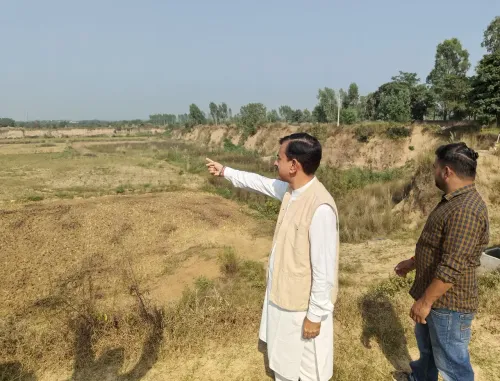
BJP alleges AAP gave 150 acres panchayat land to mining mafia
Synopsis
Sunil Jakhar has alleged the AAP government amended Punjab's Panchayati Raj law in 2025 and illegally handed 150 acres of village land to a mining mafia. He said the ED is already probing 92 acres in Pathankot, and a court has warned that mining on forest land along the international border could aid cross-border smuggling.
Key Takeaways
Former Punjab BJP President Sunil Jakhar on 25 November alleged the AAP government handed 150 acres of panchayat land to the mining mafia.
He said the transfers followed a 2025 amendment that, in his view, undermined the Panchayati Raj Act.
Jakhar alleged collusion with departments headed by three AAP ministers and AAP's Delhi-based operators.
He said the ED is already probing a 92-acre panchayat land transfer in Pathankot .
A court, as cited by him, warned that mining on Forest Department land along the international border could aid smuggling of narcotics, weapons and terrorists.
He said mining was underway inside a protected forest belt despite a ban within a one-km radius, and that auctions remained mandatory even after the amendment.
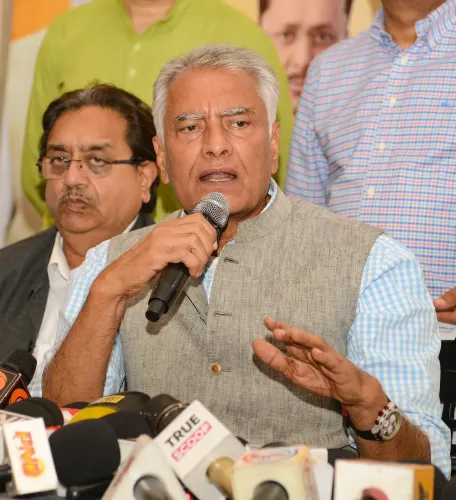
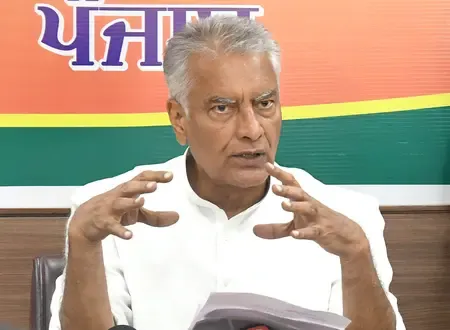
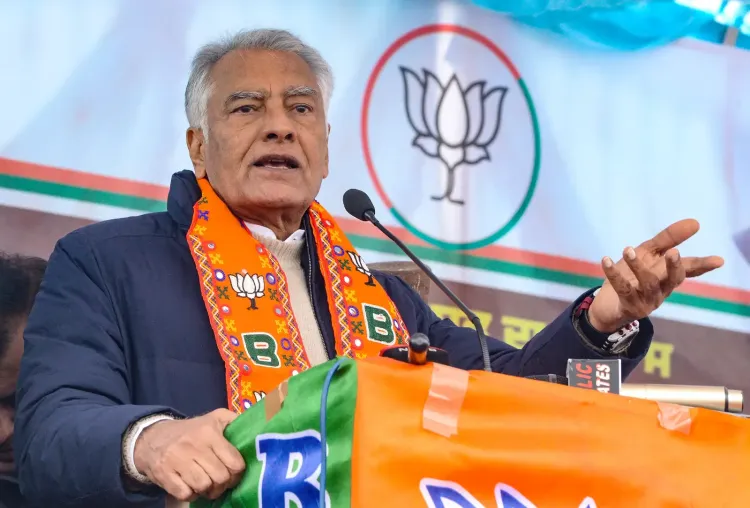
Former Punjab Bharatiya Janata Party (BJP) President Sunil Jakhar on Wednesday alleged that the Aam Aadmi Party (AAP) government had handed over 150 acres of panchayat land to the mining mafia through illegal means after amending the Panchayati Raj law. Addressing reporters in Chandigarh on 25 November, Jakhar said the state government had disregarded the fundamental spirit of the Panchayati Raj Act and acted in collusion with departments headed by three of its ministers.
What Jakhar placed on record
Jakhar said the briefing was meant to expose the alleged plunder of Punjab's natural resources and the state exchequer by AAP's Delhi-based operators working through the mining mafia. He presented what he described as facts to the media and called the AAP government thoroughly dishonest.
He argued that the dispute was not limited to public land and revenue. According to him, it is also a serious question of environment and ecological conservation, because extraction was allegedly being allowed in and around sensitive forest tracts.
Pathankot parcels and the ED probe
Jakhar said the Enforcement Directorate (ED) is already investigating the transfer of 92 acres of panchayat land in Pathankot district by the state government to its favoured mining mafia. That probe, as cited by him, is the first enforcement track against the alleged transfers.
The 150-acre figure he put out in Chandigarh is therefore being framed by the BJP as a wider pattern rather than a one-off allotment. He did not name the three ministers whose departments he accused of collusion, nor did he identify the private operators in the briefing as reported.
Forest land, the border and national security
Jakhar said a court had observed that mining on Forest Department land along the international border poses a threat to national security by facilitating the potential cross-border smuggling of narcotics, weapons and terrorists. He linked that observation to extraction on forest land in a belt where the frontier is close enough for a land-and-mining dispute to acquire a security overlay.
He expressed surprise that mining was being carried out even within a protected forest area designated by the Forest Department, despite mining being prohibited within a one-km radius of such protected areas. If that restriction was in force, any extraction inside the notified belt or within the buffer would, on his telling, breach forest safeguards.
The 2025 change to the Panchayati Raj law
Turning to what he called the next phase of the alleged scam, Jakhar said the AAP government had amended the law in 2025, undermining the basic structure and fundamental spirit of the Panchayati Raj Act, in order to take control of panchayat lands and then hand them over to its favoured mining mafia for exploitation.
He alleged that the amendments paved the way for allotment of land on the strength of a panchayat resolution and the approval of the Deputy Commissioner. Crucially, he maintained that the changes did not wipe out the requirement for land auctions and other mandatory legal procedures.
On Jakhar's own reading, a resolution-plus-Deputy-Commissioner route still could not lawfully replace an auction. He said that when it was previously not possible to hand over panchayat land to the mafia, the government amended the law to enable such allotments after a panchayat resolution was passed.
Why the charge matters
Panchayat land is village common property meant to be administered under the Panchayati Raj framework, not treated as a discretionary grant. An allegation that 150 acres moved to mining interests after a 2025 legal tweak therefore strikes at both local self-governance and the state's mineral-regulation machinery.
This comes amid the ED's reported examination of the 92-acre Pathankot transfer. Notably, Jakhar has now tied that case to a larger acreage, to three unnamed ministerial departments, and to mining inside a protected forest belt along the international border.
The Chandigarh briefing leaves the allegations on the public record. Whether investigators widen the Pathankot probe to the 150 acres he has cited, and whether the Forest Department and the courts test the one-km prohibition he invoked, will decide if the charge remains a political attack or becomes a live enforcement matter.
Point of View
Auctions and other legal steps were still required, which if true would make any quiet allotment via a panchayat resolution and a Deputy Commissioner's nod still unlawful. Punjab's riverbed mining has long sat at the junction of local patronage, environmental harm and, along the Pathankot belt, the international border. The test is not the press conference but whether the ED, the Forest Department and the courts treat the 150-acre claim with the same seriousness already attached to the 92 acres.
NationPress
25 Nov 2026
Frequently Asked Questions
What did Sunil Jakhar allege against the AAP government in Punjab?
Former Punjab BJP President Sunil Jakhar alleged that the AAP government amended the Panchayati Raj law and illegally handed over 150 acres of panchayat land to the mining mafia. He said this was done in collusion with departments headed by three AAP ministers and in disregard of the Act's basic spirit.
How much panchayat land is involved in the mining allegations?
Jakhar cited 150 acres of panchayat land as having been handed to the mining mafia. Separately, he said the Enforcement Directorate is already investigating the transfer of 92 acres of panchayat land in Pathankot district.
What change did Punjab make to the Panchayati Raj Act in 2025?
According to Jakhar, the AAP government amended the law in 2025 in a way that undermined the basic structure of the Panchayati Raj Act and allowed panchayat land to be allotted on a panchayat resolution plus Deputy Commissioner approval. He maintained that auctions and other mandatory legal procedures were still required even after that change.
Why did Jakhar link the mining row to national security?
Jakhar said a court had observed that mining on Forest Department land along the international border could facilitate cross-border smuggling of narcotics, weapons and terrorists. He also said mining was being carried out inside a protected forest area despite a prohibition within a one-km radius of such zones.
Is the Enforcement Directorate already investigating the Punjab land transfers?
Jakhar said the ED is already investigating the transfer of 92 acres of panchayat land in Pathankot district to a favoured mining mafia. He presented the 150-acre allegation as a wider pattern beyond that Pathankot case.