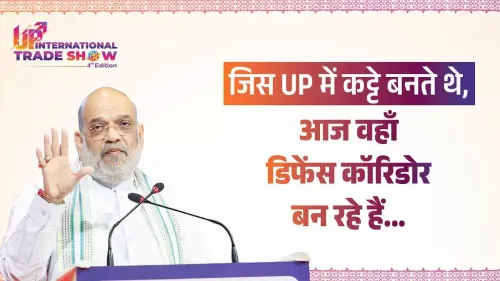
Amit Shah: Cabinet clears ₹11,000 cr equipment scheme
Synopsis
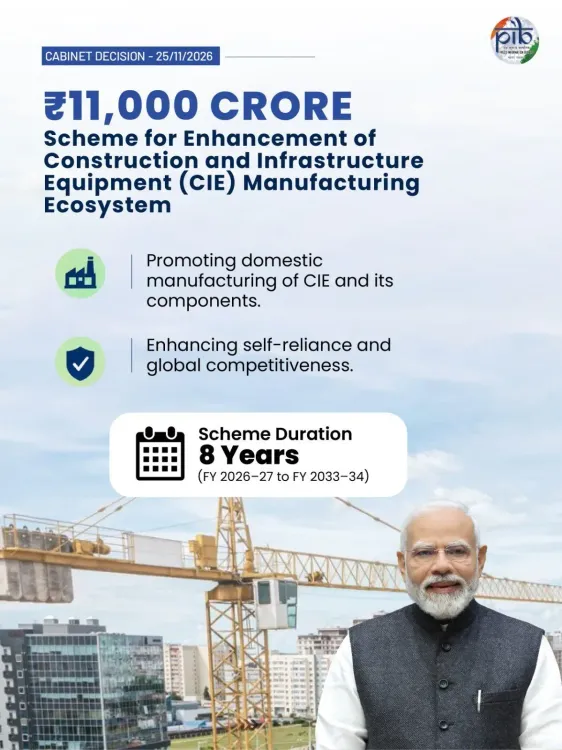
Union Home Minister Amit Shah said the Union Cabinet on 25 November 2026 approved an ₹11,000 crore Construction and Infrastructure Equipment Manufacturing Ecosystem Scheme. He projected ₹21,000 crore in investments and ₹22,500 crore in import substitution across seven equipment types.
Key Takeaways
Union Home Minister Amit Shah said the Union Cabinet on 25 November 2026 approved the Construction and Infrastructure Equipment Manufacturing Ecosystem Scheme.
He put the scheme outlay at ₹11,000 crore and linked it to Aatmanirbharta under Prime Minister Narendra Modi.
Shah said it will support manufacturing of seven types of equipment.
He projected ₹21,000 crore in investments and import substitution worth ₹22,500 crore.
The seven equipment categories and scheme guidelines were not listed in the post.
Union Home Minister Amit Shah on Wednesday turned a Cabinet decision into a question of who builds the machines that build India. In a post on X on 25 November 2026, he said the Union Cabinet had that day approved the Construction and Infrastructure Equipment Manufacturing Ecosystem Scheme — an ₹11,000 crore push he tied to Prime Minister Narendra Modi's principle of Aatmanirbharta.
He called the package 'a giant stride towards strengthening the Indian economy at its core, under Modi Ji's principle of Aatmanirbharta.' This ₹11,000 crore initiative, he said, will support manufacturing of seven different types of equipment, attract ₹21,000 crore in investments, create import substitution worth ₹22,500 crore and 'pave the way to building India with its own tools and capabilities.'
₹11,000 crore, seven lines, three targets
Those figures are the spine of the announcement. An outlay of ₹11,000 crore is meant, on Shah's telling, to pull in ₹21,000 crore of investment and displace ₹22,500 crore of imports. The seven equipment categories were not named in the post — a gap that will matter to every plant waiting to know which machines qualify.
Aatmanirbhar Bharat and the capital-goods gap
The Aatmanirbhar Bharat Abhiyan, announced in May 2020, set the frame for domestic manufacturing and lower import dependence. Cabinet-backed production-linked and ecosystem schemes have since targeted defence, electronics and heavy machinery. Construction and infrastructure equipment is capital goods: the kit that roads, metros, housing and industrial parks actually run on.
Raising manufacturing's share in GDP remains the larger aim. An ecosystem scheme is designed to draw in components, suppliers and assembly around those seven lines — once the rulebook is public.
Guidelines and the industry's next test
Construction equipment manufacturers and infrastructure developers are the stakeholders who will read the fine print. What follows is the release of scheme guidelines, identification of the seven equipment categories, and subsequent investment commitments by industry.
Until those papers appear, Shah's post is the government's first framing: India should raise its skyline with machines made at home. The next highway corridor will still need that kit. The open question is whose factory built it.
Point of View
Where New Delhi has used Cabinet-backed incentives to localise capital goods rather than only consumer manufacturing. Construction equipment is a high-import, high-visibility sector: every highway and metro site is a showroom for foreign or domestic machines. If guidelines tightly define the seven categories and crowd in real capex, the scheme becomes another brick in raising manufacturing's GDP share; if they stay vague, it remains a headline. Watch the guideline release and the first investment announcements — those will show whether the rupee math Shah cited is industrial policy or political framing.
NationPress
25 Nov 2026
Frequently Asked Questions
What is the Construction and Infrastructure Equipment Manufacturing Ecosystem Scheme?
According to Union Home Minister Amit Shah, it is an ₹11,000 crore Union Cabinet-approved initiative to support domestic manufacturing of seven types of construction and infrastructure equipment. He said it is meant to attract investment, substitute imports and advance Aatmanirbharta. Detailed guidelines and the list of seven equipment categories were not set out in his post.
How much funding did Amit Shah announce for the scheme?
Shah said the scheme is an ₹11,000 crore initiative. He also projected ₹21,000 crore in investments and import substitution worth ₹22,500 crore.
When did the Union Cabinet approve the scheme?
Shah stated on 25 November 2026 that the Union Cabinet had approved the scheme the same day. Official scheme guidelines and the precise equipment list were not detailed in the post.
How does this relate to Aatmanirbhar Bharat?
Shah tied the scheme to Prime Minister Narendra Modi's principle of Aatmanirbharta, or self-reliance. The Aatmanirbhar Bharat Abhiyan, announced in May 2020, has sought to expand domestic manufacturing and cut import dependence, including in capital goods.
Who stands to be affected by the construction equipment scheme?
Construction equipment manufacturers and infrastructure developers are the core stakeholders. Industry will look next at scheme guidelines, identification of the seven equipment categories, and actual investment commitments.