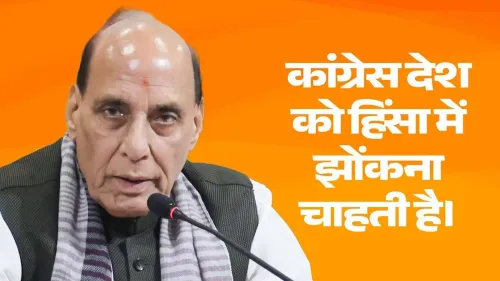
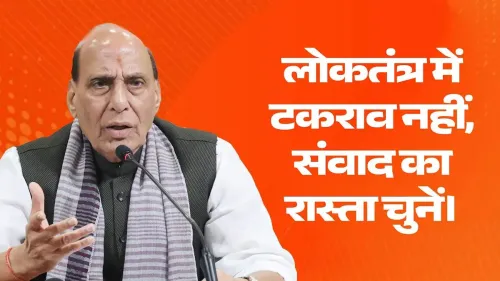
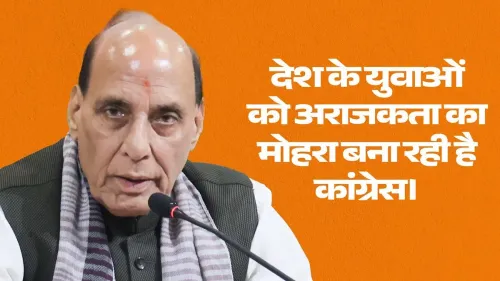
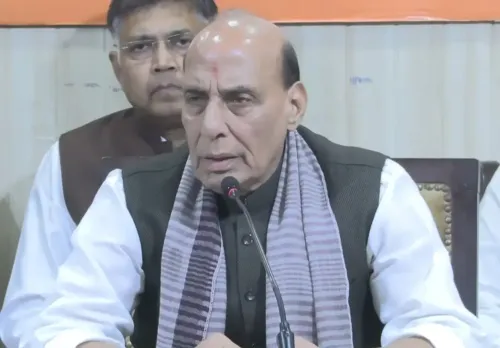
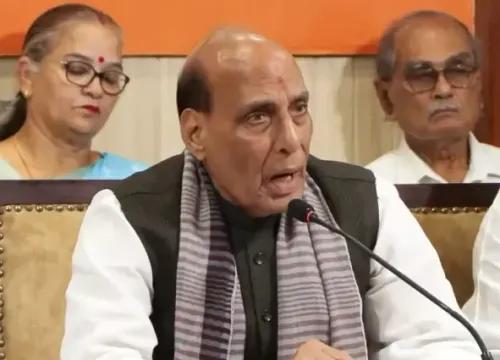
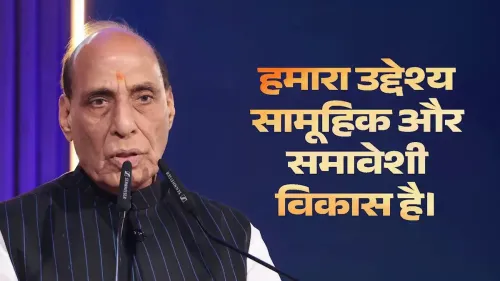
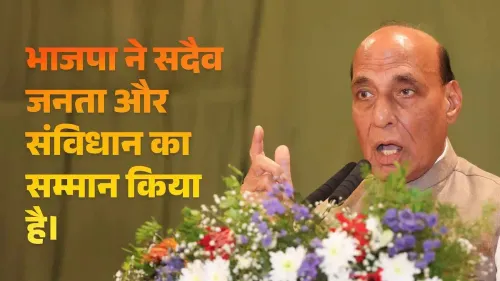
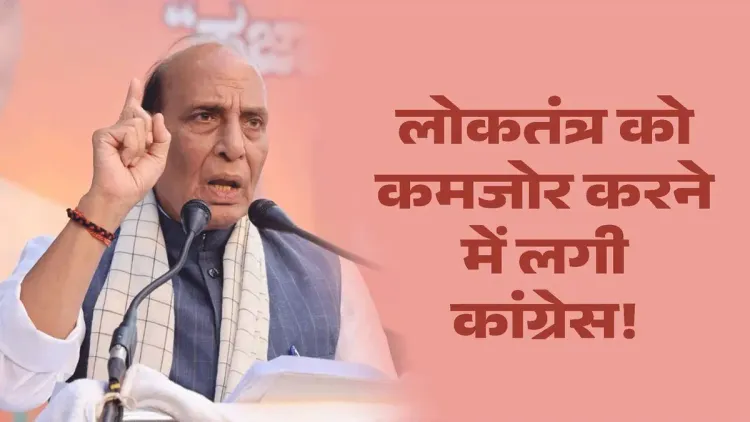
Defence Minister Rajnath Singh slams Congress on democracy
Synopsis
Union Defence Minister Rajnath Singh accused Congress of spreading anarchy and weakening democracy's roots, saying the party that governed for decades after 1947 will not succeed. He argued an aware public would block those designs.
Key Takeaways
Union Defence Minister Rajnath Singh on 25 November 2026 accused the Indian National Congress of spreading anarchy and trying to weaken democracy's roots.
He said the same democratic system that gave Congress decades in power was now, in his telling, under assault from that party.
Singh added that India's aware public would never let those designs succeed.
Congress formed India's first government after 1947 and held national office for much of the following decades; the BJP-led NDA took office in 2014 .
The post fits a longer BJP–Congress clash over democratic norms; Singh named no specific incident or Bill.
Union Defence Minister Rajnath Singh on Wednesday accused the Indian National Congress of trying to weaken the roots of democracy by spreading anarchy, even as he invoked the decades that party spent in national office after Independence. In a post on X on 25 November 2026, the senior BJP leader said India's aware public would never let those designs succeed.
Writing in Hindi, Singh drew a hard historical contrast. The same democratic system that had given Congress the chance to govern for decades was now, he said, being undermined by that party. He charged that Congress was attempting to weaken democracy's roots by spreading anarchy — अराजकता फैलाकर — and closed with a warning: the country's alert citizens would never allow those plans to work.
The charge: anarchy from a party that once governed for decades
His argument turns on a simple, combative claim. Congress formed India's first government after 1947 and held power at the Centre for much of the following decades. Singh's line is that a party which rose through that democratic order is now, in his telling, working to hollow it out.
He named no specific protest, Bill or parliamentary flashpoint. The post is a framing strike: opposition pressure recast as arajakata — anarchy — rather than as legitimate contest. That is the fight he chose to pick in public.
From Congress's long innings to the post-2014 contest
Rajnath Singh is one of the BJP's most senior voices: Union Defence Minister, former Uttar Pradesh Chief Minister and former Union Home Minister. The BJP-led NDA took office in 2014 after defeating the Congress-led UPA, ending an era in which Congress was the default party of national government.
Since then, the two sides have repeatedly battled over who is the true guardian of democratic norms. BJP figures point to Congress's long years in power to question its present conduct. Congress has often answered with its own charges about institutional strain. Singh's post sits squarely in that pattern. It adds no new scheme and names no new incident. It restates the core accusation in sharper language.
Parliament and the public as the next test
The immediate test is political. Congress's reply, and whether the charge is carried onto the floor of Parliament, will show if this was a one-day salvo or the opening line of a longer argument over democratic conduct.
Singh did not leave the last word to party war rooms. He bet that an aware public would block what he called Congress's designs. That is the line meant to travel: a party that once governed through the system is now accused of trying to unmake it — and voters, he says, will not let it happen.
Point of View
Not a policy announcement. By tying Congress's decades in office after 1947 to a present-day charge of spreading anarchy, he recasts opposition pressure as a betrayal of the system that once empowered it. That motif has recurred since the NDA's 2014 win: contrast past Congress dominance with alleged present-day disruption. The test is whether the charge sticks with voters or is met by a counter-narrative about institutional strain under the ruling side.
NationPress
25 Nov 2026
Frequently Asked Questions
What did Rajnath Singh say about Congress?
Union Defence Minister Rajnath Singh accused the Indian National Congress of trying to weaken the roots of democracy by spreading anarchy. He said the same democratic system that gave Congress decades in power was now being undermined, and that India's aware public would never let those designs succeed.
When did Rajnath Singh post his remarks on Congress and democracy?
He posted the remarks on X on 25 November 2026. The message was in Hindi and framed Congress's present conduct against its long years in national office after Independence.
Who is Rajnath Singh?
Rajnath Singh is India's Union Defence Minister and a senior BJP leader. He previously served as Uttar Pradesh Chief Minister and as Union Home Minister.
How long did Congress hold power after Independence?
The Indian National Congress formed India's first government after Independence in 1947 and held national office for much of the following decades. The BJP-led NDA took office in 2014 after defeating the Congress-led UPA.
Why do BJP leaders raise Congress's decades in power?
BJP figures have repeatedly used Congress's long period in office to contrast past dominance with current opposition conduct on democratic norms. Rajnath Singh's post continues that public exchange without naming a specific trigger event.