Rajnath Singh slams Congress over foreign remarks on PM
Synopsis
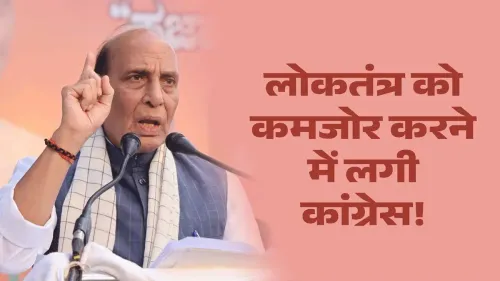
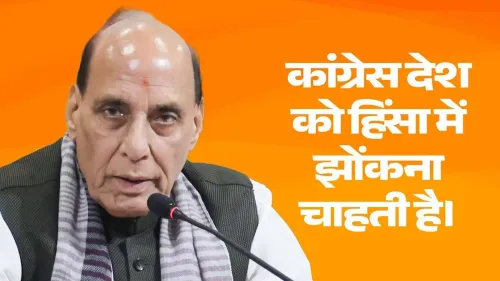
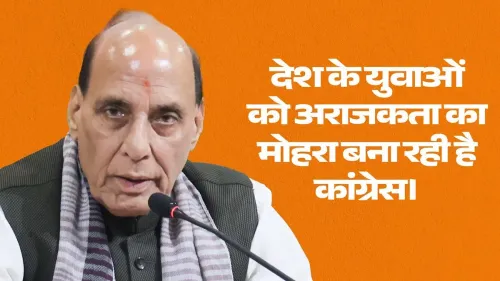
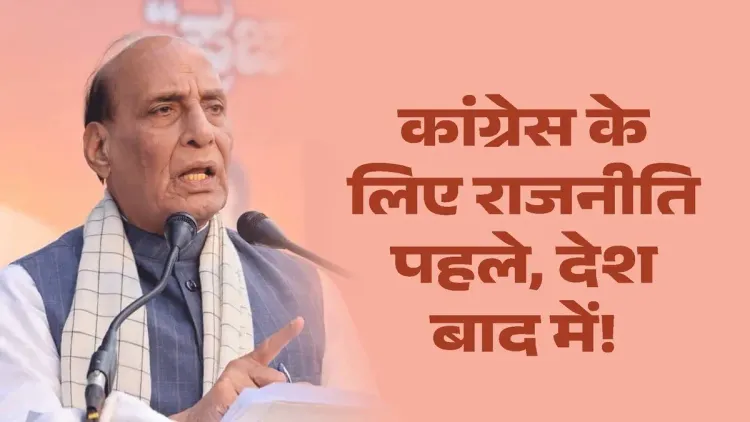
Union Defence Minister Rajnath Singh accused Congress leaders of giving foreign figures an opening to comment on India's democracy and Prime Minister Narendra Modi. He said public trust in Modi, earned through work and repeated mandates, cannot be weakened by Rahul Gandhi.
Key Takeaways
Union Defence Minister Rajnath Singh on 25 November 2026 said political opposition is distinct from the honour of the country.
He accused Congress leaders of giving foreign leaders a chance to comment on India's democracy and on Prime Minister Narendra Modi for partisan gain.
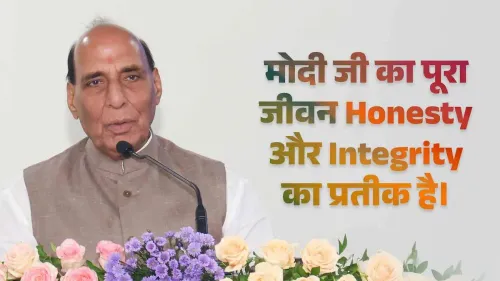
Singh said voters brought Modi to office with love and blessings, and that work and public service have repeatedly earned that trust.
He named Rahul Gandhi and said those efforts cannot weaken public confidence in the Prime Minister.
The post did not name any foreign leader, forum, or specific overseas remark.
A political fight is not a licence to outsource the country's honour. That was the charge Union Defence Minister Rajnath Singh levelled on Wednesday, 25 November 2026, from New Delhi, as he accused Congress leaders of giving foreign figures room to comment on India's democracy and on Prime Minister Narendra Modi. He named Rahul Gandhi as the effort that, in his telling, still cannot dent the public's trust.
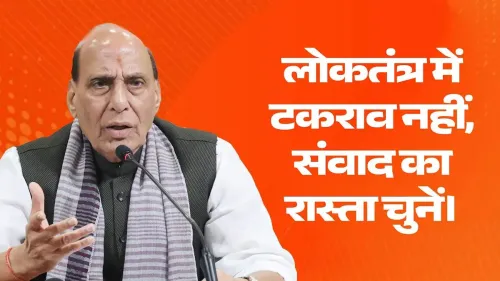
Writing in Hindi on X, Singh drew a bright line: there is a clear difference between political opposition and the honour of the country. It is unfortunate, he said, that Congress leaders were giving foreign leaders an opportunity to comment on India's democracy and the Prime Minister for their political interests. He set देश के सम्मान (the honour of the country) apart from ordinary partisan attack.
The people, he wrote, had brought Modi to power with their love and blessings. The Prime Minister had repeatedly earned that trust through work and public service. Rahul Gandhi's efforts, Singh concluded, cannot weaken this confidence.
Where Singh draws the line on dissent
This was not a defence-budget briefing. It was a political marker from a senior BJP leader who has served as Uttar Pradesh Chief Minister and Union Home Minister. Singh recast a partisan clash as a sovereignty question: attack the government at home if you must; do not, he argued, hand foreign leaders a platform on Indian democracy.
That distinction has been a running theme of BJP governments since 2014. Ruling-party voices have long treated international commentary on elections, institutions, and governance as something opposition politics should not invite or amplify.
Modi's mandate, Gandhi named
Singh put Rahul Gandhi, former Congress president, at the centre of the charge. He did not identify the foreign leaders, the forum, or any specific remark. The post offered no quotation from overseas and no date of the alleged comments.
What it did offer was a mandate argument. Modi, in Singh's account, sits in office because voters put him there, and because delivery has kept that trust intact. In that frame, Congress cannot talk away a confidence the Defence Minister presents as repeatedly renewed at the ballot box.
The internationalisation charge returns
Indian ruling parties have for years accused opposition groups of taking domestic fights abroad, especially when democracy assessments and election-season narratives travel. Singh's post continues that pattern. It treats foreign commentary on the Prime Minister and on Indian democracy as a line that partisan interest should not cross.
Congress is not quoted in the message. Attention now turns to whether the party's leadership answers, and whether the charge of inviting foreign voices into India's internal politics surfaces in Parliament's winter session.
Singh's closing bet is blunt: fight the government, but do not expect, in his words, to shake a trust the public has already given and given again.
Point of View
But inviting foreign voices onto Indian democracy and the Prime Minister is not. That line has been a BJP staple since 2014, used whenever opposition politics collides with overseas commentary on elections and institutions. By naming Rahul Gandhi and wrapping Modi in repeated public mandates, the Defence Minister is trying to make the fight about national honour rather than day-to-day governance. The test is whether Congress answers on the same terrain, or whether the charge simply becomes another winter-session talking point.
NationPress
25 Nov 2026
Frequently Asked Questions
What did Rajnath Singh say about Congress and foreign leaders?
Union Defence Minister Rajnath Singh said Congress leaders were giving foreign leaders an opportunity to comment on India's democracy and on Prime Minister Narendra Modi for political interests. He called that unfortunate and distinct from legitimate political opposition.
Did Rajnath Singh criticise Rahul Gandhi?
Yes. Singh said Rahul Gandhi's efforts cannot weaken the public trust that, in his account, voters have repeatedly placed in Prime Minister Narendra Modi. He presented that trust as earned through work and public service.
Which foreign leaders did Rajnath Singh name?
He named none. The post referred only to foreign leaders in general and offered no forum, date, or quotation. Specific overseas remarks cannot be confirmed from the text itself.
What did Rajnath Singh say about Prime Minister Modi's mandate?
He said the public brought Narendra Modi to power with love and blessings, and that Modi has repeatedly earned that confidence through work and public service. Singh argued that opposition efforts cannot dent that trust.
Why is the BJP drawing a line between opposition and national honour?
BJP governments since 2014 have often framed some opposition tactics as internationalising domestic disputes, especially around democracy and elections. Singh's post continues that pattern by treating foreign commentary on Indian institutions as a sovereignty issue, not routine politics.