Rajnath Singh flags Congress-era defence graft charges
Synopsis
Union Defence Minister Rajnath Singh charged that Congress-era defence purchases, from the 1948 Jeep case through Bofors and AgustaWestland, stayed wrapped in corruption allegations. He said national security and soldiers' honour must rank above political self-interest.
Key Takeaways
Union Defence Minister Rajnath Singh on 25 November 2026 said many Congress-era defence deals were mired in corruption allegations.
He named the Jeep purchase case, the Bofors howitzer deal and the AgustaWestland helicopter contract.
The Bofors scandal became public in 1987 over alleged kickbacks in a Swedish howitzer buy during Rajiv Gandhi's government.
The AgustaWestland VVIP helicopter contract, signed around 2010 under the UPA, was terminated in 2014 after bribery probes.
Singh said national security and soldiers' honour must be placed above political self-interest.
Union Defence Minister Rajnath Singh on 25 November 2026 lined up three of independent India's most politically charged defence files — the Jeep purchase, Bofors and AgustaWestland — and said many Congress-era deals had stayed trapped in corruption allegations. National security and the honour of soldiers, he argued, must stand above political self-interest.
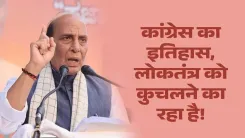
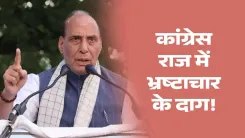
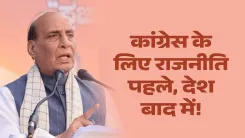
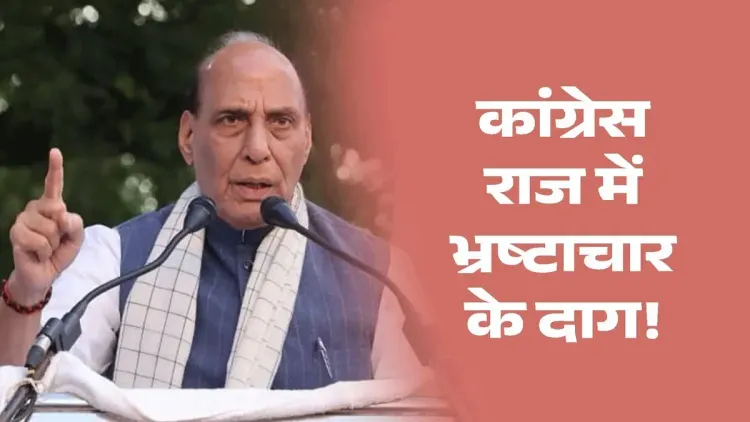
Posting in Hindi, he wrote that from the Jeep purchase case to Bofors and AgustaWestland, several defence deals during Congress rule had remained mired in graft charges. He closed with a political test as much as a principle: देश की सुरक्षा और सैनिकों का सम्मान राजनीतिक स्वार्थ से ऊपर होना चाहिए (the country's security and the honour of soldiers should be above political self-interest).
Jeep, Bofors and AgustaWestland, named in one breath
The sequence is a timeline of India's most radioactive procurements. The Jeep scandal of 1948 involved alleged irregularities in army jeep purchases under the first Congress government after Independence — an early fight over how the new republic bought kit for its soldiers.
The Bofors scandal broke into public view in 1987, with allegations of kickbacks in a howitzer deal with Sweden during the government of Rajiv Gandhi. It detonated a crisis over defence-buying integrity that still shapes how every big-ticket contract is read in Delhi.
The AgustaWestland VVIP helicopter contract, signed under the UPA government around 2010, later drew bribery probes. The contract was terminated in 2014.
A charge aimed at procurement, not just history
By stacking those three files, Singh was not announcing a new inquiry. He was restating a verdict the Bharatiya Janata Party has used for years: that Congress governments repeatedly allowed the most sensitive spending a state undertakes to be clouded by payoff allegations, and that those deals cannot be the standard for how India arms itself now.
That contrast sits inside a larger claim of the present government — tighter procedures and a heavier bet on indigenous production, rather than the import-heavy contracts associated with Bofors and AgustaWestland. The Defence Acquisition Procedure and indigenisation drives are the policy language of that claim. Whether they close the old vulnerabilities will be tested in Parliament, not in a single post.
What this argument keeps in play
Defence forces and procurement agencies are the silent stakeholders. Every time a howitzer, a helicopter or a jeep-class vehicle is purchased, the political memory of those three scandals sits in the room. Budget allocations and updates to procurement rules remain the next arena where the charge will be examined.
Singh's demand is simple to say and hard to enforce: keep soldiers' honour and national security above party interest. The names he invoked are decades old. The question they still pose — who can be trusted with the next defence cheque — will follow every contract that follows.
Point of View
Bofors and AgustaWestland, he recasts decades of Congress governments as a single story of compromised buying. That story is meant to underwrite the BJP's claim that current policy — tighter procedures and indigenous production — is a clean break. The unresolved test is whether future contracts, not historical recitals, will bear that claim out.
NationPress
25 Nov 2026
Frequently Asked Questions
What did Rajnath Singh say about Congress defence deals?
Union Defence Minister Rajnath Singh said that from the Jeep purchase case to Bofors and AgustaWestland, many defence deals during Congress rule remained mired in allegations of corruption. He added that the country's security and the honour of soldiers should be above political self-interest.
What is the Bofors scandal Rajnath Singh referred to?
The Bofors scandal refers to 1980s allegations of kickbacks in a howitzer procurement from Sweden during Rajiv Gandhi's Congress government. It became public in 1987 and triggered a major political crisis over defence procurement integrity.
What happened in the AgustaWestland helicopter deal?
The AgustaWestland case involved corruption allegations in a VVIP helicopter contract signed under the UPA government around 2010. The contract was later terminated in 2014 after probes into alleged bribes.
What was the Jeep purchase case?
The Jeep scandal of 1948 involved alleged irregularities in army jeep purchases under the first Congress government after Independence. It is often cited as an early controversy in independent India's defence buying.
Did Rajnath Singh announce a new defence inquiry?
No. The post restates historical charges against Congress-era deals and a principle that security should outrank political self-interest. It does not announce a new probe, cancellation or policy change.