Rajnath Singh: Congress treats India as a family fiefdom
Synopsis
Union Defence Minister Rajnath Singh accused Congress of treating India as a hereditary estate and Rahul Gandhi of claiming natural succession to the Prime Ministership, invoking BJP's core ethos of 'Jan Seva hi Prabhu Seva' — service to the people is service to God.
Key Takeaways
Union Defence Minister Rajnath Singh posted on June 12, 2026 accusing Congress of treating India as a family fiefdom.
Singh directly named Rahul Gandhi as someone who views himself as the 'natural heir' to the Prime Ministership.
He drew a sharp contrast: Congress leaders 'consider themselves rulers' while BJP leaders 'consider themselves servants of the people.' Singh cited the BJP organisational value Jan Seva hi Prabhu Seva ('Service to the people is service to God') as the party's guiding ethos.
The attack continues a BJP rhetorical line that dates to the 2014 general election campaign against dynastic politics.
Congress is expected to respond, and other senior BJP ministers may amplify the theme ahead of upcoming state polls.
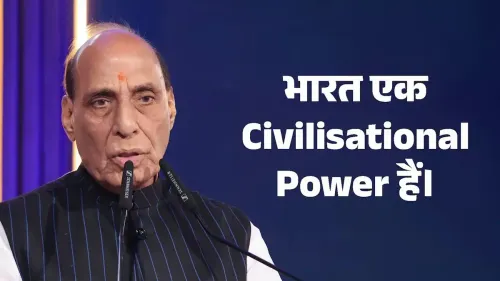
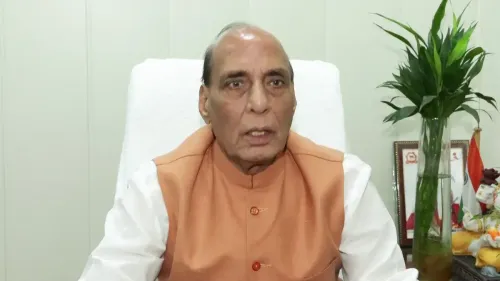
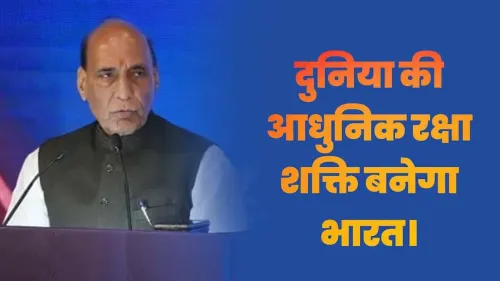
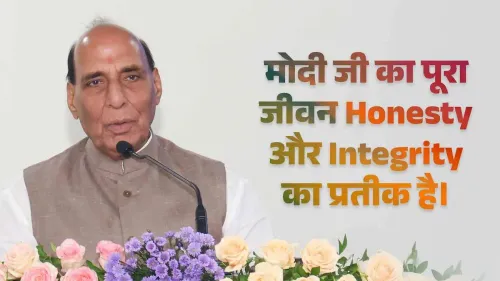
Union Defence Minister Rajnath Singh on Friday, June 12, 2026, launched a sharp political broadside against the Indian National Congress, accusing the party of treating the country as a hereditary estate and singling out Rahul Gandhi as someone who considers himself the natural heir to the Prime Minister's office.
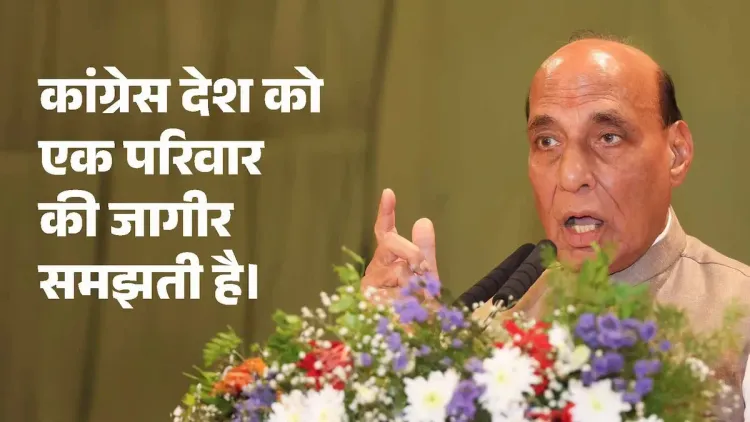
Posting in Hindi on X, Singh wrote: 'कांग्रेस की राजनीति इस सोच पर आधारित है कि देश एक परिवार की जागीर है' ('Congress politics is rooted in the belief that the country is a fiefdom of one family'). He added that Rahul Gandhi sees himself as the natural successor to the Prime Ministership — a framing Singh used to draw a pointed contrast with the Bharatiya Janata Party's self-image as a party of public servants.
Context
Singh's post distils a critique that has been central to BJP's political messaging since at least the 2014 general election, when the party ran an explicit campaign against dynastic politics and presented Narendra Modi as a leader who rose without the backing of a political family. The charge of dynastic entitlement has since become a recurring motif in BJP's attacks on Congress, particularly against the Nehru-Gandhi family.
In the post, Singh articulated the contrast in stark terms: 'वे स्वयं को शासक मानते हैं, जबकि हम स्वयं को जनता का सेवक मानते हैं' — 'They consider themselves rulers, while we consider ourselves servants of the people.' He closed by invoking a BJP organisational value: 'जन सेवा ही प्रभु सेवा', meaning 'Service to the people is service to God.'
Policy Backdrop
The Indian National Congress has been governed or led at the national level by members of the Nehru-Gandhi family for the bulk of its post-Independence history. Critics, including successive BJP governments, have argued this continuity reflects a structural conflation of party and family rather than democratic accountability.
BJP, by contrast, has institutionalised internal processes such as the Parliamentary Board and cadre-based promotion as evidence of a merit-and-service culture. Senior leaders including Rajnath Singh himself — a former Uttar Pradesh Chief Minister and former Union Home Minister who rose through the RSS-BJP organisational hierarchy — are frequently cited by the party as examples of leaders without dynastic backing reaching the highest offices.
Stakeholders and Impact
The immediate audience for Singh's remarks is the broad national electorate, particularly voters in states where assembly elections may be approaching. The dynastic-versus-service framing has historically resonated with Other Backward Classes and first-generation political entrants who see family-based succession as a barrier to their own aspirations.
For Congress, the post renews pressure on Rahul Gandhi to counter the narrative that his leadership is a product of inheritance rather than democratic mandate. The party has in the past pushed back by pointing to Gandhi's electoral contests and his Bharat Jodo Yatra as evidence of grassroots connect.
What's Next
Congress is expected to respond either through social media or parliamentary statements, as it has routinely done when senior BJP figures invoke the dynastic charge. Analysts will watch whether other BJP cabinet ministers amplify the same theme in the coming days, which would signal a coordinated messaging push ahead of any upcoming electoral cycle. Singh's post, carrying both ideological weight and personal authority as the party's second-most senior cabinet figure, is likely to set the tone for the BJP's political communication in the near term.
Point of View
A narrative the party has sustained as a live electoral weapon since 2014. By naming Rahul Gandhi explicitly and invoking the 'Jan Seva hi Prabhu Seva' ethos, Singh is doing two things simultaneously: attacking Congress's political culture and burnishing BJP's own ideological credentials. The timing — without a confirmed triggering event — suggests this is proactive messaging rather than a reactive rebuttal, pointing to a deliberate effort to keep the dynastic-politics frame dominant in public discourse. For Congress, the challenge remains that the Nehru-Gandhi family's continued centrality to the party makes this charge structurally difficult to rebut on purely organisational grounds.
NationPress
27 Sept 2026
Frequently Asked Questions
What did Rajnath Singh say about Congress and dynastic politics?
Rajnath Singh said Congress politics is rooted in the belief that India is a family fiefdom, and that Rahul Gandhi considers himself the natural heir to the Prime Ministership. He contrasted this with BJP's ethos of being servants of the people.
What does 'Jan Seva hi Prabhu Seva' mean and why did Rajnath Singh use it?
'Jan Seva hi Prabhu Seva' means 'Service to the people is service to God.' Rajnath Singh used it to describe the core value instilled in BJP workers, positioning the party as service-oriented in contrast to what he called Congress's ruler mentality.
Has BJP made this dynastic politics argument before?
Yes. BJP has explicitly campaigned against dynastic politics since the 2014 general election, when it projected Narendra Modi as a leader who rose without family backing. Senior leaders have repeatedly used this framing in parliamentary debates and public statements.
Why is Rahul Gandhi specifically targeted in Rajnath Singh's post?
Rahul Gandhi, as the most prominent face of the Nehru-Gandhi family in active politics, is the primary symbol BJP uses to illustrate its dynastic-succession critique of Congress. Singh named him directly as someone who sees the PM's post as a natural inheritance.
What is Rajnath Singh's political background?
Rajnath Singh is the Union Defence Minister and one of BJP's most senior leaders. He has previously served as Chief Minister of Uttar Pradesh and as Union Home Minister, rising through the RSS-BJP organisational hierarchy without dynastic backing.