How Did BJP and AIMIM Form an Unlikely Alliance in Maharashtra?

Synopsis
In a surprising political development, BJP and AIMIM have joined forces in Maharashtra's Achalpur and Akot municipalities. This alliance raises questions about ideological integrity and local governance dynamics. What does this mean for the future of Maharashtra politics?
Key Takeaways
BJP and AIMIM have formed an unexpected alliance in Achalpur and Akot.
This partnership raises questions about ideological integrity in politics.
Local dynamics are currently influencing national party strategies.
State leadership is critical of these local alliances.
The alliance may redefine political relationships moving forward.
Amravati, Jan 22 (NationPress) In a surprising twist in Maharashtra's political arena, the Bharatiya Janata Party (BJP) has allied with the All India Majlis-e-Ittehadul Muslimeen (AIMIM), led by Asaduddin Owaisi, within local municipal bodies. This remarkable achievement for AIMIM in the recent municipal elections has facilitated a power-sharing deal with the BJP in both Achalpur and Akot, igniting a fierce discussion regarding ideological compromises.
Within the Achalpur Municipal Council, the BJP and AIMIM have created a tactical partnership to gain control over critical positions. Despite their stark differences in state and national politics, these two parties have united to govern. As part of this collaboration, an AIMIM representative has been appointed as the Chairman of the Education and Sports Committee.
This alliance consists of the BJP as the primary partner, AIMIM with three councillors, the NCP (Ajit Pawar faction) with two councillors, and three Independent councillors.
The arrangement in Achalpur mirrors a controversial move in the Akot municipality where the local BJP leadership integrated AIMIM councillors into their governing coalition under the “Akot Vikas Manch”.
Moreover, this trend has extended to the Hivarkhed Municipal Council, witnessing an unusual three-party collaboration. A BJP candidate for the Deputy Chairperson role was nominated by a Congress member and supported by an AIMIM member. These local alliances have drawn significant criticism from the BJP’s state leadership.
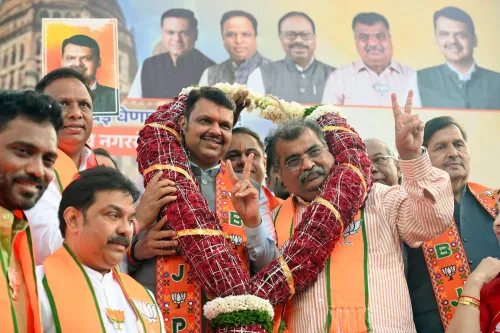
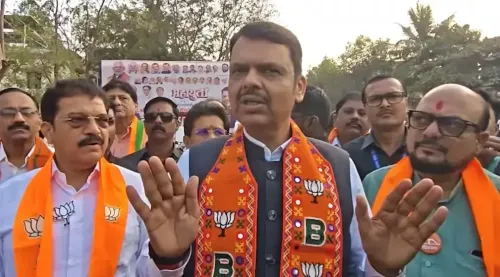
Chief Minister Devendra Fadnavis has voiced strong disapproval, labeling these local agreements as “acts of indiscipline” that could tarnish the party's reputation. He emphasized that the BJP will not accept any coalition with AIMIM or Congress.
Previously, the BJP state unit issued a show-cause notice to Akot MLA Prakash Bharsakale for facilitating the local alliance with AIMIM. Fadnavis has mandated the dismantling of these local arrangements, stating: “If this has been done by the local leadership, it will have to be broken.”
Despite the issuance of show-cause notices to local leadership, the reality on the ground remains unchanged.
The ongoing existence of these alliances indicates that local power dynamics are currently superseding the official ideologies dictated by the state headquarters. While local leaders contend that these partnerships are essential for development and stability, the state-level backlash underscores a widening gap between grassroots power structures and the ideological directives from party headquarters.
Point of View
The alliance between BJP and AIMIM in Maharashtra exemplifies shifting political alliances driven by local dynamics. While it raises pressing questions about ideological coherence, it also reflects the necessity for pragmatic governance at the grassroots level. Such collaborations may redefine political landscapes, but they must be approached with caution to maintain party integrity.
NationPress
19 Sept 2026
Frequently Asked Questions
What prompted the alliance between BJP and AIMIM?
The alliance was formed due to significant electoral success for AIMIM in recent municipal elections, leading to a need for cooperation in local governance.
What are the implications of this alliance for Maharashtra politics?
This alliance may challenge traditional political boundaries and could lead to ideological shifts within local governance.
How has the state leadership reacted to these alliances?
Chief Minister Devendra Fadnavis has expressed discontent, viewing these local alliances as detrimental to the party's image.