Assam Assembly Elections: BJP Pursues Independent Majority
Synopsis
In the upcoming Assam Assembly elections, the BJP aims not only for a third consecutive victory but also to achieve a long-sought independent majority. With various demographic influences at play, the stakes are high as party alliances and local loyalties come into focus.
Key Takeaways
The BJP aims for an independent majority in Assam's upcoming elections.
Demographics in Assam heavily influence electoral outcomes.
Coalition partners have been essential for the BJP's success in previous elections.
Local loyalties and identity politics are critical factors in this election.
The AIUDF remains a significant player in the state's political dynamics.
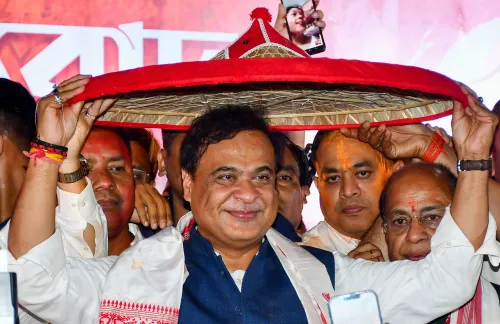
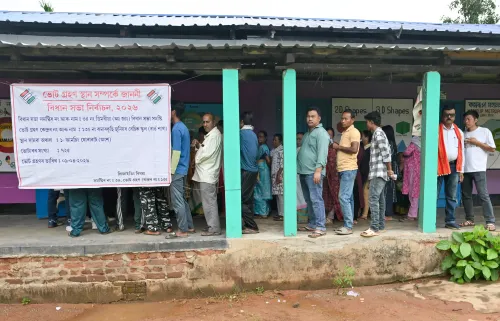
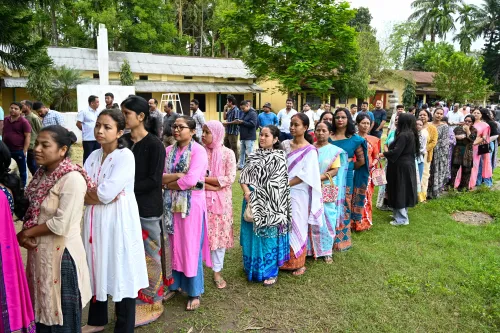
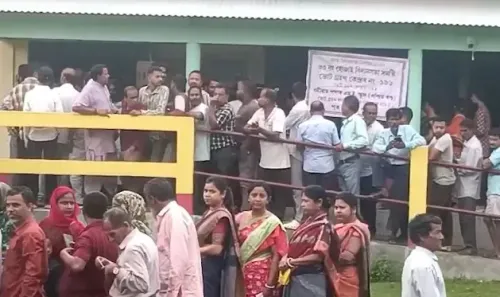
New Delhi, March 26 (NationPress) The upcoming Assam Assembly elections on April 9 will see the Bharatiya Janata Party (BJP) striving for not just a third consecutive win but also a goal that has been out of reach for a decade - achieving a simple majority independently.
Since taking charge in 2016, the BJP has consistently fallen short, securing approximately 60 seats in the 126-member assembly, never crossing the crucial halfway threshold. In 2016, it ended the Congress’ 15-year reign and asserted its influence in the Northeast by forming a government with the assistance of the Asom Gana Parishad (AGP) and the Bodoland People’s Front (BPF).
That year, the BJP's victories were largely concentrated in Upper Assam, North Assam, and the hill districts, while the minority-dominated Lower Assam remained predominantly unattainable. The party's dependence on allies like the AGP and BPF was vital to fill the gap.
According to the 2011 Census, Assam’s Muslim demographic comprises over 34.2 percent of the population, primarily located in districts such as Dhubri, Goalpara, Barpeta, Morigaon, Nagaon, Hojai, Karimganj, South Salmara–Mankachar, Hailakandi, Darrang, and Bongaigaon. Meanwhile, Hindus make up around 61.5 percent of the population, with Christians accounting for 3.7 percent.
The Scheduled Tribes (ST) population is about 12.4 percent, with Bodos representing a significant portion (approximately 35 percent), followed by Miri (17.5 percent) and Karbi (11 percent), among others. These tribes are dispersed in various locales, particularly in the autonomous regions of Karbi Anglong and Dima Hasao, where tribal communities are prominent.
The BJP-led National Democratic Alliance (NDA) has maintained a stronghold in these areas.
In the 2021 elections, the BJP once again secured only 60 seats.
While the party excelled in Assamese-majority regions, it struggled to penetrate Muslim-dominated or ethnically distinct territories. Consequently, its majority relied significantly on coalition partners like the United People’s Party Liberal (UPPL), which succeeded the BPF in the governing alliance.
The BJP's challenges in surpassing the halfway point highlight a pattern of consolidation without genuine expansion, influenced by Assam’s demographic landscape and the party's dependence on identity politics amid various linguistic, ethnic, and religious divisions.
Muslims in Assam can be primarily categorized into two groups: Assamese-speaking Muslims of Upper Assam, often referred to as Khilonjia Muslims, and Bengali-origin individuals, known as Miyas, who predominantly reside in Lower Assam's riverine areas. Collectively, they hold sway over around 35 to 40 constituencies, rendering them a pivotal electoral bloc.
Historically, their voting behavior has been cohesive, leaning towards Congress. However, the emergence of Badruddin Ajmal’s AIUDF in 2005 partially fragmented this group, channeling Bengali Muslim identity politics in regions like Dhubri, Hailakandi, and Karimganj.
In 2021, the alliance between Congress and AIUDF maximized this consolidation, excluding the BJP from Muslim-majority areas while minimizing vote splitting. The two parties have since separated.
Despite a reported reduction in Muslim-influenced constituencies from approximately 41 to 26 due to the 2023 seat delimitation, whether the BJP can overcome established local affiliations remains in question.
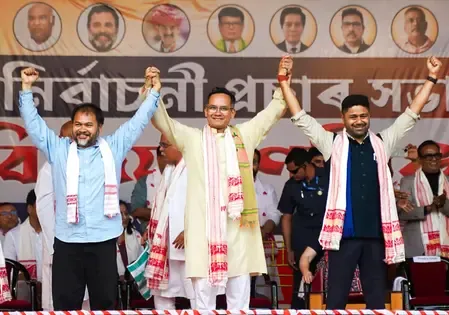
On the other hand, Congress, now led by Gaurav Gogoi as the state unit president, faces a critical challenge. Its seat count plummeted from 78 in 2011 to 26 in 2016, with a slight recovery to 29 in 2021. The party is now focused on revitalizing its support within minority communities, tea tribes, and segments of the Assamese middle class amid prevailing anti-incumbency sentiments.
AIUDF seems to be losing ground, even amongst its traditional supporters, as younger Bengali Muslims lean towards Congress or regional parties like Raijor Dal and Anchalik Gana Morcha.
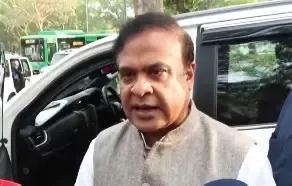
The Raijor Dal, established by activist Akhil Gogoi, aims to present itself as a secular nationalist alternative. However, Chief Minister Himanta Biswa Sarma has characterized it as a 'Muslim refuge,' potentially undermining its credibility among Assamese nationalists.
Point of View
The BJP's quest for an independent majority in Assam reflects broader trends in Indian politics, where demographic dynamics and party alliances play pivotal roles. The outcome of this election could redefine the state's political landscape amid shifting loyalties and emerging regional parties.
NationPress
29 Sept 2026
Frequently Asked Questions
What is the significance of the Assam Assembly elections?
The Assam Assembly elections are crucial for determining the political landscape of the region, particularly as the BJP seeks an independent majority for the first time in a decade.
How has the BJP performed in past elections?
The BJP has consistently secured around 60 seats in the Assam Assembly since 2016, relying on coalition partners to achieve a majority.
What demographic factors influence the election outcomes?
Assam's diverse demographics, including significant Muslim and tribal populations, play a critical role in shaping voting patterns and election results.
What challenges does the BJP face in the upcoming elections?
The BJP faces challenges in penetrating Muslim-dominated areas and overcoming established local loyalties, which may hinder their goal of an independent majority.
What is the role of the AIUDF in these elections?
The AIUDF has historically consolidated Muslim votes, and its alliance with Congress in the past elections has significantly impacted the BJP's chances in Muslim-majority constituencies.