Trump vows to claim Hormuz Strait as US territory 'pretty soon'
Synopsis
Trump's vow to annex the Strait of Hormuz — the world's most critical oil chokepoint — is his most audacious territorial claim yet, and it comes as a near-nine-month blockade keeps global energy markets on edge. With Brent at $88 a barrel, only nine ships passing Friday, and Iran calling it 'fantasies,' the gap between Trump's rhetoric and operational reality has rarely been wider.
Key Takeaways
President Trump declared on 15 August that the US will claim the Strait of Hormuz as American territory 'pretty soon' after defeating Iran.
Only nine ships passed through the Strait on Friday as the US blockade and Iranian ship attacks maintain a virtual stalemate.
Brent crude rose to $88 a barrel — up about 5% for the week — while average US petrol prices hit $1.08 per litre .
Iran's Deputy Foreign Minister Kazem Gharibabadi called the annexation claim 'fantasies,' asserting the Strait opens and closes 'only under Iran's command.' The USS Abraham Lincoln , the sole US aircraft carrier in the region, is reportedly strained after nearly nine months of deployment.
Hormuz would be the third major international territory Trump has sought to claim, after Canada and Greenland .
President Donald Trump declared on Friday, 15 August that the United States intends to formally claim the Strait of Hormuz as American territory once its ongoing military campaign against Iran concludes — a statement that drew swift international pushback and raised sweeping questions about international law, military sustainability, and global energy markets.
What Trump Said
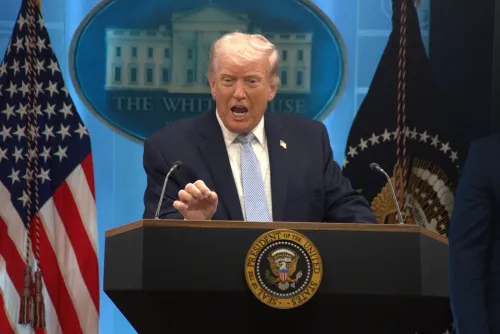
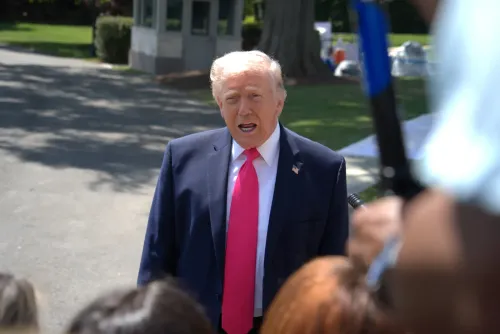
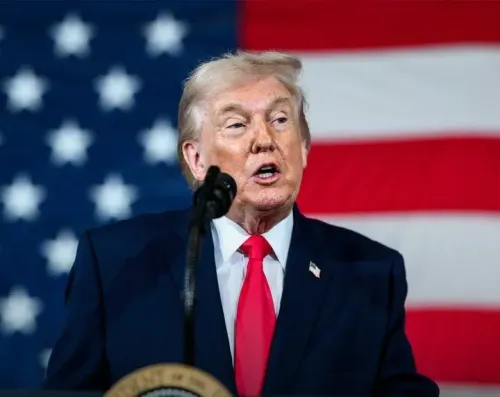
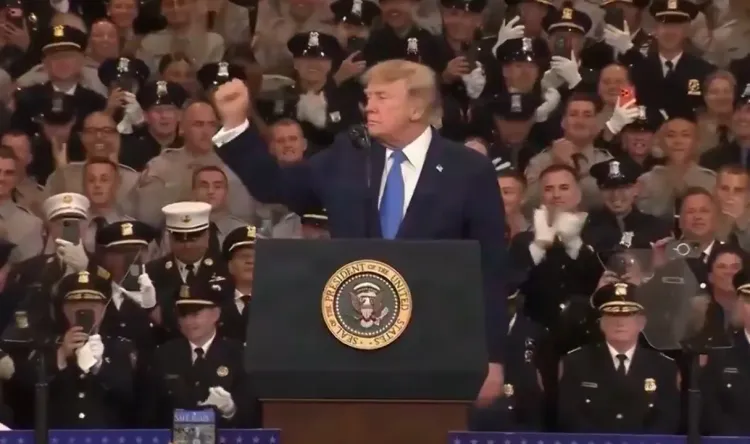
'After we finish defeating Iran, which is being very badly defeated, pretty soon, I'll be declaring the Hormuz Strait a territory of the United States,' Trump told a crowd at a police academy in a Long Island suburb of New York, where he appeared alongside the Republican candidate for the state's governorship ahead of the November mid-term elections.
Trump argued the US has already established de facto control. 'Essentially, that's what it is. We have the blockade. No ships get through unless we want them to,' he said. He framed the US posture as a global service: 'What we're doing is a great service for the world, not only for ourselves.'
His remarks follow a post on Truth Social on Wednesday in which he wrote: 'The USA has total control over the Strait of Hormuz. I THINK WE WILL KEEP IT!'
Ground Reality in the Strait
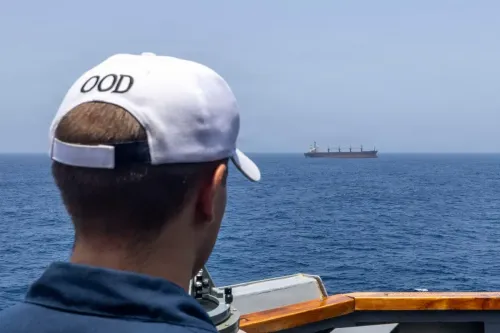
The situation on the water tells a more complicated story. According to media reports, only nine ships passed through the Strait on Friday as a virtual stalemate continues between Washington and Tehran. The US is enforcing a blockade, while Iran has been attacking vessels — reportedly hitting two ships on Thursday alone.
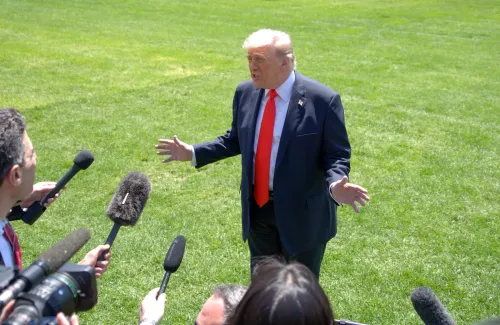
Trump had predicted on 3 August that the Strait would be 'open literally' the following day; it remains effectively closed. The USS Abraham Lincoln, the sole aircraft carrier in the region, is reportedly under strain after nearly nine months of deployment. When pressed by reporters on the vessel's condition, Trump said the deployment was 'not nearly long enough' but acknowledged it 'is being replaced with another very similar ship.'
Iran's Response
Iran's Deputy Foreign Minister Kazem Gharibabadi dismissed Trump's territorial claim as 'fantasies.' 'This strait will be opened and closed only under Iran's command, and so long as you do not accept the reality of defeat and stop indulging in fantasies, Iran will continue to enforce the blockade,' Gharibabadi said.
Legal and Practical Hurdles
The 170-kilometre-long Strait of Hormuz — located roughly 11,000 kilometres from Washington — encompasses the territorial waters of Iran, Oman, and the United Arab Emirates, as well as international waterways. Analysts note that any formal annexation would require the consent of Oman and the UAE, a wholesale disregard of international law, and sustained military control of Iranian coastal waters — conditions that appear far from met.
This would make Hormuz the third major international territory Trump has sought to claim. Earlier in his second term, he threatened to annex Canada as the 51st US state and taunted then-Prime Minister Justin Trudeau by calling him 'governor.' He also revived proposals to annex Greenland from Denmark, having first floated the idea during his first term.
Energy Prices and the Political Backdrop
The Iran conflict, which Trump launched on 28 February alongside Israel, has disrupted global petroleum supplies. The average petrol price in the US stood at $1.08 per litre on Friday, while Brent crude rose to $88 a barrel — up roughly 5% for the week.
Democrats have seized on rising fuel costs, making what they call an 'affordability crisis' a central mid-term campaign theme. Trump was unapologetic, telling the Long Island crowd: 'For you to pay a tiny little bit more for your gasoline, just remember you're doing it so that a very evil country cannot have a — really, it's the No. 1 state sponsor of terror in the world — we don't want them to have a nuclear weapon.'
With mid-terms approaching and Brent crude climbing, the Hormuz standoff is rapidly becoming as much a domestic political flashpoint as a geopolitical one. How Washington navigates the next phase — militarily and diplomatically — will shape both global energy stability and the November electoral calculus.
Point of View
Let it dominate the news cycle, and use it as leverage — whether or not the operational reality supports it. The problem this time is that the stakes are uniquely high: Hormuz is not a sparsely populated island or a friendly neighbour's territory, but the jugular of global energy supply, straddling the waters of three sovereign states. With the USS Abraham Lincoln reportedly worn thin after nine months and Iran still striking vessels, the gap between Trump's rhetoric and the US military's actual capacity to enforce a permanent presence is significant. The domestic political calculus is equally fraught: rising petrol prices are a liability heading into the mid-terms, and framing the pain as patriotic sacrifice is a gamble that may not survive a sustained $90-plus oil environment.
NationPress
29 Sept 2026
Frequently Asked Questions
What did Trump say about the Strait of Hormuz?
President Trump declared on 15 August that the US will formally claim the Strait of Hormuz as American territory once its military campaign against Iran concludes. He argued the US already exercises de facto control through its ongoing blockade, saying 'No ships get through unless we want them to.'
Why is the Strait of Hormuz strategically important?
The Strait of Hormuz is the world's most critical oil and gas chokepoint, connecting the Persian Gulf to the Arabian Sea. A significant share of global petroleum exports passes through the 170-kilometre-long waterway, making any disruption there an immediate shock to global energy prices.
How has the US-Iran conflict affected oil prices?
Brent crude rose to $88 a barrel on Friday — up roughly 5% for the week — as the US blockade and Iranian ship attacks kept the Strait effectively closed. Average petrol prices in the US reached $1.08 per litre, fuelling a Democratic 'affordability crisis' campaign narrative ahead of the November mid-terms.
What are the legal obstacles to the US annexing Hormuz?
The Strait encompasses the territorial waters of Iran, Oman, and the United Arab Emirates, as well as international waterways. Any formal annexation would require the consent of Oman and the UAE, sustained military control of Iranian coastal waters, and a wholesale disregard of international law — conditions analysts say are far from being met.
What other territories has Trump claimed or threatened to annex?
Hormuz would be the third major international territory Trump has sought to claim. Earlier in his second term he threatened to make Canada the 51st US state and revived proposals to annex Greenland from Denmark, having first floated the Greenland idea during his first term.