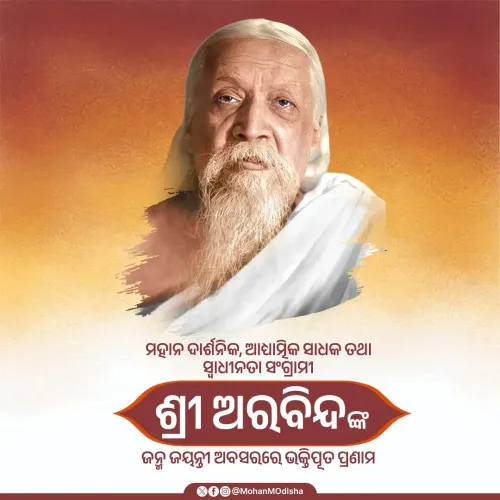
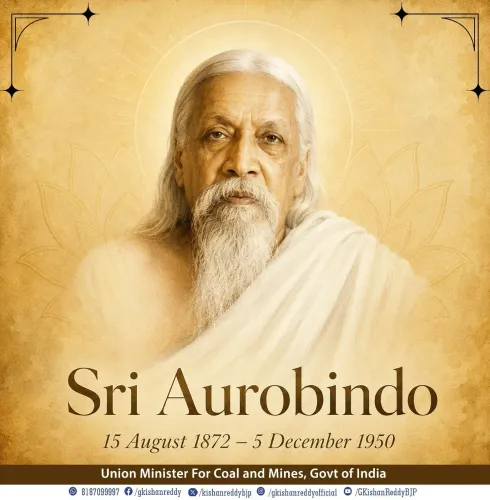
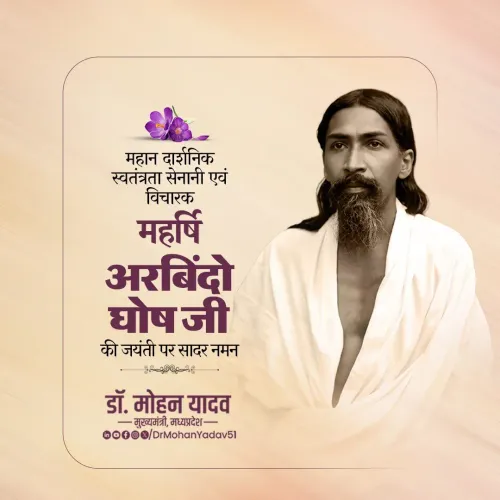
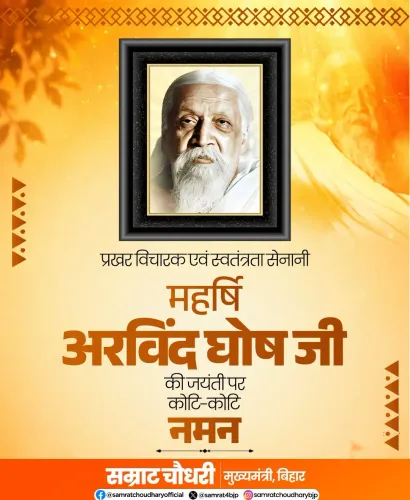
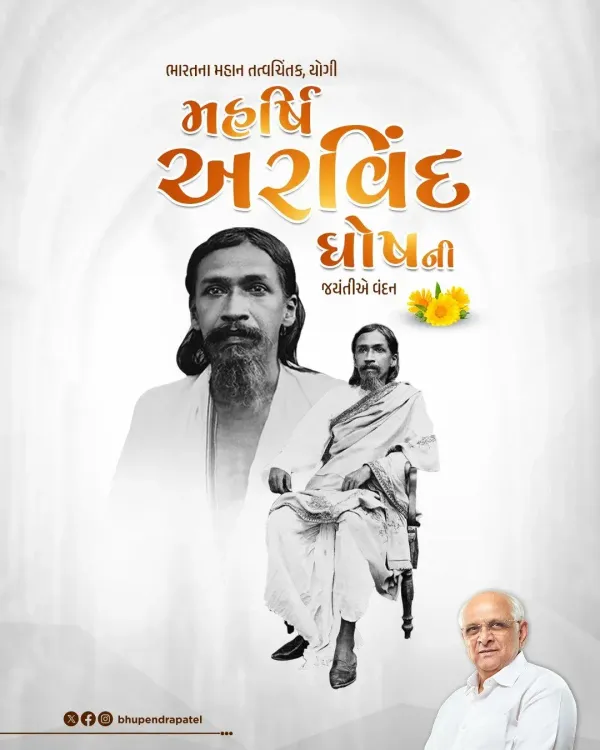
CM Bhupendra Patel pays tribute to Sri Aurobindo on his Jayanti
Synopsis
Gujarat Chief Minister Bhupendra Patel marked Sri Aurobindo Jayanti on 15 August 2026 with a Gujarati tribute honouring the philosopher's legacy of Integral Yoga, self-realisation, and cultural nationalism — themes that converge powerfully on India's Independence Day.
Key Takeaways
Gujarat CM Bhupendra Patel posted a tribute to Sri Aurobindo Ghosh on his Jayanti, 15 August 2026 .
Sri Aurobindo was born on 15 August 1872 , making his birth anniversary coincide with India's Independence Day.
Patel described him as a 'great philosopher,' pioneer of Integral Yoga , and revolutionary thinker whose message on nationalism and cultural uplift endures.
BJP leaders regularly issue public tributes on this date, linking Sri Aurobindo's ideas to contemporary nationalist and cultural discourse.
Sri Aurobindo settled in Pondicherry after his early years as an anti-colonial activist, developing a philosophy of complete spiritual and social transformation.
On Independence Day, 15 August 2026, Gujarat Chief Minister Bhupendra Patel offered a heartfelt tribute to Sri Aurobindo Ghosh — philosopher, revolutionary, and architect of Integral Yoga — whose birth anniversary falls on the very day India marks its freedom.
In a post in Gujarati, CM Patel described Sri Aurobindo as 'ભારતના મહાન તત્વચિંતક' — 'India's great philosopher' — and saluted him as the pioneer of Integral Yoga and a revolutionary thinker. He wrote that Sri Aurobindo's reflections on self-realisation, and his message for nationalism and cultural uplift, 'will forever keep our social and spiritual consciousness illuminated.'
Who was Sri Aurobindo — and why August 15 carries double weight
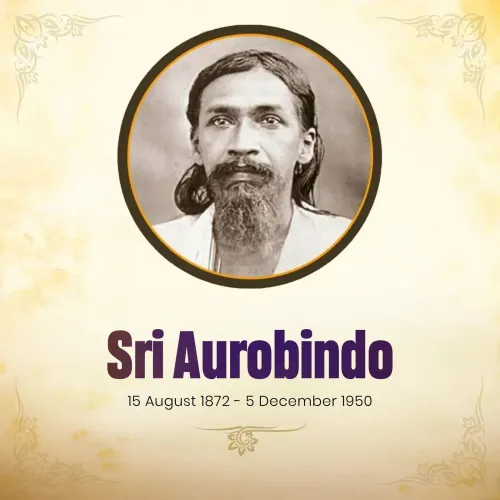
Born on 15 August 1872, Sri Aurobindo Ghosh began his public life as a fierce anti-colonial activist before turning inward. He eventually settled in Pondicherry, where he developed the philosophy of Integral Yoga — a synthesis of action, knowledge, and devotion aimed at a complete transformation of human consciousness, not merely individual liberation. He passed away on 5 December 1950.
The coincidence of his birth date with India's Independence Day has long been seen as deeply symbolic — Sri Aurobindo himself acknowledged it. That layered significance makes August 15 tributes to him a recurring feature of public life, particularly among leaders who draw a line from his cultural and spiritual nationalism to the present.
BJP's consistent thread: spiritual nationalism on Independence Day
BJP leaders at the national and state level have consistently marked Sri Aurobindo Jayanti with public messages that connect his vision of cultural regeneration to contemporary nationalist themes. CM Patel's post follows that pattern — invoking Sri Aurobindo's twin legacies of spiritual inquiry and civilisational pride on a day when both Independence and the philosopher's birth converge.
State-level events in Gujarat and across India typically pair Independence Day programmes with observances of Sri Aurobindo Jayanti, reinforcing the symbolic link between political freedom and the inner freedom Sri Aurobindo championed.
A revolutionary who traded the barricades for the ashram — and in doing so, shaped a strand of Indian thought that outlasted both — Sri Aurobindo remains a figure whose relevance leaders across generations keep returning to on this day.
Point of View
The messaging frames political freedom and inner transformation as inseparable. This positions the party as the inheritor of a broad Hindu-nationalist intellectual tradition that stretches well beyond electoral politics. The tribute also serves a regional function: communicating in Gujarati signals direct outreach to the state's cultural identity.
NationPress
30 Sept 2026
Frequently Asked Questions
When is Sri Aurobindo Jayanti celebrated?
Sri Aurobindo Jayanti is celebrated on 15 August every year, marking the birth anniversary of Sri Aurobindo Ghosh , who was born on 15 August 1872 — the same date as India's Independence Day.
What is Integral Yoga, the philosophy associated with Sri Aurobindo?
Integral Yoga is a spiritual philosophy developed by Sri Aurobindo that seeks the complete transformation of human consciousness — integrating action, knowledge, and devotion — rather than individual liberation alone. He developed it during his years at his ashram in Pondicherry .
Why did Gujarat CM Bhupendra Patel post a tribute to Sri Aurobindo?
Gujarat CM Bhupendra Patel paid tribute to mark Sri Aurobindo Jayanti on 15 August 2026 , honouring the philosopher's legacy of Integral Yoga, self-realisation, and cultural nationalism. BJP leaders regularly observe this date with public messages linking Sri Aurobindo's ideas to contemporary nationalist themes.
What is Sri Aurobindo's connection to India's independence movement?
Sri Aurobindo Ghosh was an active anti-colonial revolutionary in the early twentieth century before he turned to spiritual pursuits. He later settled in Pondicherry , where he developed his philosophical and yogic work until his death on 5 December 1950 .
What did CM Bhupendra Patel say about Sri Aurobindo?
CM Patel described Sri Aurobindo as India's great philosopher, the pioneer of Integral Yoga, and a revolutionary thinker, saying his reflections on self-realisation and his message for nationalism and cultural uplift 'will forever keep our social and spiritual consciousness illuminated.'