Is the Tamil Nadu Assembly's Resolution on MGNREGS Unconstitutional?
Synopsis
The BJP's sharp criticism of Tamil Nadu Assembly's resolution regarding MGNREGS raises important questions about constitutional authority. This article dives into the implications of such actions, exploring the balance of power between state and central governance in India.
Key Takeaways
BJP questions the constitutional validity of Tamil Nadu Assembly's resolution.
The resolution calls for maintaining funding levels under MGNREGS .
Concerns raised about state versus central powers.
Implications for rural employment and livelihoods are significant.
The ongoing dialogue about constitutional authority is crucial.
New Delhi, Jan 23 (NationPress) The Bharatiya Janata Party (BJP) on Friday vehemently condemned the Tamil Nadu Assembly for passing a resolution that calls on the Union government to uphold the right to work in rural areas as mandated by the Mahatma Gandhi National Rural Employment Guarantee Act (MGNREGA).
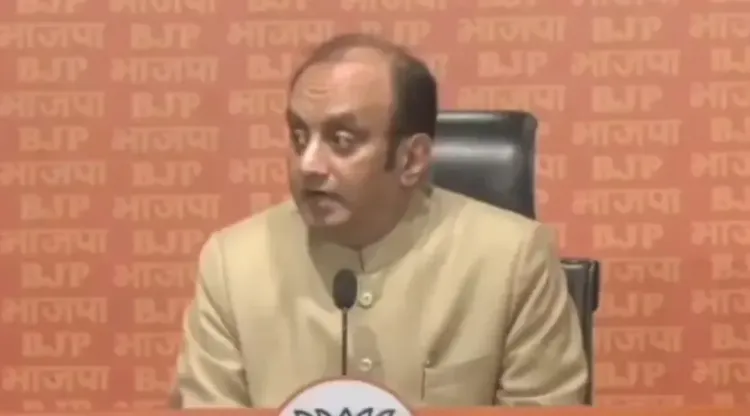
BJP spokesperson Sudhanshu Trivedi raised concerns regarding the constitutional legitimacy of the Assembly's action, claiming it represented a challenge to a law enacted by Parliament.
“I pose this question: if a Bill has been duly legislated by the Parliament of India and the Supreme Court has neither contested nor suspended it, does any State Assembly possess the constitutional power to issue a resolution against it?” he questioned during a press conference.
Trivedi further inquired if local authorities could similarly dismiss laws established by state assemblies.
“I also wish to question the administrations of Tamil Nadu and Kerala: if your state Assembly enacts legislation, do any Zila Panchayat or Municipal Corporation have the right to declare their refusal to comply with that law? If the answer is no, then the same principle applies here,” he asserted.
Trivedi also directed his criticism towards Congress leader Rahul Gandhi, accusing the opposition of selectively invoking constitutional principles. “I ask Rahul Gandhi whether the Constitution is endangered when a law passed by Parliament is openly challenged by State Assemblies in a manner that blatantly contradicts both the Constitution and its essence,” he remarked.
“Our forefathers, from Dr Rajendra Prasad to Babasaheb Bhimrao Ambedkar, emphasized that any law enacted by Parliament is obligatory for all citizens of India. Hence, my counter-question is: Is the Constitution not in jeopardy now? Or do they merely keep it close for political convenience?” he added.
The resolution, introduced by Tamil Nadu Chief Minister M.K. Stalin and passed by the Assembly, urged the Centre to ensure that allocations under the MGNREGS remain at least at the same levels as in previous years.
It also advocated for the ongoing support of the livelihoods of vulnerable groups, including women, individuals with disabilities, and Scheduled Castes and Scheduled Tribes, through guaranteed funding and social security under the scheme.
Moreover, the Tamil Nadu Assembly's resolution opposed the Centre’s proposed method of allocating funds for the scheme based on discretionary assessments and urged the Union government to retract this new procedure. It demanded the continuation of the existing MGNREGS system, where allocations are determined by actual employment needs.
The Centre’s strategy, the resolution warned, might jeopardize the legal assurance of work under the Act and negatively impact rural livelihoods, particularly among economically and socially disadvantaged communities.
Point of View
It's crucial to emphasize that while states have the right to voice their concerns, the supremacy of parliamentary law must be respected. This situation underlines the ongoing tensions between state and federal governance in India, and the importance of constructive dialogue rather than conflict.
NationPress
22 Sept 2026
Frequently Asked Questions
Why did the BJP criticize the Tamil Nadu Assembly's resolution?
The BJP criticized the Tamil Nadu Assembly's resolution because they believe it undermines the authority of a law passed by the Parliament, which they argue is binding on all states.
What are the implications of the Tamil Nadu Assembly's resolution?
The resolution could potentially challenge the federal structure of governance in India, leading to questions about state authority versus parliamentary supremacy.
What does the resolution seek?
The resolution seeks to ensure that the Union government maintains funding levels for MGNREGS and protects the livelihoods of vulnerable communities.