Should Telangana Assembly Continue MGNREGS?
Synopsis
The Telangana Legislative Assembly has unanimously passed a resolution to demand the continuation of the MGNREGS, highlighting concerns regarding the recently introduced VB G RAM G Act. The Chief Minister argues that the new legislation threatens the rights of the poor and particularly impacts vulnerable groups like women laborers. In a bid to uphold the original intent of employment guarantees, the Assembly seeks to protect the rights of the disadvantaged.
Key Takeaways
Telangana Assembly passes resolution supporting MGNREGS.
VB G RAM G Act criticized for harming the rights of the poor.
MGNREGS has significantly aided women and marginalized communities.
New funding ratio could jeopardize employment guarantees.
Resolution demands preservation of employment rights for the vulnerable.
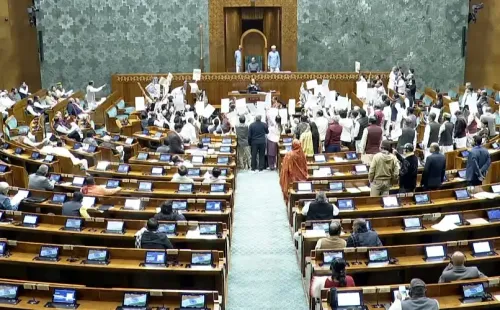
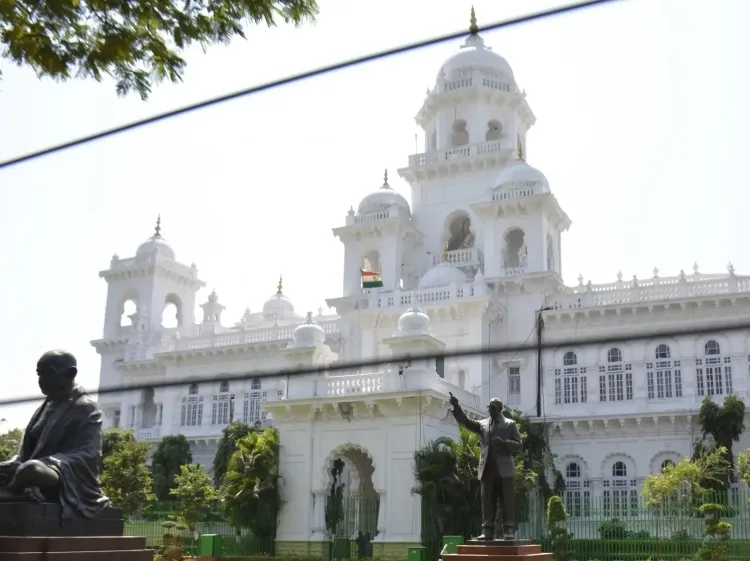
Hyderabad, Jan 2 (NationPress) The Telangana Legislative Assembly on Friday endorsed a resolution urging the ongoing support of the Mahatma Gandhi National Rural Employment Guarantee Scheme (MGNREGS) in its current form, while criticizing the newly enacted Viksit Bharat Guarantee for Rozgar and Aajeevika Mission (Gramin) Act (VB G RAM G) as harmful to the impoverished.
The resolution, introduced by Chief Minister A. Revanth Reddy, was unanimously approved through a voice vote.
It asserts that the new legislation undermines the rights of the underprivileged, particularly women laborers, and contravenes federal principles.
The resolution highlighted that MGNREGS was launched in 2005 by the UPA government under Dr. Manmohan Singh to create job opportunities for the rural poor and ensure financial stability for disadvantaged families. This initiative, aimed at alleviating poverty, unemployment, migration, labor exploitation, and gender wage gaps, was officially implemented on February 2, 2006.
The primary goal of this legislation is to guarantee a minimum of 100 days of employment annually for each rural household, along with a stipulated minimum wage.
The Chief Minister noted that, over the last two decades, nearly 90 percent of MGNREGS beneficiaries in the State belong to Scheduled Castes, Scheduled Tribes, and Backward Classes, with women comprising 62 percent of this group. The most significant beneficiaries include Dalits, tribal communities, individuals with disabilities, and members of severely disadvantaged tribes such as Adivasis and Chenchus.
The Chief Minister emphasized that the new legislation jeopardizes job security for rural women and marginalized groups who largely rely on this scheme. Provisions that weaken the foundational aspects of the original employment guarantee will adversely affect the poor.
The resolution contended that the new law infringes on the rights of impoverished individuals by deviating from the original intent of the Employment Guarantee Act, effectively abolishing the system for drafting work plans based on need.
It also pointed out that the new act is detrimental to women laborers, as approximately 62 percent of MGNREGS beneficiaries are women. The new law's limitation on fund allocation is expected to diminish the number of available workdays.
Currently, the Central government fully finances the employment guarantee scheme. The proposed shift in central-state funding to a 60:40 ratio undermines the principles of federalism, imposing additional financial strain on states. The resolution demands a return to the previous funding model.
Furthermore, it argued that the removal of Mahatma Gandhi's name from this initiative dilutes the essence of his legacy.
The mandatory 60-day hiatus during the agricultural season is deemed unjust for landless and impoverished laborers. The resolution advocates for the employment guarantee scheme to be maintained year-round.
As it stands, the employment guarantee scheme allows for 266 types of work. The elimination of labor-intensive activities such as land development in the new legislation would adversely affect small and marginal farmers, Dalits, and tribal communities.
Point of View
It is evident that the Telangana Legislative Assembly's resolution reflects a significant concern for the rights of marginalized communities in the face of new legislation. While the ongoing support for MGNREGS is vital for rural employment and poverty alleviation, the debate surrounding the VB G RAM G Act highlights the necessity for policies that uphold the spirit of federalism and protect the most vulnerable populations. NationPress stands with the principles of equity and justice for all.
NationPress
30 Sept 2026
Frequently Asked Questions
What does the new VB G RAM G Act entail?
The Viksit Bharat Guarantee for Rozgar and Aajeevika Mission (Gramin) Act aims to provide employment and livelihoods but has been criticized for undermining the rights and provisions that MGNREGS offers to the rural poor.
Why is the Telangana Assembly concerned about the new Act?
The Telangana Assembly believes that the VB G RAM G Act threatens employment guarantees, particularly for vulnerable groups like women, and undermines the foundational principles of the original MGNREGS.
How does MGNREGS support marginalized communities?
MGNREGS has provided significant employment opportunities primarily to Scheduled Castes, Scheduled Tribes, and women, ensuring financial security and reducing poverty and exploitation within rural communities.
What are the implications of changing the funding ratio?
Altering the funding ratio from 100% central support to a 60:40 ratio increases the financial burden on state governments and could limit the effectiveness of employment guarantee schemes.