BJP's Satish Poonia, Alka Gurjar file Rajya Sabha nominations in Jaipur
Synopsis
The BJP has fielded Jat leader Satish Poonia and Gurjar face Alka Gurjar for Rajya Sabha from Rajasthan — a dual community bet that goes beyond routine nominations. With voting on 18 June and the 2028 state elections already on the horizon, this is as much a social engineering move as it is a parliamentary one.
Key Takeaways
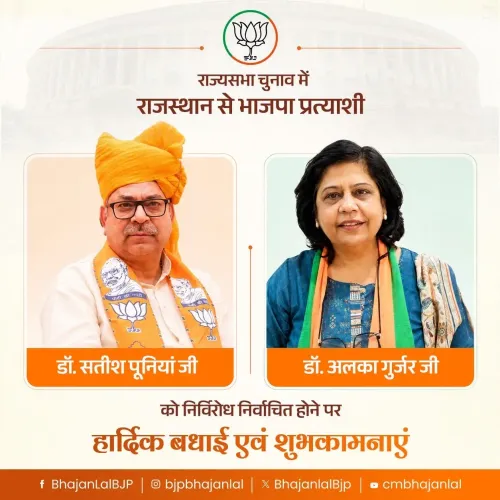
Dr Satish Poonia and Dr Alka Gurjar filed BJP Rajya Sabha nomination papers in Jaipur on 8 June 2025 .
Voting for three Rajasthan Rajya Sabha seats is scheduled for 18 June ; the BJP is expected to win two seats based on assembly strength.
The nominations replace Union Minister Ravneet Singh Bittu , whose term ends on 21 June .
Poonia represents the Jat community and Gurjar the Gurjar community — both electorally influential groups in Rajasthan.
The move is seen as a strategic counter to Congress's strongholds among these communities and linked to BJP's positioning for the 2028 state elections .
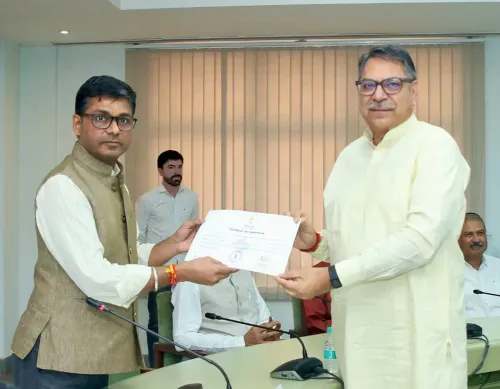
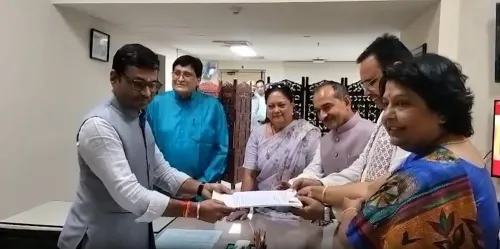
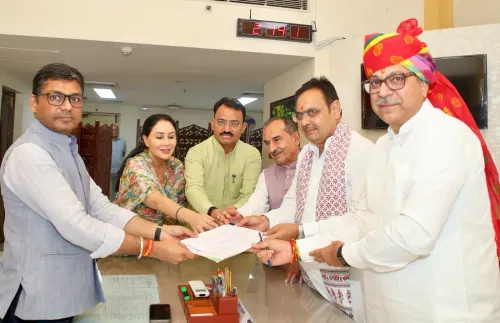
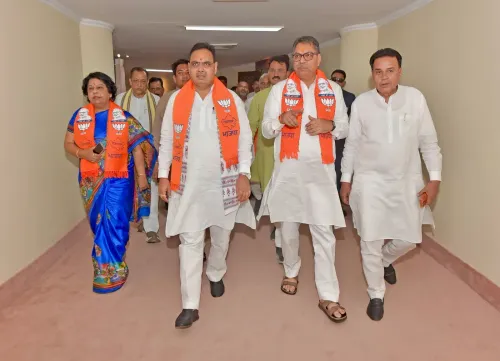
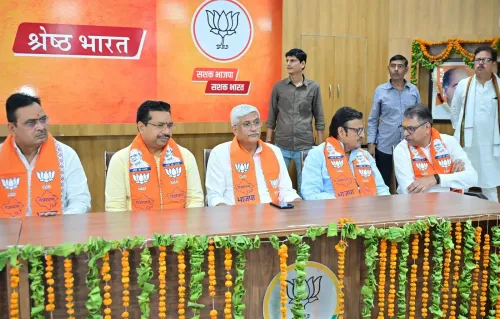
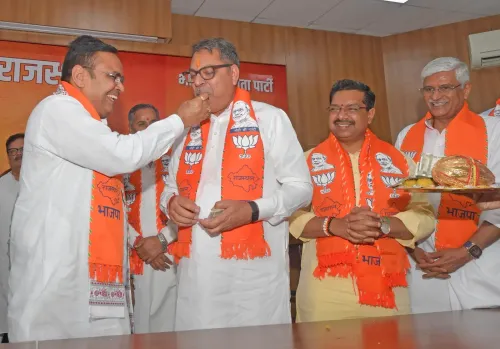
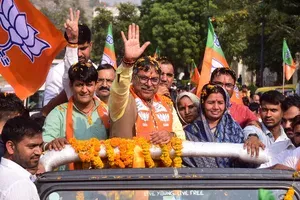
Bharatiya Janata Party (BJP) candidates Dr Satish Poonia and Dr Alka Gurjar filed their nomination papers for the Rajya Sabha elections on Monday, 8 June, proceeding from the BJP State Headquarters in Jaipur to the Rajasthan Legislative Assembly in the presence of senior party leaders and workers. The two nominees are part of a broader list of 11 BJP candidates announced by the party's Central Election Committee across states.
Key Developments
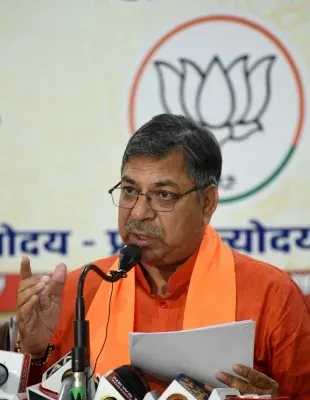
BJP Rajasthan President Madan Rathore described the nominations as a matter of pride for the party, saying both leaders have consistently served the organisation and would now contribute at the national level through the Upper House. He also called on party workers to strengthen outreach and ensure government schemes reach every section of society.
Chief Minister Bhajanlal Sharma said Poonia and Gurjar have rendered dedicated service to the organisation, and that Rajasthan would greatly benefit from their presence in the country's Upper House.
What the Candidates Said
Dr Satish Poonia credited the party's culture of rewarding hard work and dedication. 'I, too, began as an ordinary worker, and the organisation has accorded me respect and opportunities at every step of the way,' he said. Dr Alka Gurjar attributed the opportunity to the trust placed in them by party workers and affirmed that both would work collaboratively for the 'double-engine' government and the development of Rajasthan.
Context and Political Significance
The candidatures replace outgoing Union Minister Ravneet Singh Bittu, whose Rajya Sabha term ends on 21 June. Voting for the three Rajasthan seats is scheduled for 18 June, with the BJP anticipated to secure two of those seats based on current assembly strength.
Political observers see the selection of Poonia, a prominent Jat community leader, and Gurjar, a well-connected face from the Gurjar community, as a calculated move to consolidate support among two electorally significant groups in Rajasthan. The Jat and Gurjar communities collectively influence a large number of Assembly constituencies, and the BJP's choices are widely seen as a counter to the Congress party's own strongholds among these groups.
Broader Electoral Calculus
Analysts note that this social balancing act is also tied to the BJP's long-term positioning ahead of the 2028 Rajasthan state elections. By elevating leaders from these two communities to the Upper House, the party signals intent to deepen its grassroots connect well before the next electoral cycle. This is consistent with a pattern the BJP has followed in other states — using Rajya Sabha nominations as a tool for community outreach and organisational reward.
With voting set for 18 June, all eyes will now be on the final tally and whether the BJP's community arithmetic translates into consolidated ground support across Rajasthan's diverse constituencies.
Point of View
But the timing here, with 2028 already in view, suggests a longer game. What is worth watching is whether these nominations translate into tangible organisational work within these communities or remain symbolic gestures. The Congress, which has its own credible Jat and Gurjar faces, will be watching closely — and the real test will come in by-elections and local body polls before the big one.
NationPress
24 Oct 2026
Frequently Asked Questions
Who are the BJP's Rajya Sabha candidates from Rajasthan in 2025?
The BJP has nominated Dr Satish Poonia and Dr Alka Gurjar as its Rajya Sabha candidates from Rajasthan. Both filed their nomination papers on 8 June 2025 at the Rajasthan Legislative Assembly.
When is voting for the Rajasthan Rajya Sabha seats?
Voting for the three Rajasthan Rajya Sabha seats is scheduled for 18 June 2025 . The BJP is anticipated to secure two of the three seats based on its current strength in the Rajasthan Legislative Assembly.
Why did the BJP choose Satish Poonia and Alka Gurjar?
Political observers attribute the selections to community representation — Poonia is a prominent Jat leader and Gurjar is a well-known Gurjar community face. Both communities hold significant electoral influence across Rajasthan's Assembly constituencies, and the nominations are seen as a counter to Congress's own strongholds among these groups.
Whose Rajya Sabha seat are Poonia and Gurjar replacing?
The nominations come as part of a broader list of 11 BJP candidates across states and replace the seat held by Union Minister Ravneet Singh Bittu , whose Rajya Sabha term ends on 21 June 2025 .
How does this nomination connect to Rajasthan's 2028 elections?
Analysts see the BJP's choice of leaders from the Jat and Gurjar communities as part of its long-term positioning ahead of the 2028 Rajasthan state elections. Elevating these leaders to the Upper House is widely interpreted as a signal of intent to deepen grassroots connect with these electorally significant groups well before the next state poll.