Are Security Concerns Over the Bengal-Bengaluru Rail Corridor Justified?
Synopsis
Karnataka BJP leader Chalavadi Narayanaswamy has raised urgent national security issues regarding the West Bengal-Bengaluru rail link, citing unregulated movement of Bangladeshis. His appeal to Union Minister Ashwini Vaishnaw calls for immediate action to safeguard India's borders and ensure the integrity of the rail services.
Key Takeaways
Concerns raised about national security due to unchecked immigration.
Call for action from Union Minister for Railways.
Need for stricter monitoring at railway stations.
Evidence of fraudulent documentation among travelers.
Economic benefits of rail services must be balanced with security needs.
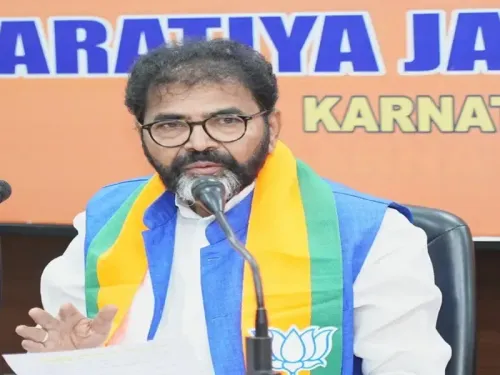
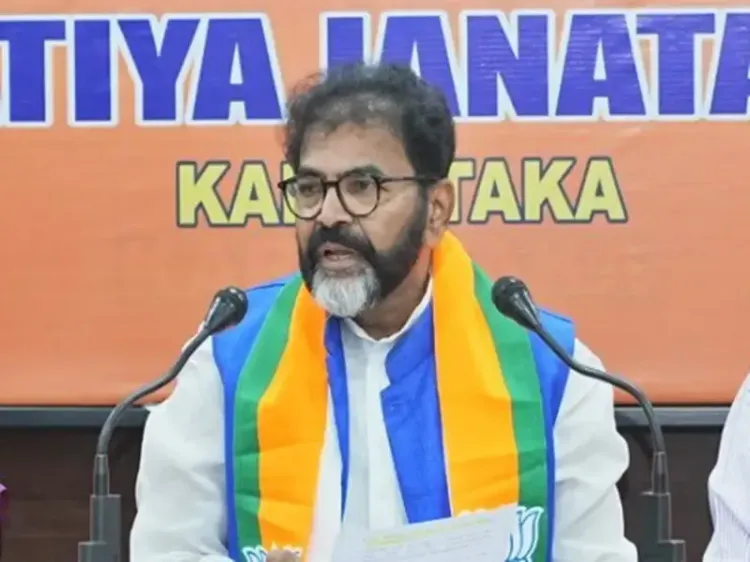
Bengaluru, Jan 15 (NationPress) - Karnataka BJP leader Chalavadi Narayanaswamy raised alarms regarding national security in relation to the rail connectivity between West Bengal and Bengaluru. He has reached out to Union Minister for Railways Ashwini Vaishnaw to address the purported unregulated movement of Bangladeshis.
Narayanaswamy, who serves as the Leader of the Opposition in the Legislative Council, expressed in his correspondence: “I am writing to draw your immediate attention to a serious issue that could compromise our national security due to the ongoing rail services connecting West Bengal and Bengaluru.
“The security of our borders and the safety of our urban areas hinge on the diligence of Indian Railways. I implore you to prioritize this national security matter and take urgent measures to regulate and oversee these transit routes. I eagerly await your actions to protect our nation,” he stated.
“As you may know, there are between 15 to 17 train services weekly and daily (including routes from Howrah/Sealdah to Yesvantpur/Sir M. Visvesvaraya Terminal) linking these regions. While these services are crucial for our economy, there is increasing public concern that these corridors are being misused for the unregulated movement of illegal immigrants, particularly those from across the international boundary,” he noted.
Reports suggest that many individuals using these routes hold Aadhaar cards and voter IDs acquired through fraudulent channels. Recent judicial comments, notably from the Bombay High Court, have clarified that these documents do not constitute proof of citizenship, yet they are being utilized to circumvent local security checks, he remarked.
Bengaluru has evolved into a significant hub for labor colonies where illegal settlers allegedly reside, posing as migrants from West Bengal and the Northeast. Recent police operations in January 2026 have already uncovered many individuals with forged identification, Narayanaswamy highlighted.
The high volume of passengers complicates the ability of the Railway Protection Force (RPF) and the GRP to perform comprehensive background checks during transit, effectively creating a “green corridor” for unauthorized entry into southern India, he remarked.
He called for a targeted verification campaign at key boarding and deboarding locations (Howrah, Malda Town, Kharagpur, and Bengaluru terminals) involving biometric cross-referencing.
“Reassess the need for the high number of weekly services on this corridor to improve security oversight. Deploy undercover RPF and Intelligence Bureau (IB) personnel on these specific trains to observe and identify unusual movement patterns. Integrate railway reservation systems with the Special Intensive Revision (SIR) and other national databases to flag individuals with dubious documentation,” he demanded.
Point of View
Concerns regarding unchecked migration and national security are paramount. The call for stricter monitoring and verification processes reflects a growing need for vigilance in maintaining the integrity of our borders while balancing the economic benefits of rail connectivity.
NationPress
28 Sept 2026
Frequently Asked Questions
What are the security concerns related to the Bengal-Bengaluru rail corridor?
The concerns center around the alleged unchecked movement of illegal immigrants, particularly from Bangladesh, potentially compromising national security.
What actions are being requested by Chalavadi Narayanaswamy?
He is urging the implementation of stricter monitoring and verification processes at key railway stations to ensure the integrity of passenger documentation.
How many train services connect West Bengal and Bengaluru?
There are currently 15 to 17 weekly and daily train services connecting these regions.
What has been reported about the identification documents of some travelers?
Reports indicate that many travelers possess Aadhaar cards and voter IDs obtained through fraudulent means, which are not valid proof of citizenship.
What has been the outcome of recent police operations?
Recent police operations have identified numerous individuals with forged documents residing in Bengaluru's labor colonies.