BJP Condemns Mamata Banerjee for Alleged Threat to Bengali Hindus in Viral Speech
Synopsis
In a controversial public address, Mamata Banerjee's remarks have come under fire from the BJP, which claims she issued an 'open warning' to Bengali Hindus. This has ignited a heated political debate in West Bengal as the state prepares for upcoming elections.
Key Takeaways
BJP criticizes Mamata Banerjee's speech.
Allegations of an 'open warning' to Bengali Hindus.
The remarks stir debate on communal polarization.
No immediate response from the TMC on the issue.
Political tensions are rising ahead of elections.
Kolkata, March 9 (NationPress) The Bharatiya Janata Party (BJP) has criticized West Bengal's Chief Minister, Mamata Banerjee, for her remarks that have gained significant traction on social media.
On Monday, BJP national spokesperson Pradeep Bhandari launched a pointed attack against Mamata Banerjee, accusing her of delivering an "open warning" to Bengali Hindus during a recent public demonstration or dharna.
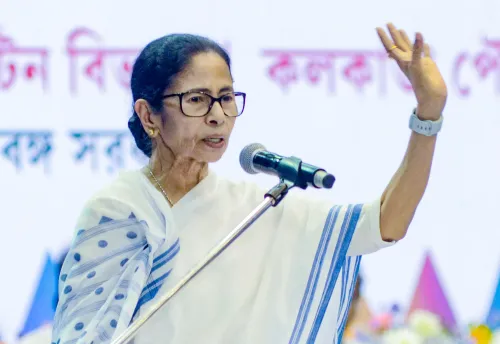
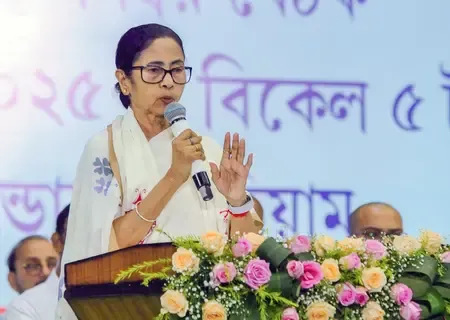
Bhandari shared a video clip on his X account (@pradip103), allegedly showing Banerjee making the statement, "We exist, that is why all of you are safe. If we were not here, when a certain community comes together as a group and surrounds you, they would finish you off in one second."
He characterized her comment as an "open threat" to Bengali Hindus, suggesting it reveals the Trinamool Congress's (TMC) desperation as their support base diminishes.
Bhandari further pointed fingers at the ruling TMC for engaging in "open Bengali Hindu hate" through such rhetoric, which he claims is part of a larger strategy of community polarization.
The statement, which has been widely disseminated on social media, has ignited a heated debate among users. Many interpreted Banerjee's words as suggesting that her presence or the governance of the Trinamool acts as a shield for Hindus against potential threats from other communities.
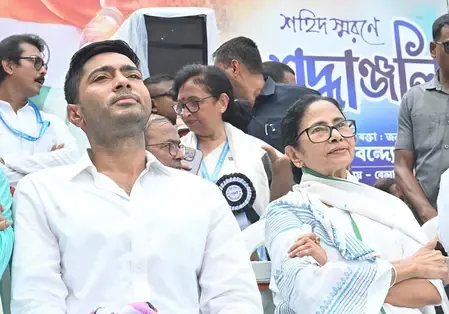
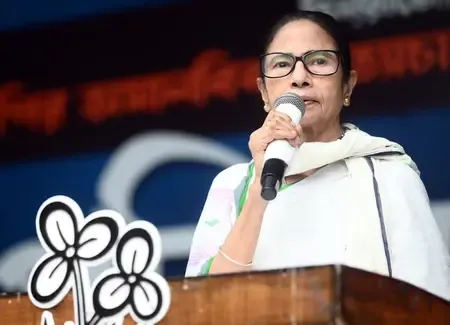
While the context of Banerjee's speech, reportedly delivered from a "Dharna Drama Manch" (a public protest platform), is currently under examination, there has been no immediate official response or clarification from her office or the TMC.
The remarks seem to be part of a broader address amidst ongoing political strife in the state, possibly related to recent protests, disruptions in the assembly, or community tensions.
BJP leaders have amplified the video to underscore what they describe as the TMC's anti-Hindu bias and politically motivated tactics.
As West Bengal approaches critical elections, these exchanges highlight the growing political rifts within the state.
Frequently Asked Questions
What did Mamata Banerjee say in her speech?
Mamata Banerjee suggested that her presence protects Bengali Hindus from potential threats posed by another community, stating, 'We exist, that is why all of you are safe.'
How did the BJP respond to Banerjee's remarks?
The BJP accused Banerjee of issuing an 'open warning' to Bengali Hindus and described her comments as an 'open threat' that reflects the TMC's desperation.
What is the significance of this controversy?
This controversy highlights the deepening political divides in West Bengal and raises concerns about communal polarization as the state approaches elections.
Is there any official response from the TMC?
As of now, there has been no immediate clarification or denial from Mamata Banerjee's office or the TMC regarding her remarks.
What are the implications for the upcoming elections?
The exchange underscores the growing tension between political parties and may influence voter sentiment as West Bengal gears up for electoral battles.