BJP's Gandhinagar civic manifesto: AI labs, sports hubs and smart roads in 5-year plan
Synopsis
The BJP's Gandhinagar municipal manifesto is an ambitious rebranding exercise — casting a state capital long defined by its secretariat as a future AI-enabled sports and knowledge hub. With AI labs in schools, a cricket stadium at Randheja and a double-decker heritage bus tour, the party is betting that aspirational urban identity sells as powerfully as drainage networks and concrete roads.
Key Takeaways
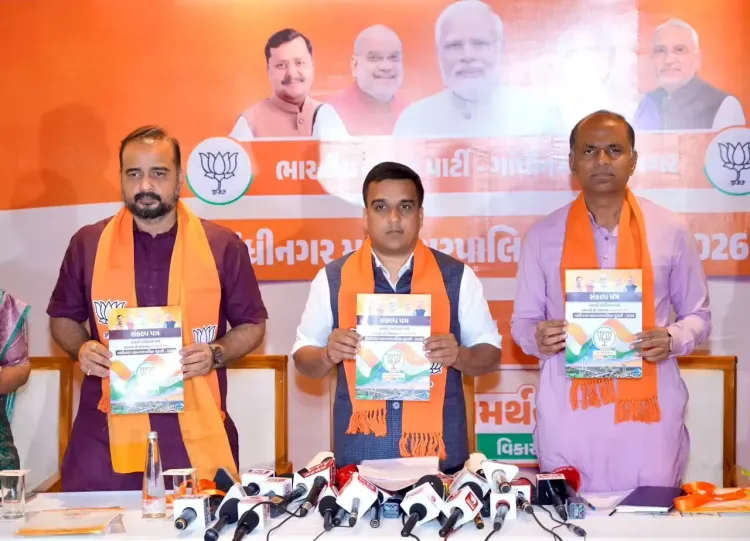
BJP released its Gandhinagar Municipal Corporation election manifesto on 8 October 2026 .
Deputy CM Harsh Sanghavi unveiled the plan, pitching Gandhinagar as a 'Sports Capital, Knowledge Hub and Cultural Centre.' Key proposals include AI-based traffic signals , smart roads on Ch-Road, Road Nos.
2 and 3 and the Gh-7-Pethapur stretch.
AI laboratories , smart classrooms and STEM and robotics education planned for municipal schools under an expanded Gyankunj project.
Sports infrastructure includes a cricket stadium at Randheja , a sports complex at Pethapur and separate gyms for women.
Municipal services to be decentralised through zonal offices ; a 'Gandhinagar Urban Darshan' double-decker AC bus service proposed for heritage tourism.
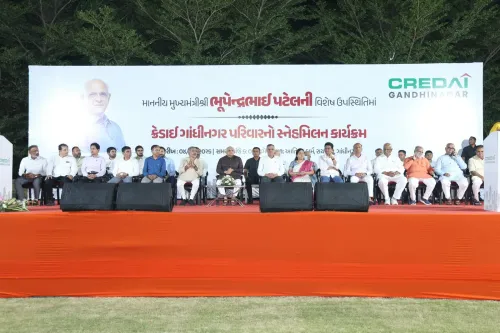
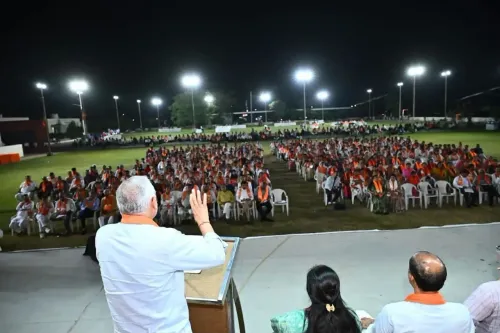
The Bharatiya Janata Party (BJP) on 8 October 2026 released its manifesto for the Gandhinagar Municipal Corporation election, outlining a five-year blueprint centred on AI-enabled civic infrastructure, smart road development, new sports facilities, decentralised municipal services and expanded public transport for Gujarat's state capital. The document, unveiled in Gandhinagar, positions the city as a future 'Sports Capital, Knowledge Hub and Cultural Centre.'
Key Announcements in the Manifesto
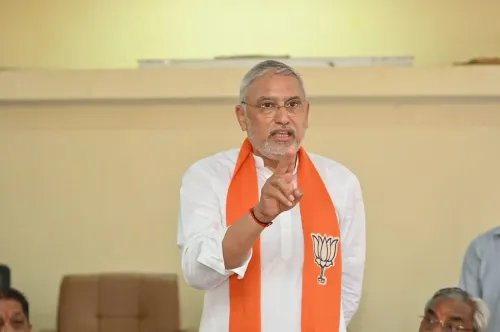
Deputy Chief Minister Harsh Sanghavi, who released the document, said the party's resolve was to make Gandhinagar 'more facility-rich, smart, clean, beautiful, green, a cultural centre, a sports centre and inclusive over the next five years.' The manifesto proposes AI-based traffic signals and the development of Ch-Road as an iconic thoroughfare, alongside Road Nos. 2 and 3 and the Gh-7-Pethapur stretch as designated smart roads. Approach roads across sectors would be modernised and progressively converted to concrete surfaces.
Infrastructure proposals include taking forward the K-2-Vavol overbridge and completing the overbridge from K-7 towards Randheja. Sanghavi added that individual sectors would receive distinct identities through theme-based urban design, including sector-specific entry gates, modern footpaths and coordinated beautification of major roads and public spaces.
Technology and Education Push
A significant plank of the manifesto is technology-led education. AI laboratories would be established in municipal schools, complemented by smart classrooms, digital learning tools, and STEM and robotics-based education programmes. The BJP has also proposed expanding smart schools under the Gyankunj project and developing a robotics-based sports facility.
A modern Namo Library would be built for students and competitive examination aspirants. Libraries and reading centres would be set up in all villages now incorporated into the municipal corporation area, with focused programmes on education, skills and careers for young residents. Development of data centres is also proposed to strengthen the city's digital backbone.
Sports, Culture and Heritage Plans
The manifesto places considerable emphasis on turning Gandhinagar into a sports destination. Proposals include a modern sports complex, a cricket stadium at Randheja, a sports complex at Pethapur, separate gyms for women and a robotics-based sports facility. The party said modern training facilities would be made available to help local athletes progress to national and international levels.
On the cultural front, the BJP has proposed a City Centre, Performing Arts Facility and Town Hall. Meena Bazaar would be redeveloped and modernised, while the Gh-5 Open Air Theatre would be upgraded. Historical and cultural sites would be linked with tourism, including development of Ambapur Vav as a heritage site and a 'Waste to Best' Wonder Park. A 'Gandhinagar Urban Darshan' double-decker AC bus service has been proposed to connect key historical, cultural and development landmarks.
Green Spaces, Civic Inclusion and Peripheral Villages
The manifesto seeks to preserve Gandhinagar's green character through tree plantation, landscaping and theme-based plantations along major roads and sectors. The Sector-1 lake would be redeveloped with a walkway, landscaping, seating and recreational facilities.
Newly incorporated localities — Gokulpura, Fatehpura, Adivada and Kubernagar — would receive improved roads, street lights, drainage, water supply and other civic infrastructure. Rural chowks, a labour chowk, a community hall at Randheja and improved connectivity between Randheja and surrounding areas are also promised. Effective implementation of the PM Awas Yojana for economically weaker families has been included.
Public health and sanitation measures proposed include physiotherapy centres through public participation, mobile food-testing vans, bio-mining for solid waste disposal and a modern animal hospital. Municipal services would be decentralised through zonal offices so residents can access civic complaints, certificates and other services locally.
Sanghavi's Broader Vision
Sanghavi highlighted progress made over the previous five years — including drainage networks, drinking water lines, roads, healthcare facilities, gardens, lakes, smart government schools, Ahmedabad-Gandhinagar Metro connectivity, the Sabarmati-Gandhinagar riverfront and local bus services — and framed the new manifesto as a forward leap. 'The next five years will give new momentum and a new direction to Gandhinagar's overall development,' he said.
He also noted that Gandhinagar was no longer solely an administrative capital but was emerging as a hub for national and international conferences, universities, fintech and global companies. How these commitments translate into budgeted timelines and implementation mechanisms will be closely watched as the municipal election campaign intensifies.
Point of View
Knowledge Hub' framing is a direct play for younger voters in a city that has seen a significant influx of university and fintech talent, but without binding timelines or budget allocations, it risks reading as a wish list. The real test is whether the winning party's first budget reflects these commitments or quietly shelves them.
NationPress
8 Oct 2026
Frequently Asked Questions
What are the main promises in the BJP's Gandhinagar Municipal Corporation manifesto?
The BJP's manifesto for the Gandhinagar Municipal Corporation election, released on 8 October 2026, promises AI-based traffic signals, smart roads, AI laboratories in municipal schools, a cricket stadium at Randheja, a modern sports complex, a Namo Library, decentralised civic services through zonal offices and a double-decker AC heritage bus service. The party's overarching goal is to position Gandhinagar as a 'Sports Capital, Knowledge Hub and Cultural Centre' over the next five years.
Who released the BJP manifesto for Gandhinagar civic polls?
Deputy Chief Minister Harsh Sanghavi released the manifesto in Gandhinagar on 8 October 2026. He framed the document as a vision to prepare the city for the next generation through technology, modern facilities and human-centric development.
What education and technology proposals are included in the manifesto?
The manifesto proposes establishing AI laboratories in municipal schools alongside smart classrooms, STEM education and robotics-based learning. It also includes expanding smart schools under the Gyankunj project, developing a modern Namo Library and encouraging data centre development to strengthen the city's digital infrastructure.
What sports infrastructure is the BJP promising for Gandhinagar?
The BJP has proposed a modern sports complex, a cricket stadium at Randheja, a sports complex at Pethapur, separate gyms for women and a robotics-based sports facility. The party says modern training facilities will be provided to help local athletes reach national and international levels.
How will newly incorporated villages around Gandhinagar benefit?
Localities such as Gokulpura, Fatehpura, Adivada and Kubernagar — recently absorbed into the municipal corporation — are promised improved roads, street lights, drainage, water supply and other civic infrastructure. Rural chowks, a labour chowk and a community hall at Randheja are also proposed, along with effective implementation of the PM Awas Yojana for economically weaker families.